
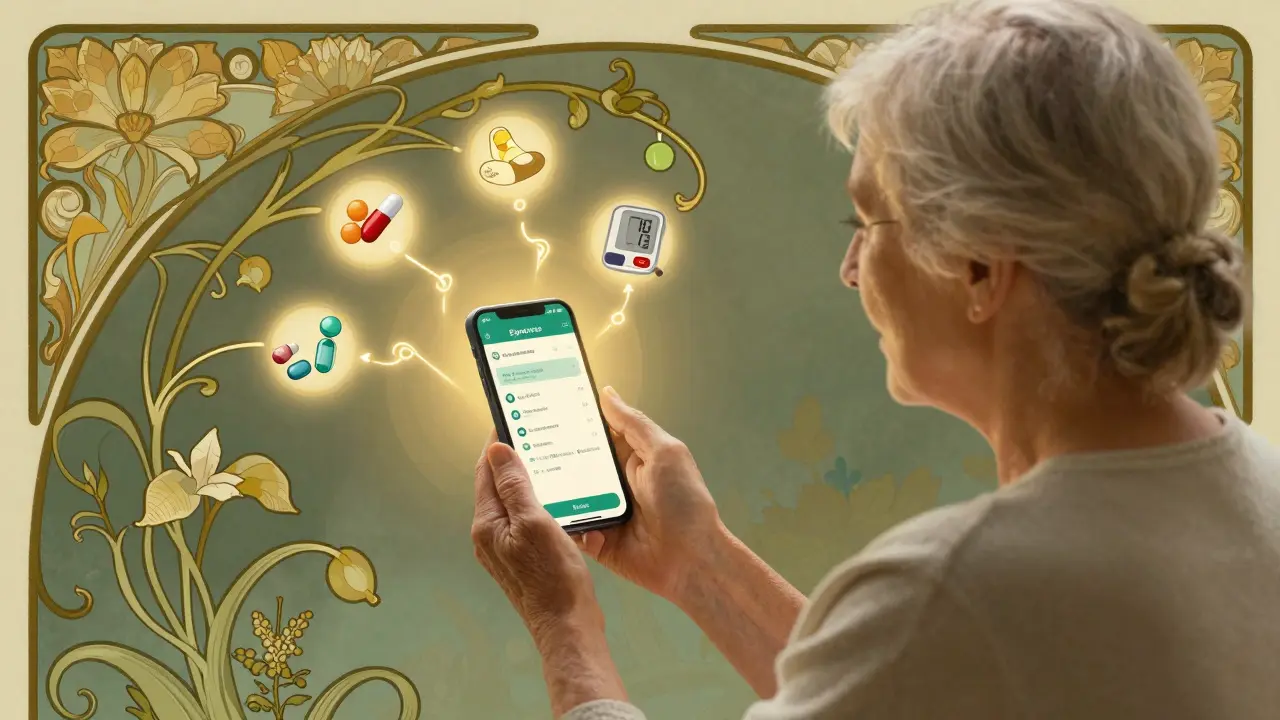
When you’re taking multiple medications-especially generics-it’s easy to assume they’re safe together. But that’s not always true. A common painkiller like ibuprofen can raise blood pressure when mixed with certain blood pressure meds. Antidepressants can become dangerous when combined with antibiotics or even St. John’s wort. These aren’t rare mistakes. They happen every day, and digital tools are now the frontline defense.
Why Generic Drugs Are Riskier Than You Think
Generic drugs work the same way as brand-name versions. Same active ingredient. Same dosage. Same effect. But here’s the catch: pharmacies often switch between different generic manufacturers. One month you get the ibuprofen from Teva, the next from Mylan. They’re chemically identical, but fillers, coatings, and release mechanisms can vary slightly. These small differences can change how drugs interact in your body.And it’s not just two drugs. The average person over 65 takes nearly five prescriptions at once. Add in over-the-counter pain relievers, vitamins, herbal supplements, and even grapefruit juice, and you’ve got a chemical cocktail no one’s fully mapping out. That’s where digital tools come in-not as replacements for your doctor, but as real-time safety nets.
Epocrates: The Go-To Mobile App for Quick Checks
If you’re a clinician, pharmacist, or even a patient managing multiple meds, Epocrates is the most-used tool in outpatient settings. It lets you check up to 30 drugs at once-brand names, generics, OTCs, and herbal supplements. That’s more than any other app.Its interface is clean. Type in a drug, tap another, and instantly see the interaction level: minor, moderate, severe. No login. No paywall. The free version covers 95% of what most people need. It’s why the American Academy of Family Physicians gave it a five-star rating in 2018-and why it still holds a 4.6 out of 5 on Google Play with nearly 50,000 reviews.
Users love how fast it is. You can pull it up while a patient is still talking. No waiting. No scrolling. It even lets you bookmark common combinations you check often. For busy clinics, ERs, and home care nurses, Epocrates isn’t just convenient-it’s lifesaving.
Micromedex: The Enterprise Powerhouse
Hospitals don’t use Epocrates. They use Micromedex. Why? Because it does more than flag interactions. It tells you how to fix them.Micromedex doesn’t just say “avoid this combo.” It tells you alternative drugs, adjusted dosages, monitoring parameters, and even IV compatibility. If a patient needs two IV antibiotics that can’t mix, Micromedex shows you the correct sequence and flush protocol. It’s got over 2,500 drug monographs with FDA and off-label uses, plus 700+ clinical calculators for kidney function, fluid balance, and drug conversions.
It’s integrated into electronic health records at 89% of U.S. hospitals. That means when a doctor prescribes a new drug, the system auto-checks it against everything else in the patient’s chart. Merative, the company behind Micromedex, bought InteracDx in 2023 to add AI-driven prediction. Their goal? Cut false alerts by 35%. That’s huge. Right now, up to 96% of interaction warnings get ignored because they’re wrong or too vague.
But Micromedex isn’t for casual use. It’s complex. Training takes months. It’s built for teams, not individuals. If you’re not in a hospital or large clinic, you won’t need it. But if you are, you won’t work without it.
DrugBank and DDInter: For Research and Deep Dives
If you’re a pharmacist, researcher, or student digging into *why* drugs interact, DrugBank and DDInter are your best friends.DrugBank gives you the full biochemical story. Not just “this combo raises serotonin,” but exactly which enzyme (CYP2D6) is inhibited, how it affects plasma concentration, and what the clinical risk is based on genetic variants. The free version lets you check five drugs, but you’ll get pop-up ads pushing you to upgrade. It’s frustrating if you’re trying to use it daily.
DDInter, launched in 2021 by Chongqing University, is the only fully free, open-access DDI database. No account needed. No ads. You can check five drugs at a time, filter by interaction mechanism (pharmacokinetic, pharmacodynamic), and even see the research papers behind each warning. Its 2024 update added machine learning to predict new interactions-not just ones already documented.
These tools aren’t for quick checks. They’re for understanding. If you’ve ever wondered why two drugs that seem harmless can cause seizures or heart rhythm problems, DDInter and DrugBank show you the science.
mobilePDR and UpToDate: Niche Strengths
mobilePDR is the “official” app of Prescriber’s Digital Reference. That means drug summaries are updated within a week of manufacturer changes-faster than most competitors. It’s great for checking dosing, indications, and black box warnings. But its interaction checker? Weak. It misses herbal supplements and doesn’t rank severity well. If you need quick, authoritative drug info, it’s solid. If you need interaction safety, skip it.UpToDate Lexidrug is the only major tool that includes overdose treatment guidance. If someone accidentally takes 10 pills of a sedative, it doesn’t just warn you about interactions-it tells you how to treat the overdose: activated charcoal? Naloxone? Supportive care? That’s rare. Only Drugs.com matches it. UpToDate also lets you check over 50 drugs at once. But it’s expensive, tied to institutional subscriptions, and not meant for individual use.
The Real Problem: Alert Fatigue and False Positives
Here’s the ugly truth: these tools aren’t perfect. In fact, they’re often wrong.Studies show clinicians ignore between 49% and 96% of interaction alerts. Why? Too many false alarms. A tool might flag a combination as “severe” because both drugs affect the liver-even though the patient’s liver is healthy. Or it warns about a grapefruit interaction when the patient doesn’t even eat grapefruit.
That’s called alert fatigue. And it’s deadly. When you’re bombarded with warnings you can’t trust, you start clicking “ignore” without thinking.
Top hospitals now customize their systems. They lower the severity threshold for high-risk patients. They mute alerts for low-risk combinations. They train staff to question every warning-not accept it blindly. The American Society of Health-System Pharmacists says this kind of tuning reduces errors by 30%.
What You Should Use in 2026
If you’re a patient managing your own meds: Epocrates. Download the free app. Type in every pill, supplement, and OTC drug you take. Check it weekly. If you’re on more than three meds, this isn’t optional.If you’re a clinician in a hospital or clinic: Micromedex. It’s not just about interactions-it’s about safety protocols, dosing adjustments, and integration with your EHR. You’ll need training, but it’s worth it.
If you’re a student, researcher, or curious about the science: DDInter. It’s free, open, and transparent. You’ll learn more about how drugs really work than in most pharmacology courses.
And if you’re using a tool that asks you to pay every time you check two drugs? Walk away. You’re being charged for basic safety.
What’s Next for Digital Interaction Tools
The FDA is pushing for smarter systems. In 2023, they named improved drug interaction algorithms a top priority. Expect AI to start predicting interactions before they happen-not just flagging known ones.Imagine this: your doctor prescribes a new generic statin. Your phone alerts you: “This combo increases muscle damage risk by 22% in patients with your genetic profile. Try this alternative.” That’s coming. Companies like Merative and DDInter are already building it.
But the biggest barrier isn’t technology. It’s trust. If tools keep yelling false alarms, no one will listen. The next generation needs to be smarter, quieter, and more personal. Not just a checklist. A conversation.
Frequently Asked Questions
Can I trust generic drug interaction checkers?
Yes-but not blindly. All tools have false positives and false negatives. Epocrates and Micromedex are the most reliable for clinical use. Always cross-check with your pharmacist, especially if you’re on high-risk drugs like blood thinners, antidepressants, or seizure meds. Never skip a consultation just because the app says it’s safe.
Are free drug interaction tools reliable?
Epocrates and DDInter are free and highly reliable for most users. DrugBank’s free version is limited and annoying with upgrade prompts. Avoid tools that lock basic features behind paywalls-especially if you’re managing your own meds. If a free tool gives you clear, actionable info without nagging, it’s trustworthy.
Do these tools work with over-the-counter drugs and supplements?
Epocrates covers the most OTCs and supplements, including St. John’s wort, melatonin, and fish oil. Micromedex includes many, but not all. DrugBank and DDInter have solid supplement data. mobilePDR is weak here. Always input everything-even if you think it’s harmless. Garlic supplements can thin your blood. Vitamin K can undo warfarin. These aren’t myths.
Why do different apps show different interaction results?
Because they use different databases. Epocrates pulls from Micromedex and other sources. DDInter is built on academic research. DrugBank includes proprietary data. No single tool has every interaction. That’s why experts recommend using at least two tools if you’re unsure. If one flags something, investigate it-even if another doesn’t.
Should I use these tools if I’m on Medicare or Medicaid?
Absolutely. Medicare patients average 4.8 prescriptions. That’s a high-risk scenario. Many Medicare Advantage plans now partner with Epocrates or Micromedex to offer free access to beneficiaries. Check with your plan. Even if you’re paying out of pocket, the cost of one adverse drug event-hospitalization, ER visit, fall-far exceeds the price of a subscription or app download.
Next Steps
If you’re managing multiple medications, start today. Download Epocrates. Enter every drug, supplement, and OTC you take. Save the list. Check it again in a week. If you’re a healthcare provider, talk to your IT department about integrating a clinical decision support tool. Don’t wait for an error to happen. The tools are here. The data is better than ever. The only thing missing is action.

Skye Kooyman
January 24, 2026 AT 22:55Epocrates free version is all I need. Just typed in my 4 meds and it flagged the grapefruit + statin thing I forgot about. Scary how easy it is to mess up.
Nicholas Miter
January 26, 2026 AT 20:18Been using Epocrates since med school. Still the fastest. Micromedex is overkill unless you're running a hospital pharmacy. I keep it open on my tablet during rounds-no loading, no login, just tap and go.
Also, side note: people forget that generics switch manufacturers all the time. One batch might have a different coating that changes absorption. Not a big deal for most, but for narrow-therapeutic-index drugs? Big problem.
John Wippler
January 27, 2026 AT 22:00Y’all are talking about apps like they’re magic wands. They’re not. They’re glorified databases with a UI.
The real issue isn’t the tools-it’s the fact that patients don’t tell their doctors about the turmeric capsules they’re taking because ‘it’s just natural.’ Or they think ‘herbal’ means ‘safe.’
My grandma took St. John’s wort with her SSRI and ended up in the ER with serotonin syndrome. She didn’t even know it was a drug. She thought it was tea.
Tools help. But education? That’s the real fix. We need to stop treating meds like candy.
Ashley Karanja
January 28, 2026 AT 00:18As someone who’s been on 7+ meds since my transplant, I’ve become a walking interaction database. I check everything-even my omega-3s and magnesium. But honestly? The biggest win wasn’t any app-it was my pharmacist sitting down with me for 45 minutes, writing everything out on paper, color-coded.
Epocrates? Great for quick checks. But nothing replaces a human who actually listens. I’ve had apps miss things because I didn’t type ‘fish oil’ correctly-turned out it was ‘omega-3’ in the database.
Also, DDInter is a gem. I used it to understand why my anticoagulant reacts weirdly with my thyroid med. The enzyme diagrams? Mind-blowing. I finally get why my INR swings. It’s not magic. It’s biochemistry. And now I can explain it to my kids.
PS: Yes, grapefruit juice is evil. I stopped drinking it. No regrets. My liver thanked me.
Aurelie L.
January 28, 2026 AT 21:55Why is no one talking about how Micromedex is basically a corporate spy tool? They track every search. Your hospital’s IT department knows you checked for interactions with marijuana. Or wine. Or your ex’s antidepressants.
And don’t get me started on the ‘AI-driven prediction’ nonsense. If the system can’t tell the difference between a 70-year-old with kidney disease and a 25-year-old athlete, it shouldn’t be predicting anything.
Just say no to surveillance pharma.
Geoff Miskinis
January 30, 2026 AT 02:51Let’s be honest: Epocrates is the pharmacy equivalent of a Swiss Army knife-functional, slightly outdated, but gets the job done. Micromedex? That’s the titanium-plated, laser-etched, 18-karat gold-plated scalpel. It costs $2,000/year per user and requires a PhD in pharmacokinetics to operate.
DDInter? The only open-source tool that doesn’t beg for your credit card. Kudos to Chongqing University for actually doing something for the global south. Most of these tools are built by American companies for American patients with American insurance.
And yes, the alert fatigue is real. I’ve seen residents ignore a ‘severe’ interaction because the tool labeled it ‘severe’ for a patient on 12 drugs-and the patient was on 3. The system didn’t know the other 9 were discontinued.
What we need isn’t more features. We need context-aware AI that knows who the patient is-not just what’s in their chart.
Simran Kaur
January 31, 2026 AT 03:32In India, we don’t even have access to most of these apps. My cousin in Delhi takes 5 pills a day-generic warfarin, metformin, atorvastatin, and a herbal tonic called ‘Hridayamrit’-and she just trusts the pharmacist who sold it to her. No app, no doctor, no follow-up.
DDInter is the only thing I’ve found that works on a basic Android phone with slow data. No ads, no login. I showed it to her. She didn’t understand CYP enzymes, but she got that ‘this combo might make you dizzy.’ That’s enough.
Why do we assume digital tools are only for rich countries? The real innovation isn’t the AI-it’s making knowledge free and simple.
Robin Van Emous
February 1, 2026 AT 14:52I just want to say thank you to whoever wrote this. I’ve been taking 4 meds for 5 years and never checked interactions. I thought generics were all the same. I didn’t know about the manufacturer switches.
I downloaded Epocrates today. Entered everything. It flagged a combo I didn’t even realize I was taking: my sleep aid and my blood pressure med.
I called my doctor. We changed one thing. No big deal. But I almost didn’t know.
Thank you for not just listing tools. You explained why they matter.
Josh josh
February 2, 2026 AT 19:56epocrates is the real MVP. free. no bs. i use it when i’m at the pharmacy and the clerk says ‘oh this generic is fine’ and i’m like ‘hold up let me check’
also grapefruit juice is the devil. i stopped drinking it after i found out it makes my cholesterol med go wild. no more orange juice for me. sad but true.
bella nash
February 2, 2026 AT 22:06It is imperative to underscore the fact that the proliferation of digital pharmacovigilance platforms, while ostensibly beneficial, introduces a paradigmatic dependency on algorithmic decision-making in lieu of clinical judgment, thereby potentially eroding the epistemic authority of the prescriber and the autonomy of the patient. The normalization of such tools risks the commodification of therapeutic risk assessment, wherein safety is reduced to a binary output devoid of phenomenological nuance. One must interrogate not merely the efficacy of these systems, but their ontological implications within the physician-patient dyad.
SWAPNIL SIDAM
February 3, 2026 AT 00:39Bro, I’m from a small town in India. We don’t have Epocrates. We have a guy at the local pharmacy who knows which pills don’t mix. He doesn’t have a degree but he’s been doing this for 30 years. He remembers my mom’s meds from 2015.
Maybe we don’t need fancy apps. Maybe we need more people like him.
Sally Dalton
February 3, 2026 AT 08:22OMG I just checked my meds on Epocrates and it flagged my magnesium + blood pressure med 😱 I’ve been taking them together for 2 years… I thought magnesium was ‘good’ for BP??
Just called my pharmacist and she said ‘yep, that’s a thing’ and switched me to a different one. I’m so glad I read this. Thank you!!
Also-St. John’s wort is NOT harmless. I’m done with ‘natural’ supplements without checking. 🙏
Betty Bomber
February 4, 2026 AT 02:40I’m 72 and take 5 prescriptions. I use Epocrates. I don’t understand half the warnings, but I take a screenshot and show my daughter. She’s the one who actually reads the small print.
My advice? If you’re older and on meds, find a tech-savvy family member. Don’t try to figure it out alone. The apps aren’t perfect, but they’re better than guessing.
Kipper Pickens
February 5, 2026 AT 00:27Micromedex’s AI prediction engine? It’s not magic-it’s trained on biased data. Most of the interaction studies were done on white, male, middle-class patients. What happens when you’re a Black woman with kidney disease? The algorithm doesn’t know. It just spits out the same ‘severe’ flag.
And if your EHR auto-flags every combo? You’re not safer. You’re desensitized.
Tools need to be personalized, not just powerful. Otherwise, we’re just automating ignorance.