
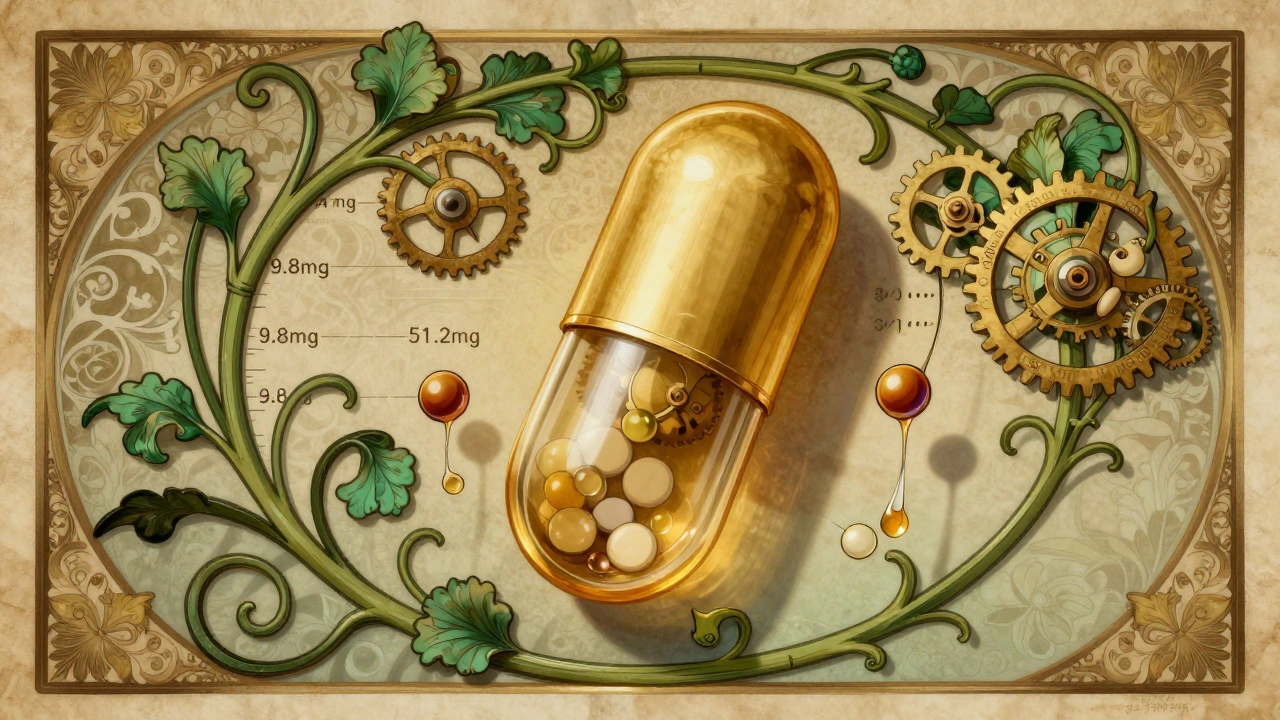
When a blockbuster drug’s core patent expires, generics can legally copy it. But in many cases, they don’t-because the original brand still owns the formulation patent on the exact way the drugs are mixed, dosed, or delivered. This isn’t a loophole. It’s a deliberate, expensive, and legally complex strategy that keeps generics out for years after the original patent dies.
What Exactly Is a Formulation Patent on a Drug Combination?
A formulation patent doesn’t protect the drugs themselves. It protects how they’re put together. Think of it like a recipe. The active ingredients-say, Drug A and Drug B-might be old, well-known, and off-patent. But if a company figures out that combining them in a 9.8mg to 51.2mg ratio, inside a pH-sensitive capsule that releases the drugs 45 minutes apart, leads to a 37% drop in side effects and a 22% increase in effectiveness, that’s patentable. Not because the drugs are new, but because the combination works in a way no one predicted. These patents cover:- Exact ratios of active ingredients
- Special coatings or release mechanisms (delayed, extended, targeted)
- Novel delivery systems (subcutaneous injection instead of IV, inhalers, patches)
- Specific dosing schedules (e.g., once daily instead of twice)
- Stabilizing excipients that make the combination physically stable
Why Do Companies Spend Millions on These Patents?
The math is simple: a single blockbuster drug can make $1 billion to $5 billion a year. If you can delay generic entry by even three years, you’re talking about billions in revenue. Formulation patents are the main tool for doing that. Take Roche’s Phesgo®. It combines two cancer drugs-trastuzumab and pertuzumab-into a single subcutaneous injection. Before Phesgo, patients needed two separate IV infusions, each taking hours. The new formulation cut treatment time to under 8 minutes. Even though the core patents on both drugs had expired, Phesgo’s unique delivery method and fixed ratio earned it a new patent. That kept biosimilars out for years, even though the ingredients were public knowledge. The FDA confirms that 78% of new drug approvals between 2015 and 2020 relied on at least one formulation or combination patent to extend market control. These aren’t minor tweaks. They’re often the difference between a drug being viable or not.How Do These Patents Survive Legal Scrutiny?
It’s not easy. The 2007 Supreme Court case KSR v. Teleflex made it much harder to patent combinations. The court ruled that combining two known things for a known purpose is “obvious” unless you can prove something unexpected happened. So what counts as “unexpected”? You need hard data:- A statistically significant improvement in efficacy (p-value under 0.01)
- A major reduction in side effects not seen with either drug alone
- A new mechanism of action caused by the combination
- Proof that the specific ratio or delivery method is critical
What’s the Catch? High Failure Rates and Legal Risks
Formulation patents are risky. They have a 38% invalidation rate in court-nearly double that of primary patents. Why? Because courts are getting stricter. Judges are tired of companies making tiny changes just to delay competition. The Federal Trade Commission (FTC) calls this “evergreening” and “product hopping.” That’s when a company discontinues the original version of a drug and pushes patients to a new patented version-even if the clinical benefit is minimal. One example: oxaliplatin formulations where the only change was switching from a glass vial to a plastic one. The FTC is now investigating 17 such cases. And not all formulation patents hold up. Amgen spent $147 million defending a patent on an auto-injector for Enbrel®-only to lose in court. The judge ruled that automating a manual injection wasn’t inventive. That’s the line: innovation vs. automation.How Do Generic Companies Fight Back?
Generics don’t just wait. They file Paragraph IV challenges, claiming the formulation patent is invalid. In 2023, 842 such challenges were filed-up from 517 in 2020. And they’re winning more often: 45% of formulation patents are now invalidated. Their strategy? Design around the patent. If the patent covers a 9.8mg/51.2mg ratio, generics can launch with 10mg/50mg. If the patent claims a specific coating, generics use a different one. If the patent protects a subcutaneous injection, generics may still offer the original IV version. In the Mylan v. Celgene case, generics got approval for Revlimid® by targeting non-patented cancer indications-even though the branded version was only approved for one specific use. The patent didn’t cover all uses, so generics exploited the gap.Regulators Are Starting to Push Back
The FDA and Congress are taking notice. In May 2024, the FDA proposed a new rule: to qualify for 3-year exclusivity based on a new formulation, companies must prove “clinical superiority.” That means showing patients actually get better outcomes-not just a more convenient pill. Congress is also considering the Preserve Access to Affordable Generics Act, which would limit secondary patents to those that deliver “meaningful clinical benefit.” If passed, it could invalidate nearly 30% of existing formulation patents. The USPTO’s 2024 report found that 31% of formulation patents between 2015 and 2022 covered trivial changes-like salt forms or minor excipient swaps-with no clinical improvement. That’s the kind of patent that’s now under fire.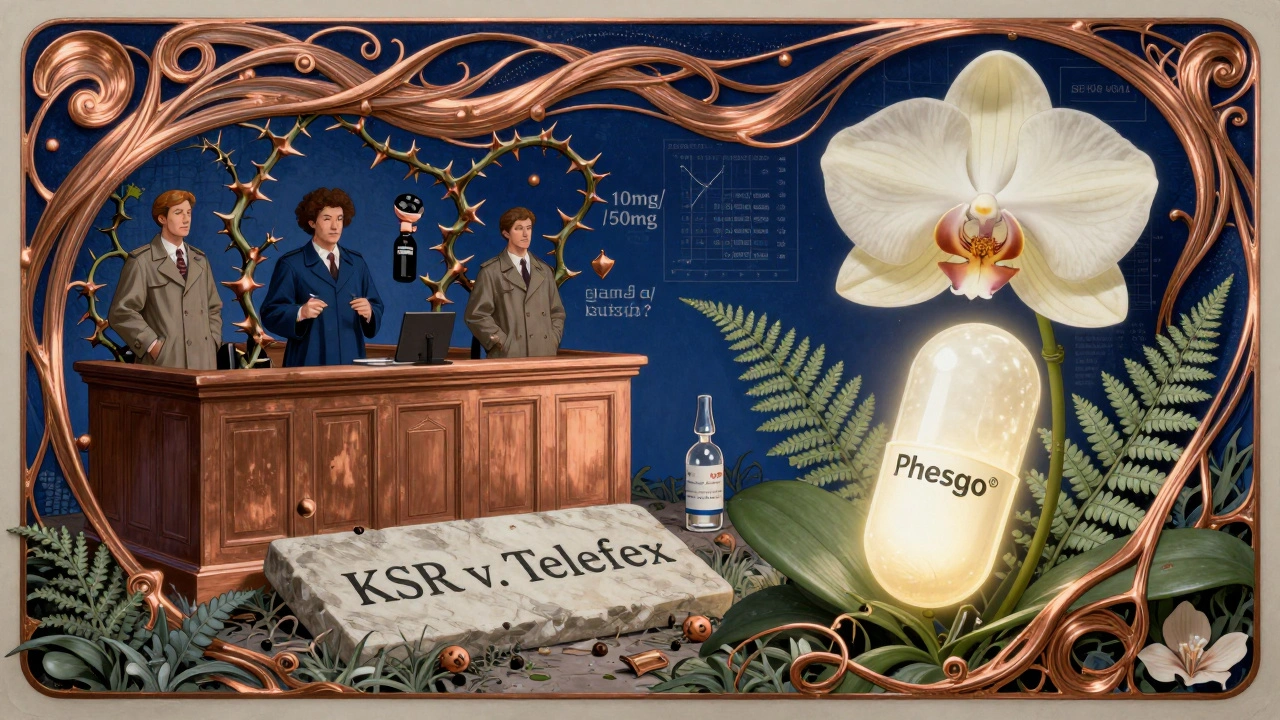
Who Benefits? Who Gets Hurt?
Big pharma wins. Companies like Roche, Merck, and AstraZeneca have built multi-patent “picket fences” around their drugs. AstraZeneca’s Nexium® earned $189 billion in revenue over a decade thanks to layered formulation patents. But patients and insurers pay more. The FTC estimates that evergreening adds 17-23% to U.S. drug prices. The Congressional Budget Office projects that reforming these patents could save $150 billion in healthcare costs by 2028. Meanwhile, generic companies invest billions to challenge these patents. It’s a high-stakes game: win, and you capture 80% of the market. Lose, and you’ve spent millions for nothing.The Future: Fewer Patents, More Innovation
The era of easy evergreening is ending. Companies that survive will be those that invest in real innovation-not just patent tricks. Roche’s 2023 patent for a trastuzumab-deruxtecan combination with pH-sensitive release technology took 2.3 years to develop. But it’s projected to extend exclusivity by 8.5 years. That’s the new standard: deep science, not minor tweaks. IQVIA predicts that by 2030, the average exclusivity extension from formulation patents will drop from 5.3 years to 3.8 years. The days of filing 10 patents on the same drug just to block generics are fading. The winners will be companies that use formulation patents to genuinely improve patient care-better dosing, fewer side effects, easier administration. The losers will be those trying to game the system with cosmetic changes.Bottom Line: It’s Not About the Drugs-It’s About the Design
Formulation patents on drug combinations aren’t magic. They’re expensive, legally fragile, and increasingly scrutinized. But they still work-when they’re built on real science. If you’re a patient, you’re paying for these patents. If you’re a generic maker, you’re fighting them. If you’re a drug company, you’re betting millions that your combination is truly novel. The system isn’t broken. But it’s being reshaped. And the next decade will belong to those who innovate-not just patent.Can a drug company patent a combination of two already-patented drugs?
Yes, but only if the combination produces unexpected results-like significantly improved effectiveness, reduced side effects, or a new delivery method that wasn’t obvious. Simply mixing two known drugs for a known purpose won’t qualify. The USPTO requires strong clinical data proving the combination works better than either drug alone.
How long do formulation patents last?
Standard patent life is 20 years from filing. But because most formulation patents are filed later in a drug’s lifecycle, they often provide only 3-8 years of exclusivity after approval. The Hatch-Waxman Act allows for patent term extension (PTE) of up to 5 years, but total exclusivity can’t exceed 14 years after FDA approval. Regulatory exclusivity (like 3-year new formulation exclusivity) can add more time on top of that.
What’s the difference between a formulation patent and a composition-of-matter patent?
A composition-of-matter patent protects the chemical structure of a single active ingredient-it’s the strongest, broadest type of patent. A formulation patent protects how multiple ingredients are combined, dosed, or delivered. Formulation patents are narrower and easier to design around, but they’re often filed later to extend exclusivity after the core patent expires.
Why do some formulation patents get rejected by the FDA or USPTO?
Most rejections happen because the patent lacks “unexpected results.” If the combination is obvious, or if the change is too minor (like switching from a tablet to a capsule with no clinical benefit), it’s rejected. Other common reasons: insufficient written description (37% of rejections) or failure to prove the specific ratio or delivery method is critical (29% of rejections).
Do formulation patents help patients?
Sometimes. If the formulation improves dosing, reduces side effects, or makes treatment easier (like switching from IV to subcutaneous injection), patients benefit. But many formulation patents are filed for financial reasons alone-with no real clinical advantage. The FDA’s new proposed rule requires proof of clinical superiority, which should help separate meaningful innovations from patent tricks.

Levi Cooper
December 12, 2025 AT 00:48This is why America's drug prices are insane. Big Pharma spends millions on tiny tweaks just to keep profits flowing while real innovation dies. You think that 9.8mg vs 10mg difference actually helps patients? Nah. It’s just a legal loophole they exploit while we pay $2,000 for a pill that should cost $20. This isn’t capitalism-it’s corporate theft.
Ashley Skipp
December 13, 2025 AT 15:33So they patent the ratio and the capsule and the timing but not the drug itself? Wow. So basically they’re charging us for packaging. I mean if I made a new box for my cereal and called it 'premium crunch technology' they'd laugh at me. But for drugs? Oh that's science.
Donna Anderson
December 15, 2025 AT 01:49Yesss this is so important!! I work in pharma and honestly most of these patents are just lazy. Like switching from glass to plastic vials?? That’s not innovation that’s just cost cutting dressed up as science. But when it actually works like the subcutaneous combo that cuts treatment time from hours to minutes? That’s legit. We need more of that and less of the patent trolling.
Laura Weemering
December 16, 2025 AT 12:34...and yet... we are all complicit. We demand convenience. We want it faster. We want it easier. We want it painless. So they give us subcutaneous injections instead of IVs... and charge $10,000 more. The system doesn’t reward health-it rewards perception. And the perception is that ‘new’ equals ‘better’... even when it’s just a different color pill.
Audrey Crothers
December 16, 2025 AT 13:51THIS!! My dad’s on one of these combo drugs and the switch from IV to injection changed his life. No more 4-hour hospital visits, no more nausea from the slow drip. It’s not just about profit-it’s about dignity. But yeah, if they’re just changing the capsule material? That’s BS. We need the FDA to step up and actually enforce clinical superiority. 🙏
Stacy Foster
December 16, 2025 AT 16:06They’re all in on it. The FDA, the USPTO, the doctors-they’re all paid off. You think these ‘clinical superiority’ studies are real? Nah. They’re cooked. The data’s manipulated. The trials are designed to fail. And you think generics are innocent? They’re just waiting for the patent to expire so they can sell the same thing for 90% off and call it ‘affordable’. It’s all a game. The patient? Just a number.
Reshma Sinha
December 17, 2025 AT 18:21Interesting perspective. In India, we see this differently-formulation patents are often the only way local manufacturers can enter the market with improved delivery systems. For example, sustained-release versions of antiretrovirals that reduce pill burden from 4x/day to once-daily. That’s not evergreening-that’s access. The issue isn’t formulation patents per se, it’s the imbalance in enforcement. Rich countries get the science; poor countries get the leftovers.
Lawrence Armstrong
December 18, 2025 AT 08:05Real talk: if you can prove a 37% drop in side effects with a specific ratio, then yeah, patent it. But if you’re just changing the excipient from lactose to mannitol? That’s not innovation. That’s accounting. The USPTO needs to stop rubber-stamping these. And the FDA? They need to require real patient outcomes-not just lab numbers. 🤷♂️
Adam Everitt
December 20, 2025 AT 02:44so like… if i make a drug that comes in a blue pill instead of white… and say its ‘better absorption’… but the data is shaky… and the side effects are the same… is that still patentable? because honestly… that’s what it feels like most of the time
wendy b
December 22, 2025 AT 01:20One must acknowledge the structural economic incentives inherent in the pharmaceutical innovation ecosystem. The patent regime, as codified under the Hatch-Waxman Act, was never intended to facilitate perpetual market exclusivity through incrementalist modifications. Rather, it was designed to balance public health imperatives with private investment. The current paradigm, however, has devolved into a form of rent-seeking behavior that undermines the very principles of competitive markets. One might argue that the erosion of patent quality represents not merely a legal failure, but a moral one.
nikki yamashita
December 22, 2025 AT 11:37So if a combo drug cuts treatment time from hours to minutes? That’s worth patenting. If it’s just a different color pill? Not so much. Simple as that. Let’s reward real wins, not legal tricks. 💪