

Going to a medication appointment alone can feel overwhelming-especially if you’re managing multiple prescriptions, dealing with side effects, or just feeling too tired to ask the right questions. You might leave the office thinking you understood everything, only to realize later you missed a key detail about dosage, timing, or interactions. That’s not your fault. Healthcare systems are complicated. But you don’t have to face it alone.
Why Bringing Someone With You Matters
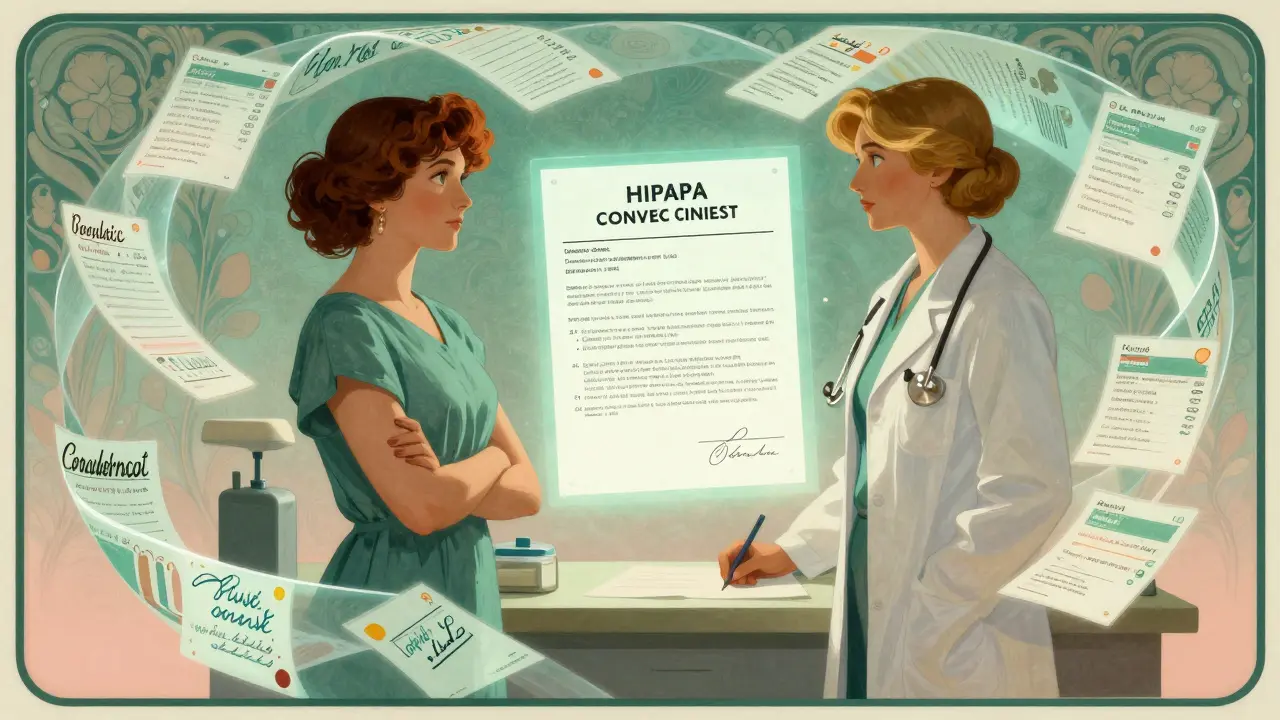
More than 1.5 million people in the U.S. experience medication errors each year, according to the Institute of Medicine. Many of those errors happen during appointments because patients forget to ask questions, misremember instructions, or are too anxious to speak up. Bringing a caregiver or advocate isn’t just helpful-it’s a proven way to cut those risks. Studies show that when someone else attends with you, medication reconciliation errors drop by up to 63%. That means fewer wrong doses, fewer dangerous drug interactions, and fewer trips to the ER. The American Medical Association says providers must allow patients to bring advocates. That’s not a suggestion-it’s policy. And by 2023, 92% of large healthcare systems had formal rules in place to support it. Still, many people don’t know their rights. Or worse, they’re told, “HIPAA won’t let us talk to them.” That’s false. HIPAA allows information sharing if the patient gives permission. All you need is a simple signed form or verbal consent recorded in your chart.Who Can Be Your Advocate?
Your advocate doesn’t need a title. It could be your spouse, adult child, sibling, close friend, or even a neighbor who’s good with details. Some people hire professional advocates-certified through organizations like the Patient Advocate Certification Board. These professionals charge $75 to $200 an hour, but they’re trained to spot red flags in prescriptions, understand insurance rules, and know exactly what questions to ask. For people on five or more medications, professional advocates reduce medication errors by more than half. But for most families, the best advocate is someone who already knows you well. A family caregiver might not have a certificate, but they know your routines, your moods, your fears. They remember when you said, “This pill makes me dizzy,” or “I skipped it because it tasted awful.” That kind of insight is priceless.How to Prepare Before the Appointment
Preparation is the difference between a smooth visit and a frustrating one. Start at least 72 hours before your appointment.- Gather all your medications. Don’t just bring a list. Bring the actual bottles. The FDA found that 23% of medication errors come from inaccurate written lists. Pills look similar. Names can be confusing. Seeing the real bottles helps your provider spot differences in color, shape, or dosage.
- Write down your symptoms. Track when they happen-before or after taking a pill, after meals, at night. Use a simple notebook or a free app. Include anything unusual: dizziness, nausea, sleep changes, rashes.
- Make a list of questions. Use the “Ask Me 3” framework: What is my main problem? What do I need to do? Why is it important? Add specific ones like: “Can this pill be crushed?” “Is there a cheaper version?” “What happens if I miss a dose?”
- Check your insurance coverage. Call your pharmacy or log into your insurer’s portal 48 hours ahead. Some medications get denied at the counter. If your advocate knows ahead of time, they can ask the doctor for alternatives before you leave the office.
What to Do During the Appointment
Once you’re in the room, your advocate’s job is to listen, ask, and take notes. Here’s how to make it work:- Introduce them. Say something like: “This is my daughter. She’s helping me keep track of my meds.” Then confirm with the provider: “Is it okay if she joins the conversation?” Most will say yes. If they hesitate, remind them: “I’ve given permission under HIPAA.”
- Use SBAR. It’s a simple communication tool used by nurses and doctors: Situation (I’m here because my dad’s been dizzy), Background (He’s on warfarin, lisinopril, and a new antibiotic), Assessment (I think the antibiotic might be interacting), Recommendation (Can we check his INR or switch meds?). This method improves understanding by over 50%.
- Ask for clarification. If the doctor says, “Take one daily,” ask: “At breakfast or bedtime?” If they say, “It’s safe,” ask: “What signs should I watch for?” Don’t be afraid to say, “Can you write that down?”
- Confirm changes. Every time a new prescription is added, stopped, or changed, make sure your advocate writes the name, dose, frequency, and reason. Then ask: “Can you please confirm this matches what’s in my chart?”
After the Appointment: The Most Important Step
Many people think the appointment ends when they walk out. It doesn’t. The real work starts after.- Create a visual medication schedule. Take pictures of each pill. Put them in a phone album labeled “My Meds.” Add the name, dose, time, and purpose next to each photo. GoodRx found this cuts identification errors by 67%.
- Set up a “medication buddy” system. Have your advocate call you once a day to check if you took your pills. Or use a pill dispenser with alarms. Studies show this boosts adherence by 41%.
- Call the pharmacy. A week after the appointment, call your pharmacy and ask: “Can you confirm the prescription details I got from Dr. Smith?” Pharmacists often catch errors doctors miss.
- Follow up if something’s unclear. If you’re still confused, email your provider’s office. Say: “I’d like to clarify the instructions for [medication name]. My advocate [name] was with me on [date]. Can you confirm the dose and timing?” Keep a copy of that email.
What to Do If You’re Turned Away
Sometimes, you’ll get pushback. A nurse says, “Only family members can be here.” Or a receptionist says, “We don’t allow visitors during med reviews.” That’s not okay. You have rights. Under the Affordable Care Act and the 21st Century Cures Act, you can bring anyone you choose. You don’t need to be related. You don’t need to be a legal guardian. Just say: “I’ve given verbal consent. I’d like my advocate to stay.” If they still refuse, ask to speak to the patient services manager. Most clinics have a formal complaint process. One patient on Reddit shared how her advocate was banned from a medication appointment. She ended up missing a critical drug interaction that led to a 10-day gap in her treatment. She filed a complaint. The clinic changed its policy within two weeks.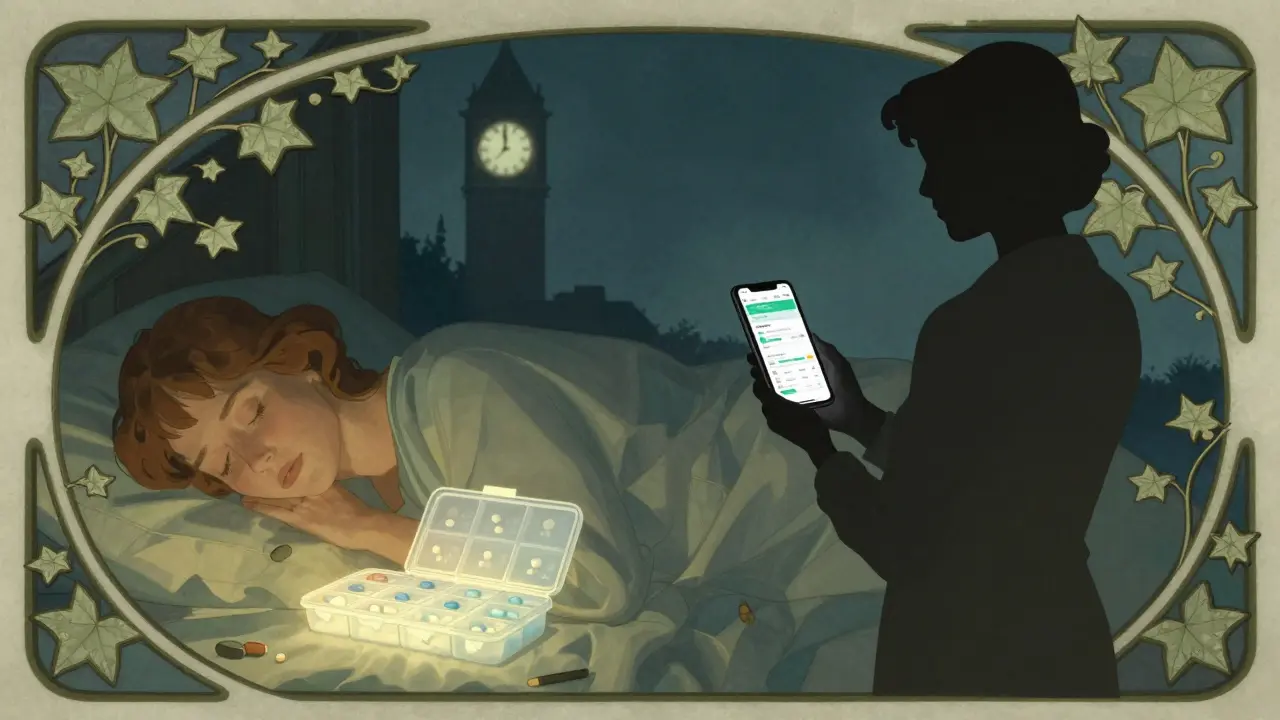
Tools That Help
You don’t need to do this alone. There are free, easy tools out there:- MyTherapy (free app): Tracks meds, symptoms, and sends reminders.
- GoodRx: Compares prices and finds coupons for prescriptions.
- MediCheck Pro (AI tool): Now used in some clinics to scan your meds and flag interactions in real time.
- Printable worksheets from the National Down Syndrome Society: Help track symptoms and questions before appointments.
What’s Changing in 2026
Medication advocacy is becoming part of standard care. In 2024, Medicare started requiring providers to document advocate involvement for high-risk patients. The CMS now includes it in doctor performance scores. And by 2026, nearly 70% of medication appointments are expected to include virtual advocates-someone joining by phone or video if they can’t be there in person. More pharmacies are hiring medication advocates too. The American Pharmacists Association certified over 4,000 pharmacists in this role in just six months. These advocates can help you understand your prescriptions before you even leave the counter.You’re Not Alone
Bringing someone to your medication appointment isn’t a sign of weakness. It’s a smart move. It’s how people stay safe. It’s how mistakes get caught. It’s how you make sure your care matches your life-not the other way around. If you’re unsure where to start, pick one thing: Bring your pill bottles next time. Ask one question. Write down one thing the doctor says. That’s enough. Progress doesn’t require perfection. It just requires action.Can I bring a friend who’s not a family member to my medication appointment?
Yes. You can bring anyone you trust-friend, neighbor, church member, or paid advocate. HIPAA allows you to share your health information with anyone you authorize, even if they’re not related. Just tell the provider at the start: “I’m giving permission for [name] to be here and hear my medical information.” Most clinics will ask you to sign a simple form or note it in your chart.
What if the doctor or nurse says they can’t talk to my advocate?
That’s not true. HIPAA doesn’t block communication with advocates-it protects your privacy. If someone says, “We can’t discuss this with them,” respond by saying, “I’ve given consent. Can you please confirm that in my record?” If they still refuse, ask to speak to a patient advocate or clinic manager. You have the right to have your chosen person present. Many clinics now train staff on this policy because it’s required under federal rules.
How do I know if my advocate is helping or making things worse?
A good advocate asks questions, takes notes, and checks for clarity-not just repeats what you say. If they interrupt too much, argue with staff, or make assumptions without checking facts, they can accidentally cause confusion. The best advocates listen more than they speak. They say things like, “Can you repeat that?” or “Is this the same as last time?” If you feel more stressed after the appointment, talk to them about it. You can also ask your provider for feedback: “Did my advocate help you understand my needs better?”
Is there a free or low-cost professional advocate I can hire?
Yes. Many Federally Qualified Health Centers (FQHCs) offer free medication advocacy services, especially for Medicare or low-income patients. The American Patient Advocate Foundation also has a referral network for low-cost advocates. Some nonprofit organizations, like the National Council on Aging, connect seniors with trained volunteers. Check with your local Area Agency on Aging-they often have lists of resources. Professional advocates typically charge $75-$200/hour, but many offer sliding scale fees or package deals for ongoing support.
What if I’m not sure I need an advocate?
You don’t need to wait until something goes wrong. Even if you feel fine, bringing someone along once can show you how much you’re missing. Many people realize after one appointment that they forgot to ask about side effects, didn’t understand the timing, or didn’t know their meds were covered. If you take three or more medications, have memory issues, or struggle to remember instructions, an advocate is a safety net-not a last resort. Start small: bring someone to your next appointment just to listen. See how it feels. You might be surprised how much clearer everything becomes.





Anthony Capunong
January 6, 2026 AT 19:24Man, I can't believe we still have to fight just to bring someone to a doctor's appointment. In my country, you'd get kicked out for even suggesting it. This post is basically telling us the obvious: if you're drowning in meds, get a lifeline. Why is this even a debate?
Aparna karwande
January 6, 2026 AT 23:34Oh please. You think this is revolutionary? In India, we've been doing this for generations-grandma, auntie, cousin, whoever knows your name and your habits. We don't need fancy apps or certified advocates. We have family. And we don't need HIPAA to tell us how to care for each other. This is just American overcomplication with a side of bureaucracy.
Vince Nairn
January 8, 2026 AT 07:25Wow. So the solution to our broken healthcare system is... bring a friend? I'm shocked. I mean, who knew the answer wasn't more pills or more $$$ but just someone to write stuff down? Brilliant. Next up: maybe we should teach doctors to speak English. And maybe, just maybe, stop making patients feel like they're asking for a favor just to have someone sit in the room with them.
Ayodeji Williams
January 10, 2026 AT 02:37Bro this is fire 🔥 I brought my cousin to my last med check and the nurse literally said "we don't allow strangers" 😭 I told her I'm not a stranger, I'm his ride and his memory. She gave me a look like I asked for a kidney. But guess what? We caught a dosage error. 10/10 advocate. If you're not bringing someone, you're playing Russian roulette with your health 💊💣
Kyle King
January 10, 2026 AT 05:30Let me guess-the government wants you to bring someone so they can track who you're talking to. HIPAA? More like HIPAA-2: Now With More Surveillance. You think they're helping you? Nah. They're building a database on who's asking questions. Next thing you know, your advocate gets flagged for "excessive health inquiry." I saw a guy get denied because his sister had a blog about insulin prices. Coincidence? I think not.
Kamlesh Chauhan
January 10, 2026 AT 20:50Why even bother? Doctors don't listen anyway. I brought my brother last time and he wrote down everything. The doc just nodded and wrote something on a sticky note. Two weeks later the med was wrong. The pharmacy didn't even check. This whole thing is theater. Just take your pills and hope for the best
Emma Addison Thomas
January 12, 2026 AT 00:32It's fascinating how such a simple, humane practice-having someone sit with you during a vulnerable moment-has become a political issue. In the UK, we take it for granted. My mum brought my aunt to every appointment after her stroke. No forms, no fuss. Just presence. Maybe we’ve forgotten that care isn’t always about protocols. Sometimes it’s just about not being alone.
Mina Murray
January 13, 2026 AT 17:31Oh sure, bring a friend. But did you know most 'advocates' are secretly working for Big Pharma? They get paid to nudge you toward expensive brand-name drugs. That 'free' app? It's tracking your habits. That 'certified advocate'? Probably a shill for the insurance company. And don't get me started on the 2026 'virtual advocates'-that's just AI bots listening in. You think you're safe? You're being profiled. And they're selling your data.
Rachel Steward
January 15, 2026 AT 07:02Let’s be real: this isn’t about advocacy. It’s about the collapse of personal responsibility in healthcare. We’ve outsourced our cognitive labor to strangers because we’re too lazy to read the pill bottle. The real problem? We’ve turned medicine into a spectator sport. You don’t need an advocate-you need to be the protagonist of your own health. Stop outsourcing your brain. The system won’t fix you. You have to fix yourself. And if you can’t remember your own meds? Maybe you shouldn’t be taking them.
Christine Joy Chicano
January 16, 2026 AT 12:29I love the idea of taking photos of your pills and labeling them-it’s so simple, yet so underused. I started doing this after my grandma mixed up her blood pressure meds and ended up in the ER. Now I have a Google Photos album called ‘My Meds’ with the date, time, and why each pill matters. It’s saved me so many times. Also, the ‘Ask Me 3’ framework? Game changer. I use it with my mom now. She says it makes her feel heard for the first time in years.
Adam Gainski
January 17, 2026 AT 11:19Just wanted to say this post is spot on. I'm a nurse and I see this every day-patients leaving confused, families stressed, errors piling up. The moment someone walks in with a list, bottles, and a calm voice, everything shifts. Providers actually listen better. The system isn't broken-it's just under-resourced. Bringing someone doesn't just help the patient. It helps the whole team. Thanks for putting this out there. Seriously.
Sai Ganesh
January 17, 2026 AT 16:04In India, we call this 'family support'-not 'advocacy.' No certificates needed. Just someone who knows you. My uncle took my aunt to her appointments after her diabetes diagnosis. He remembered her sugar levels, her moods, even what she ate for breakfast. The doctor said, 'You know her better than I do.' That’s the truth. No app can replace that.
Paul Mason
January 17, 2026 AT 18:35So you're telling me I need to bring my wife to every appointment because I forget what the doctor says? Wow. I thought I was just bad at remembering. Turns out I'm just lazy. Fair enough. I'll bring her next time. She's better at this anyway. She even remembers what I had for lunch.
Katrina Morris
January 19, 2026 AT 02:20i just brought my best friend to my last appt and she took notes and i felt so much better lol i think i was scared to ask stuff before but she just asked and it was easy. the doctor even said 'good job having someone with you' 😊 i’m gonna do it every time now
steve rumsford
January 20, 2026 AT 10:18I brought my neighbor. He’s a retired pharmacist. We walked in, he looked at my meds, and said ‘You’re on three drugs that shouldn’t be together.’ Doctor changed them on the spot. I didn’t even know I was in danger. That’s the power of having someone who actually knows what they’re looking at. Not a family member. Not a ‘certified advocate.’ Just a guy who read the damn labels.