
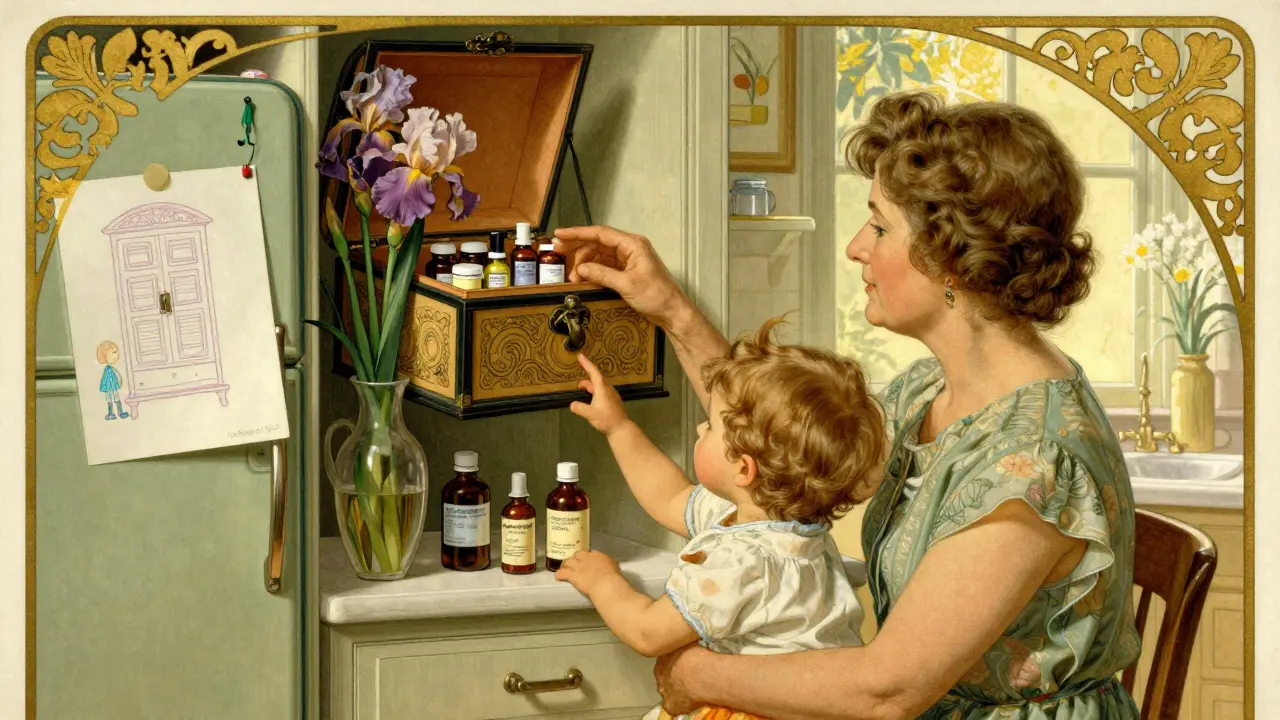
Every year, over 58,000 children under five end up in the emergency room because they got into medicine that wasn’t meant for them. And in nearly 4 out of 10 of those cases, the medicine came from a grandparent’s purse, nightstand, or kitchen counter. This isn’t about bad parenting or careless seniors-it’s about a system that never taught grandparents how to keep medicines out of reach, even when they’re doing everything else right.
Why Grandparents Are at the Center of This Problem
Grandparents are more involved in childcare than ever. One in eight U.S. children lives with a grandparent, and many of them take daily prescriptions. On average, caregiving grandparents manage 4.7 medications each-compared to just 2.1 for parents in their 30s and 40s. That’s a lot of pills. And most of them are stored where kids can reach them: on the nightstand, in a purse, or in a drawer next to the cereal box. It’s not that grandparents don’t care. In fact, 87% say they’re deeply worried about their grandkids’ safety. But they’ve been told for decades that child-resistant caps are enough. They don’t know that 30% of 4-year-olds can open them in under five minutes. They don’t realize that transferring pills into a weekly pill organizer makes them look like candy to a curious toddler. And they rarely get clear instructions from doctors or pharmacists.The Real Danger: Where Medicine Is Stored
Here’s what’s actually happening in homes where grandparents care for kids:- 29% keep medicines in non-childproof containers like pill organizers
- 12% leave prescriptions on bedroom nightstands or dressers
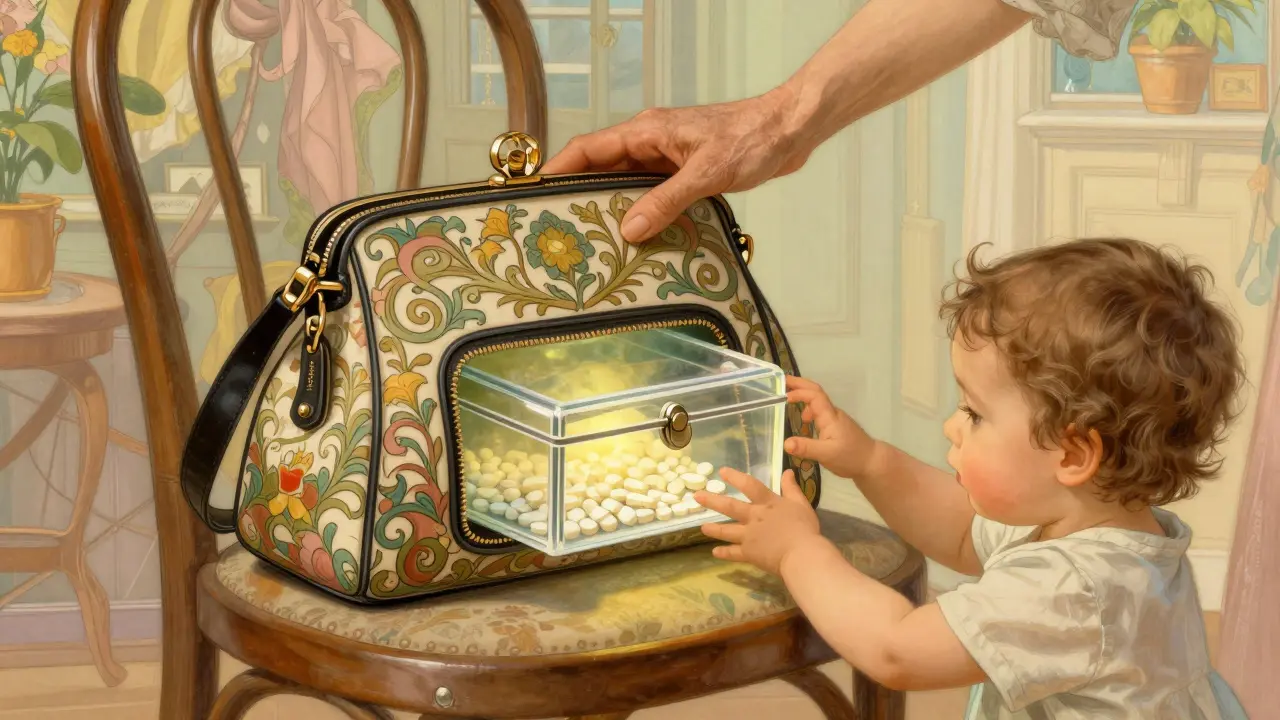
- 31% carry meds in purses or bags during visits
- Only 22% use locked storage, compared to 58% of parents
What Works: The PROTECT Initiative and Real Results
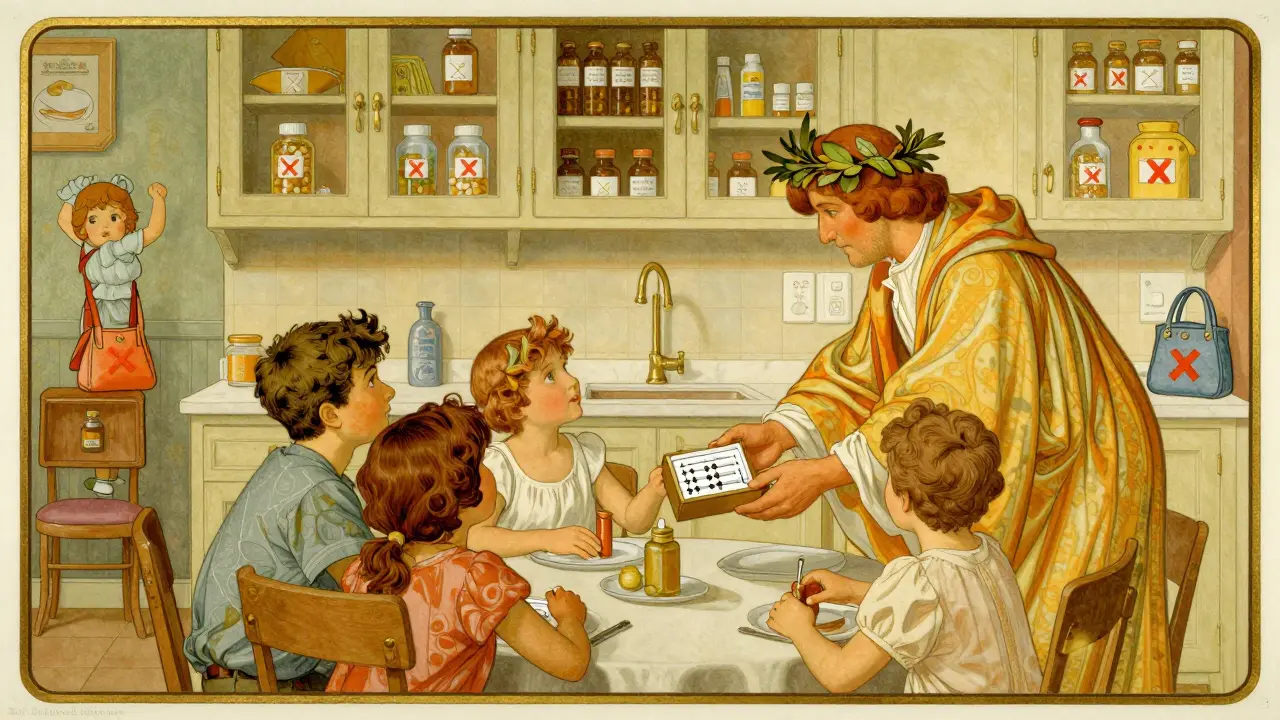
In 2010, the CDC and the Consumer Healthcare Products Association launched the Up & Away and Out of Sight campaign. It wasn’t just another pamphlet. It was a 15-minute conversation with grandparents-simple, direct, and focused on their role as caregivers. The results? After one session, safe storage jumped from 39% to 78%. That’s not a small change. That’s life-saving. The key? They didn’t say, “You’re doing it wrong.” They said, “Let’s keep our grandkids safe.” They taught grandparents to:- Store all medicines up high, in a locked cabinet
- Keep them in original containers with child-resistant caps
- Never leave pills in purses, bags, or nightstands
- Dispose of old or expired meds safely
How to Talk to Grandparents Without Making Them Feel Blamed
This is the hardest part. Many grandparents feel accused when someone says, “Don’t leave your meds out.” They’ve raised kids, raised grandkids, and never had a problem. Why now? The trick is language. Instead of “You need to lock your meds,” say:- “Let’s make sure the little ones stay safe when they visit.”
- “I know you’ve always been careful-let’s make sure we’re extra safe now.”
- “These caps aren’t foolproof. Even good parents get caught off guard.”
Make It a Family Routine
Safety isn’t just about storage-it’s about communication. Only 38% of families have a clear plan for who knows where the medicine is kept. That’s dangerous. Start a simple routine:- Have a 5-minute chat with grandparents during their first visit of the season: “Where do you keep your meds?”
- Offer to help them move meds to a locked cabinet or lockbox.
- Ask if they’ve ever had a close call. Listen. Don’t judge.
- Give them a fridge magnet with Poison Control’s number: 1-800-222-1222.
What Grandparents Can Do Right Now
You don’t need a fancy app or a doctor’s note. Here’s what to do today:- Check every drawer, purse, nightstand, and cabinet in your home. Move all medicines-prescription, OTC, vitamins, supplements-to one locked spot.
- Keep everything in its original bottle. No more pill organizers for meds you take daily.
- Get a lockbox. They cost under $20. Many pharmacies give them out for free.
- Dispose of old meds properly. Take them to a pharmacy drop-off. Don’t flush them.
- Teach your grandkids: “Medicine is not candy. Only grown-ups give medicine. If you find it, tell an adult.”
Why This Isn’t Just About Grandparents
The problem isn’t going away. By 2040, 20% of the U.S. population will be over 65. More seniors. More meds. More kids living with grandparents. The numbers are rising fast. And it’s not just grandparents. It’s any caregiver-nannies, aunts, uncles, neighbors-who watches kids while parents are at work. Everyone needs to know this. But grandparents are the biggest group with the highest risk. The good news? Change is possible. AARP’s workshops raised safe storage from 41% to 79% in just six months. Community pharmacies that offer free lockboxes and quick safety talks see 72% of grandparents follow through.What’s Missing-and What’s Coming
Right now, only 12% of Medicare plans offer medication safety counseling. Most grandparents never hear a word about it from their doctor. That’s changing. In 2023, the American Geriatrics Society added pediatric medication safety to its official guidelines for senior care. Doctors are now supposed to ask: “Do you care for young children? Let’s talk about your meds.” New tools are coming too. The CDC launched a free digital toolkit with videos in multiple languages. A mobile app is being tested that sends reminders before holidays-when kids visit and risks spike. But none of this matters unless we talk about it. Not in a clinic. Not in a pamphlet. In the kitchen, over coffee, while playing with grandkids.Final Thought: It’s Not About Control. It’s About Love.
Grandparents don’t need to be perfect. They just need to know how to protect the ones they love. A locked box isn’t a sign of distrust. It’s a sign of care. A simple conversation isn’t nagging-it’s the most important thing you can do to keep a child safe. You don’t need to be a doctor. You don’t need to buy expensive gear. Just lock it up. Talk about it. And never assume a child won’t reach for it.Why are grandparents more likely to cause pediatric medicine poisonings than parents?
Grandparents often take more medications-on average 4.7 daily versus 2.1 for parents-and are less likely to store them securely. Many believe child-resistant caps are enough, even though 30% of 4-year-olds can open them in under five minutes. They also commonly keep meds in purses, nightstands, or pill organizers, which are easy for kids to access. Unlike parents, they rarely get safety instructions from healthcare providers.
Is it really necessary to lock up medicine if I only have a few pills?
Yes. Even one pill can be dangerous. A single adult dose of blood pressure or heart medication can send a toddler to the ER. It’s not about quantity-it’s about potency. Many common medications are deadly in small amounts for children. Locking them up is the only reliable way to prevent accidents.
What if my grandparent refuses to lock up their meds?
Avoid blaming them. Instead, frame it as a family safety habit: “We’re all doing this now to keep the kids safe.” Offer to help them set up a lockbox. Suggest putting it in a place they already use, like a high closet shelf. Many change their mind after a close call or after seeing a real story. Share a news article or a friend’s experience-it often hits harder than advice.
Can I use a pill organizer for my grandparent’s daily meds?
Only if you keep the organizer locked up and still keep the original bottles for reference. Pill organizers are great for remembering doses, but they remove the child-resistant caps and labels. That makes them look like candy to kids. Always store the organizer in a locked cabinet-not on the counter or in a purse.
Where can I get a free medicine lockbox?
Many pharmacies-especially chains like CVS, Walgreens, and Rite Aid-offer free lockboxes through the CDC’s Up & Away campaign. Ask at the pharmacy counter when picking up prescriptions. Local health departments and AARP chapters also sometimes give them out. If you can’t find one, a simple $15 lockbox from a hardware store works just as well.
What should I do if my grandchild swallows medicine?
Call Poison Control immediately at 1-800-222-1222. Don’t wait for symptoms. Don’t try to make them vomit. Have the medicine bottle ready when you call-they’ll need the name, dose, and amount taken. Keep this number saved in your phone and posted on the fridge. Every minute counts.




Dan Gaytan
December 23, 2025 AT 20:53This hit me right in the feels. My grandma used to keep her blood pressure pills on the nightstand next to her candy jar. One time, my cousin (age 3) popped two like gummies. We rushed to the ER-turns out, it was just a scare, but the panic? Real. Now she’s got a little lockbox on her closet shelf. No more drama. 💙
claire davies
December 25, 2025 AT 20:44As someone who grew up in the UK with a granny who thought ‘childproof’ meant ‘kids won’t reach it if it’s on the top shelf’-spoiler: they always do-I’m so glad this is getting attention. I remember her stash: pills in a biscuit tin, vitamins in a drawer with the cookies, and her ‘emergency’ insulin in her handbag. No one ever told her it was dangerous. We didn’t even have the words for it back then. Now I send her a little lockbox every Christmas with a note: ‘For the little ones who think your purse is a treasure chest.’ She rolls her eyes, but she uses it. 🌿
Andy Grace
December 27, 2025 AT 13:17My aunt’s a caregiver for her grandkids and she swears she’s careful. But last week, I saw her pull out a pill organizer from her tote bag while waiting for the bus. No labels. Just colorful dots. I didn’t say anything. Just handed her a free lockbox from the pharmacy counter. She took it. Didn’t thank me. But she didn’t throw it out either. Progress, I guess.
Spencer Garcia
December 28, 2025 AT 06:43Lockbox under $20. Pharmacy gives them out free. Poison Control number on the fridge. Done. No need to overcomplicate it.
Jeffrey Frye
December 29, 2025 AT 10:19Let’s be real-this isn’t about grandparents being dumb. It’s about the healthcare system ignoring them. Docs don’t ask. Pharmacies don’t offer. No one says, ‘Hey, you’re raising kids now, so here’s how not to accidentally poison them.’ Meanwhile, parents get pamphlets, apps, and home visits. Grandparents? ‘Here’s your prescription, have a nice day.’ It’s systemic neglect wrapped in ‘they should know better.’
And don’t even get me started on the pill organizers. I’ve seen grandmas transfer meds into those things like they’re packing lunchboxes. No labels. No caps. Just little rainbow pills sitting next to the gummy vitamins. A 2-year-old doesn’t care about ‘prescription’ or ‘OTC.’ They see color. They see candy. And they go for it.
Also, the CDC’s campaign? Brilliant. But it’s still a drop in the bucket. Only 12% of Medicare plans even mention this? That’s criminal. We’re talking about kids dying from pills that cost $3. We need mandatory safety counseling at every senior wellness check. Not optional. Not ‘if you have time.’ Mandatory.
And for the love of god, stop calling it ‘grandparent safety.’ It’s not a niche issue. It’s a public health crisis hiding in plain sight. Every grandparent who takes meds is a potential hazard zone if we don’t act. And we’re not acting. We’re just writing blog posts and patting ourselves on the back.
My uncle took his grandkids’ Tylenol bottle as a ‘reminder’ to lock his stuff up. He still has it. On his desk. As a warning. That’s the kind of change we need. Not guilt. Not shame. Just a damn bottle on the counter.
Lindsey Kidd
December 29, 2025 AT 18:40I love how this post frames it as love, not control. 🥹 My grandma used to say, ‘I raised three kids, I know what I’m doing.’ Then she saw a video of a toddler swallowing a blood pressure pill and just… broke down. Now she keeps everything locked and even has a little sign on the box: ‘Grandma’s Special Vitamins-Ask First!’ 😊 She lets the grandkids help her pick out the lockbox color. It’s become a ritual. No lectures. Just love. And a lock.
Usha Sundar
December 30, 2025 AT 09:55My sister’s husband’s mom hides her meds in the cookie jar. Said it’s ‘easier to remember.’ Kid found them. Called 911. Mom cried for three days. Now she’s in therapy. And so is the kid.
Abby Polhill
December 30, 2025 AT 17:57There’s a clear epidemiological gap here. The geriatric care paradigm remains pharmacocentric, with minimal integration of pediatric environmental risk mitigation. Grandparents, as non-professional caregivers, operate in a regulatory vacuum where medication safety protocols are neither codified nor incentivized. The Up & Away initiative represents a rare, low-cost, high-yield intervention in the social determinants of pediatric toxicity. We need policy-level scaling: CMS reimbursement for safety counseling, mandatory inclusion in Medicare Annual Wellness Visits, and standardized caregiver education modules in senior centers. Until then, we’re just bandaging a hemorrhage with tissue paper.
Harsh Khandelwal
January 1, 2026 AT 00:13They’re just pushing this so they can sell more lockboxes. ‘Oh no, grandma’s meds are dangerous!’ Meanwhile, the real problem? Big Pharma making pills that look like candy. And the FDA lets it slide. Lockboxes? Yeah, sure. But why not ban pill designs that look like Skittles? Why not make all meds taste like dirt? Why are we blaming grandmas instead of the companies that make pills that look like gummies? This whole thing’s a scam. They want your money. Not your grandkids’ safety.