
Imagine taking a medication that saves your mental health but turns toxic if you take a common painkiller or forget to drink enough water. That is the reality for millions of people managing bipolar disorder with Lithium, a mood stabilizer with a narrow therapeutic index requiring careful monitoring due to significant risks of toxicity from drug interactions and physiological changes. Lithium has been a cornerstone treatment since its FDA approval in 1970, but it comes with a catch: the difference between a helpful dose and a dangerous one is tiny. The therapeutic range sits between 0.6 and 1.2 mmol/L. Go slightly above that, and you risk severe toxicity. This guide breaks down exactly which drugs and lifestyle factors push lithium levels into the danger zone, so you can stay safe.
The Narrow Therapeutic Index Explained
To understand why interactions matter, you first need to grasp what "narrow therapeutic index" means. Most medications have a wide safety margin. If you accidentally take a bit too much ibuprofen, you might get an upset stomach, but you won't end up in the hospital. Lithium is different. It stays in your body longer and relies almost entirely on your kidneys to filter it out-about 95% of lithium is excreted unchanged through renal elimination. Because your kidneys handle both salt and water balance, anything that affects how your kidneys work will directly change how much lithium stays in your blood. When your kidneys hold onto sodium, they also hold onto lithium. When they flush sodium, they flush lithium. This biological link is the root cause of most lithium-related emergencies.
NSAIDs: The Silent Danger
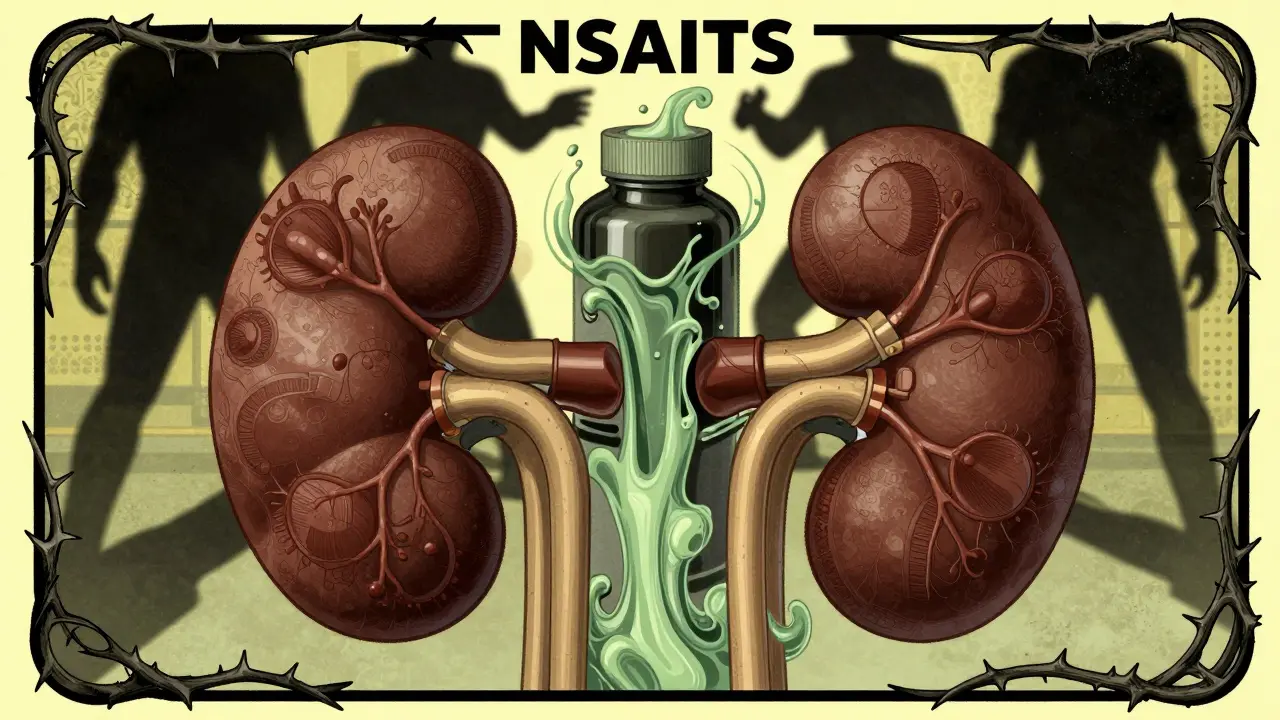
Non-steroidal anti-inflammatory drugs (NSAIDs) are among the most common culprits behind lithium toxicity. You likely know these as ibuprofen, naproxen, or aspirin. They work by blocking prostaglandins, chemicals that cause inflammation and pain. But prostaglandins also help keep blood vessels in your kidneys open. When NSAIDs block them, those vessels constrict, reducing the glomerular filtration rate. In simpler terms, your kidneys slow down their filtering process. Since lithium depends on this filtration to leave your body, it builds up in your bloodstream.
The severity varies by drug type. Indomethacin causes the most significant spike, increasing lithium levels by 30% to 60%. Ibuprofen raises levels by 25% to 40%, while celecoxib, a COX-2 inhibitor, causes a smaller but still risky increase of 15% to 30%. This interaction usually kicks in within the first week of starting an NSAID. Elderly patients or those who are already dehydrated face even higher risks because their kidneys are less efficient at compensating for these changes. A fatal case reported by Medsafe New Zealand involved a 72-year-old woman who developed lethal toxicity after adding an NSAID to her regimen of lithium and an ACE inhibitor. Her lithium levels had only been sporadically monitored, highlighting how quickly things can go wrong when assumptions replace checks.
Diuretics: Water Pills and Lithium Levels
If NSAIDs are the silent danger, diuretics are the loud alarm. Often called "water pills," diuretics are prescribed for high blood pressure and heart failure. They force your kidneys to dump excess fluid and salt. However, lithium mimics sodium in your body. When your kidneys lose sodium, they try to conserve it by reabsorbing it from the urine. In the process, they mistakenly reabsorb lithium instead of letting it pass out. This mechanism makes certain diuretics particularly problematic.
| Diuretic Class | Example Drugs | Effect on Lithium | Risk Level |
|---|---|---|---|
| Thiazide Diuretics | Hydrochlorothiazide, Chlorthalidone | Increases by 25-50% | High |
| Loop Diuretics | Furosemide (Frusemide) | Increases by 10-25% | Moderate |
| Potassium-Sparing | Spironolactone | Variable/Unpredictable | Moderate |
| Osmotic Diuretics | Mannitol | Decreases by 15-30% | Low (Risk of subtherapeutic levels) |
Thiazide diuretics like hydrochlorothiazide are the most dangerous. They can cause a rapid rise in serum lithium concentrations within 7 to 10 days. Loop diuretics like furosemide pose a risk too, but it is generally less pronounced. Interestingly, some diuretics actually lower lithium levels. Osmotic diuretics (mannitol) and carbonic anhydrase inhibitors (acetazolamide) decrease lithium levels by 15% to 30%. While this sounds safer, it creates a different problem: your lithium levels might drop below the therapeutic range, leading to a relapse of bipolar symptoms. Herbal diuretics found in weight-loss teas also present an underappreciated risk. They can cause dangerous elevations through dehydration despite being marketed as "natural." Always check labels for hidden diuretic ingredients.
Dehydration and Sodium: The Lifestyle Factors
Medications aren't the only thing that shifts lithium levels. Your daily habits play a massive role. Dehydration is a critical risk multiplier. Lithium levels rise proportionally when the amount of water in your blood decreases. Even mild dehydration, defined as losing just 2% to 3% of your body weight in water, can increase lithium concentrations by 15% to 25%. This happens during intense exercise, long-distance air travel, fever, diarrhea, or vomiting. The NHS Borders guidelines stress that keeping up fluid intake is essential, especially in situations where there is a risk of dehydration and increased loss of salt.
Sodium intake is equally important. Lithium and sodium compete for absorption in your kidneys. If you consume less salt in your diet, your kidneys hold onto more lithium, raising its levels in your blood. Conversely, eating more salt decreases lithium levels. Dietary sodium changes of just 20 to 30 mmol per day can alter lithium concentrations by 10% to 20%. This means switching to a low-salt diet for heart health without adjusting your lithium dose could inadvertently trigger toxicity. Consistency is key. Drastic swings in either hydration or salt intake are far more dangerous than moderate, steady consumption.

Recognizing Early Signs of Toxicity
You cannot rely on feeling fine to know your lithium levels are safe. Early symptoms of lithium toxicity are often subtle and easily mistaken for other issues. According to clinical data, diarrhea occurs in 68% of early toxicity cases. Lightheadedness affects 52% of patients, and drowsiness hits 47%. As levels rise further, you may experience blurred vision (31%) and tinnitus, a ringing in the ears (29%). Severe cases can progress to seizures, coma, and permanent renal impairment. These symptoms don't always appear all at once. They creep in. If you start an NSAID or feel dehydrated and notice a slight tremor in your hands or unusual fatigue, do not ignore it. These are your body's warning signals.
Safety Protocols and Monitoring
Expert consensus strongly recommends avoiding concurrent use of lithium with NSAIDs and thiazide diuretics whenever possible. If co-administration is unavoidable, clinicians typically prescribe lower doses of the interacting drug, limit the duration of use, and adjust the lithium dose accordingly. Close monitoring is non-negotiable. Guidelines specify that lithium concentrations should be checked weekly for the first month after adding an NSAID or changing diuretic therapy. Patients traveling to hot climates or experiencing gastroenteritis require specific counseling about hydration and immediate testing if symptoms arise. Shared care with a renal specialist is often recommended for high-risk patients, including the elderly and those with chronic physical illness. Despite these clear protocols, gaps remain. Sporadic monitoring still occurs in practice, underscoring the need for patient vigilance. You are the last line of defense. Know your baseline, track your symptoms, and communicate openly with your healthcare provider about every supplement and over-the-counter medication you take.
Can I take Tylenol (Acetaminophen) with Lithium?
Yes. Acetaminophen (Tylenol/Paracetamol) does not interact with lithium in the same way NSAIDs do. It is generally considered a safer alternative for pain relief and fever reduction for patients on lithium therapy. However, always consult your doctor before starting any new medication.
How quickly do NSAIDs affect lithium levels?
The interaction typically occurs within the first week after initiating NSAID use. In some cases, especially with high-dose indomethacin, levels can rise significantly within a few days. Regular monitoring during this initial period is crucial.
Does coffee or alcohol affect lithium levels?
Alcohol can cause dehydration, which indirectly raises lithium levels. Caffeine may have a mild diuretic effect, but its impact is usually less significant than prescription diuretics. The primary concern with both is maintaining consistent hydration and sodium intake.
What should I do if I miss a lithium dose?
Do not double up on doses to make up for a missed one. Take the next scheduled dose as usual. Missing a single dose rarely causes immediate withdrawal effects, but doubling up increases the risk of toxicity. Contact your pharmacist or doctor if you frequently miss doses.
Are there natural supplements that interact with lithium?
Yes. St. John's Wort can reduce the effectiveness of lithium. Herbal diuretics, such as dandelion or hibiscus tea in large quantities, can increase lithium levels through dehydration and sodium loss. Always disclose supplement use to your healthcare provider.