
You might have heard a pharmacist or doctor mention switching a medication to something "equivalent." In the medical world, this is often called therapeutic interchange is the practice of substituting a prescribed medication with a chemically different drug from the same therapeutic class that is expected to produce substantially equivalent clinical outcomes. But here is the thing: there is a common misconception that this involves jumping between different classes of drugs. It doesn't. Doing that would be a clinical change in therapy, not an interchange. Real therapeutic interchange stays within the same family of drugs to ensure the patient gets the same result, usually at a lower cost.
The Quick Breakdown
- What it is: Switching a drug for another in the same class (e.g., one statin for another).
- What it isn't: Switching to a completely different type of medication (e.g., a statin to a blood pressure med).
- Where it happens: Mostly in hospitals and skilled nursing facilities with a set formulary.
- The Goal: Better cost control and standardized care without hurting patient health.
Why Providers Use Therapeutic Interchange
If two drugs do the same thing, why not just use the one that is cheaper or easier to manage? That is the core logic here. Hospitals and long-term care facilities use a formulary is a continually updated list of medications that are approved for use within a specific healthcare setting to standardize care. When a doctor prescribes something not on that list, the pharmacy might suggest a therapeutic alternative.
This isn't just about saving money, though the financial impact is huge. For instance, skilled nursing facilities can save tens of thousands of dollars a month by streamlining their drug choices. More importantly, it reduces the risk of errors. When a facility uses a limited set of proven drugs, the staff becomes more familiar with the side effects and dosing requirements of those specific medications, which generally leads to safer patient care.
Therapeutic Interchange vs. Generic Substitution
People often confuse therapeutic interchange with generic substitution, but they are very different processes. Generic substitution is straightforward: the pharmacist swaps a brand-name drug for its exact chemical generic. The molecules are the same; only the brand name and price change.
Therapeutic interchange is a bigger leap. The drugs are chemically different, but they belong to the same class and achieve the same goal. Think of it like swapping a Ford for a Toyota-they are different brands and have different engines, but they both get you to the same destination safely. Because this involves a different chemical compound, it requires more oversight than a simple generic swap.
| Feature | Generic Substitution | Therapeutic Interchange |
|---|---|---|
| Chemical Structure | Identical | Different |
| Therapeutic Class | Same | Same |
| Clinical Outcome | Equivalent | Substantially Equivalent |
| Approval Needed | Usually automatic | P&T Committee / Prescriber |
Who Actually Makes the Decision?
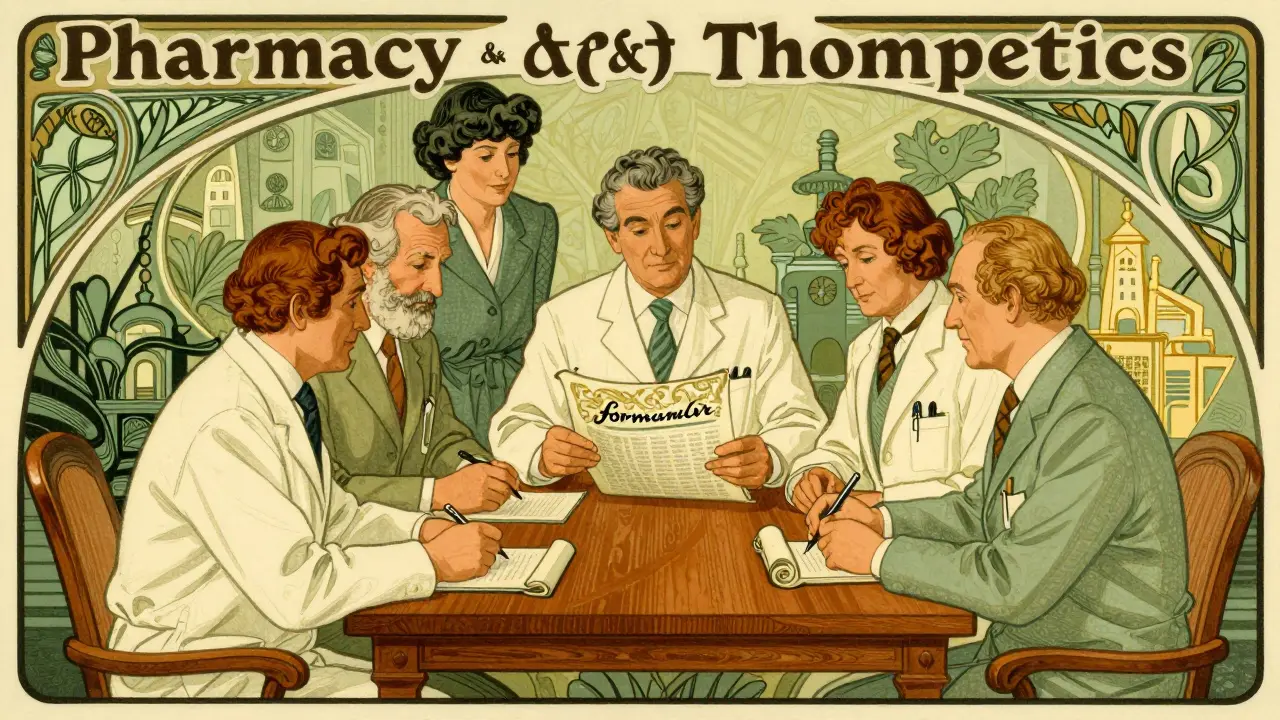
A pharmacist can't just wake up and decide to change a patient's medication. That would be dangerous. Instead, the process is governed by a Pharmacy and Therapeutics Committee is a multidisciplinary team of physicians and pharmacists responsible for establishing and monitoring a facility's medication policies , often called the P&T Committee. This group looks at evidence-based research to decide which drugs are the most effective and cost-efficient for their specific patient population.
Once the P&T Committee approves a list of interchanges, a protocol is set. In many cases, the prescribing doctor must sign a "TI letter" or a global agreement. This document tells the pharmacy, "If I prescribe Drug A, feel free to dispense Drug B instead." Without this signature or a direct conversation between the pharmacist and the doctor, the switch typically doesn't happen, especially in community pharmacies where regulations are much stricter than in hospitals.
The Risks and Guardrails
Is it always safe to switch? Mostly, but not always. This is why the rule is that interchanges must happen within the same class. If a provider recommends a drug from a different class, they are no longer performing a therapeutic interchange; they are changing the clinical treatment plan. That requires a completely different level of medical justification.
The danger comes when a substitution is made for a drug that requires very precise dosing or has a narrow therapeutic index. In these cases, even a "similar" drug can cause a problem. This is why the American College of Clinical Pharmacy emphasizes that exceptions to the policy must be allowed. If a patient has a specific allergy or a history of failing on the formulary-approved drug, the provider must be able to override the interchange and use the original prescription.

Implementing the Process in Real Settings
In a fast-paced hospital, this process is mostly invisible to the patient. The pharmacist identifies the non-formulary drug, checks the P&T approved list, and makes the switch. In long-term care, it's a bit more administrative. The focus is on "global therapeutic interchange," which allows providers to increase compliance with the formulary across the entire resident population.
However, the transition isn't always smooth. Some doctors dislike the feeling of losing control over the specific drug they chose. To fix this, the best programs focus on transparency. When the healthcare team, the patient, and the family are all in the loop, the switch is seen as a collaborative effort to optimize care rather than a cost-cutting measure imposed by the pharmacy.
Can a pharmacist change my medication without asking my doctor?
Generally, no. In community pharmacies, the pharmacist must contact the prescriber for a new prescription. In hospitals or nursing homes, it can happen if the doctor has already signed a pre-approved agreement (a TI letter) allowing the Pharmacy and Therapeutics Committee to substitute within the same drug class.
Is therapeutic interchange the same as using a generic drug?
No. Generic substitution uses the exact same chemical compound. Therapeutic interchange uses a different chemical compound that is in the same therapeutic class and provides a substantially similar clinical effect.
Why wouldn't a provider switch to a different class of drugs?
Switching to a different class of drugs changes the way the medication works in the body. This is a clinical change in therapy, not an interchange. Doing so could lead to different side effects, different efficacy levels, and would require a new medical evaluation of the patient's needs.
Who decides which drugs are "equivalent" for interchange?
This decision is made by a Pharmacy and Therapeutics (P&T) Committee. They use evidence-based medical research and interdisciplinary input from doctors and pharmacists to create a formulary of approved substitutions.
What happens if a patient doesn't respond well to the substituted drug?
Standard protocols allow for exceptions. If a patient has an adverse reaction or the drug isn't working, the provider can override the formulary and prescribe the original medication or another alternative.
What to do next
If you are a healthcare provider looking to start a program, your first step is assembling a multidisciplinary P&T Committee. Don't just look at the price tags; look at the clinical evidence for each drug in the class. Create clear, written protocols and get your prescribing staff to sign off on the interchange options to avoid administrative bottlenecks later.
If you are a patient, don't be afraid to ask your pharmacist why a medication was switched. Asking "Is this in the same therapeutic class as what the doctor ordered?" is a great way to ensure your care is remaining consistent and safe.