

Serotonin Syndrome Risk Estimator
Patient Profile & Medications
Risk Assessment
You are taking your daily antidepressant for mood stability. Then you get sick-nausea hits hard, maybe from a virus or chemotherapy. Your doctor prescribes ondansetron, a common antiemetic medication used to prevent nausea and vomiting. It seems harmless. But within hours, you feel jittery, confused, and your muscles start twitching. This isn’t just a bad stomach bug anymore. You might be experiencing serotonin syndrome, a potentially life-threatening condition caused by excessive serotonin activity in the brain.
This scenario highlights a critical intersection in modern medicine: the combination of antiemetics (anti-nausea drugs) and serotonergic agents (like SSRIs). While rare, this interaction can escalate quickly. Understanding the risk, recognizing the symptoms, and knowing how to manage them is vital for patients and clinicians alike.
Understanding the Mechanism of Serotonin Toxicity
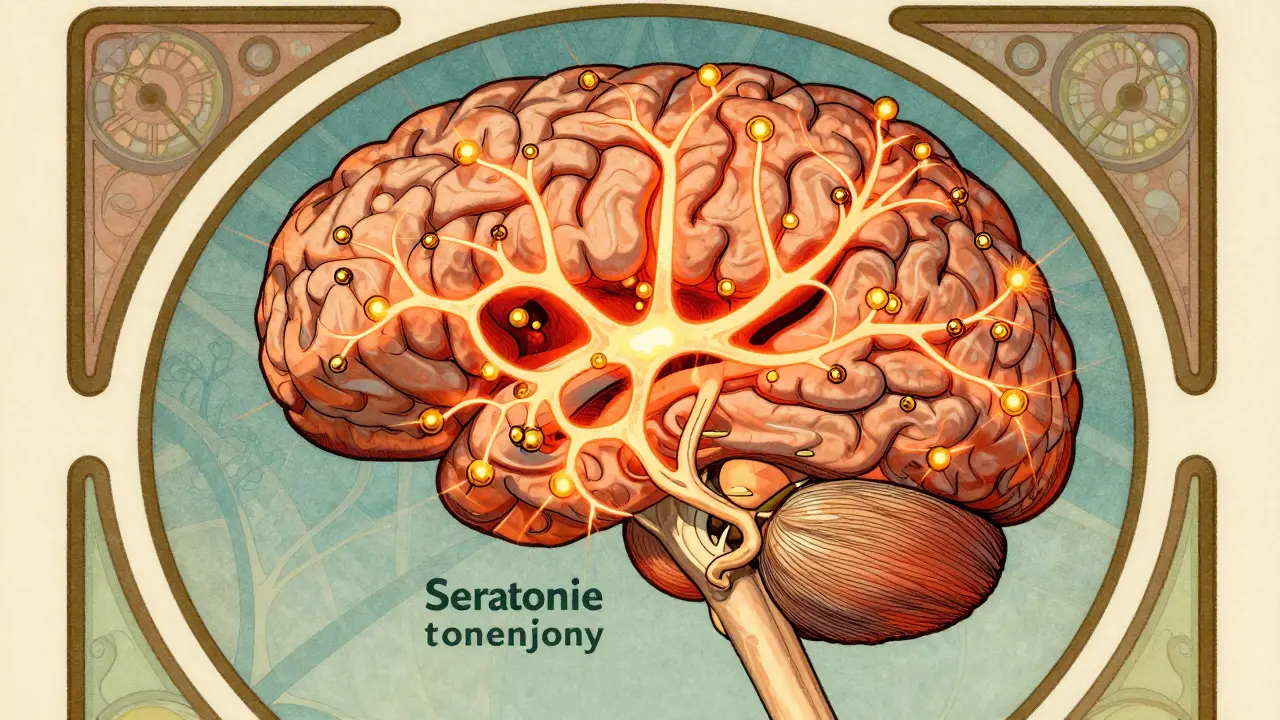
To grasp why this happens, we need to look at how serotonin works. Serotonin is a neurotransmitter that regulates mood, digestion, and other functions. Normally, it’s released into the synaptic cleft and then reabsorbed by the presynaptic neuron via the serotonin transporter (SERT). Drugs like SSRIs block this reuptake, leaving more serotonin available to stimulate receptors.
When you add certain antiemetics into the mix, the balance tips. Although many antiemetics are designed to block specific serotonin receptors (like 5-HT3), they can sometimes affect other pathways or inhibit enzymes that break down serotonin. For instance, some drugs may weakly inhibit SERT or interact with cytochrome P450 enzymes (CYP2D6, CYP3A4), which metabolize both antidepressants and antiemetics. This leads to an accumulation of serotonin, overstimulating 5-HT1A and 5-HT2A receptors. The result? A cascade of physical and mental symptoms known as serotonin syndrome.
| Antiemetic Class | Examples | Serotonin Interaction Mechanism | Risk Level |
|---|---|---|---|
| 5-HT3 Antagonists | Ondansetron, Granisetron | Potential off-target effects; CYP enzyme inhibition | Moderate (with SSRIs) |
| Dopamine Antagonists | Metoclopramide | Weak serotonin reuptake inhibition | Moderate |
| NK1 Receptor Antagonists | Aprepitant | CYP3A4 inhibition increasing SSRI levels | Low-Moderate |
| Corticosteroids | Dexamethasone | No direct serotonergic activity | Low |
Identifying High-Risk Combinations
Not all combinations are equal. The highest risk occurs when multiple serotonergic agents are used together. According to data from the FDA Adverse Event Reporting System, 85% of documented cases involve drug-drug interactions. Here are the most concerning pairings:
- SSRIs + Ondansetron: While ondansetron is a 5-HT3 antagonist, case reports suggest it may lower the threshold for serotonin syndrome in susceptible individuals, especially those with poor CYP2D6 metabolism.
- MAOIs + Any Serotonergic Antiemetic: Monoamine oxidase inhibitors (MAOIs) prevent the breakdown of serotonin. Combining them with any drug that increases serotonin levels is extremely dangerous and generally contraindicated.
- SNRIs + Metoclopramide: Metoclopramide has weak serotonin reuptake inhibitory properties. When combined with SNRIs (which also increase norepinephrine), the risk of toxicity rises significantly.
Age plays a crucial role too. Patients over 65 are disproportionately affected. Data shows that while older adults make up only about 19% of the population, they represent over 41% of serotonin syndrome cases involving ondansetron and SSRIs. Their bodies process drugs slower, and they often take multiple medications, compounding the risk.
Recognizing the Symptoms Early
Catching serotonin syndrome early can save lives. The symptoms typically appear within hours of starting or increasing a dose. They fall into three categories: mental status changes, autonomic instability, and neuromuscular abnormalities.
- Mental Status: Anxiety, agitation, confusion, restlessness. Patients may seem "wired" but tired.
- Autonomic Instability: Rapid heart rate (tachycardia), high blood pressure, sweating, fever, dilated pupils. Body temperature can spike dangerously high.
- Neuromuscular Issues: Tremors, muscle rigidity, hyperreflexia (overactive reflexes), clonus (rhythmic muscle contractions). Clonus is a key differentiator from other conditions like neuroleptic malignant syndrome.
Clinicians use the Hunter Serotonin Toxicity Criteria to diagnose the condition. It has high specificity (97%), meaning if the criteria are met, it’s very likely serotonin syndrome. Key indicators include spontaneous clonus, inducible clonus with agitation or diaphoresis, tremor with hyperreflexia, hypertonia with temperature above 38°C, or ocular clonus with agitation or diaphoresis.

Management and Treatment Protocols
If you suspect serotonin syndrome, act fast. The first step is immediate discontinuation of all serotonergic agents. Supportive care is essential: cool the patient, hydrate them, and monitor vital signs closely.
In severe cases, medication is needed. Cyproheptadine is the first-line antidote. It’s a serotonin antagonist that blocks 5-HT1A and 5-HT2A receptors. Typical dosing starts at 4-8 mg orally, repeated every 2 hours until symptoms improve. For patients who cannot take oral meds, IV options like dexmedetomidine are emerging as effective alternatives due to their ability to modulate serotonin release without causing sedation as heavily as benzodiazepines.
Prevention is better than cure. If a patient on an SSRI needs anti-nausea treatment, consider non-serotonergic options first. Dexamethasone, a corticosteroid, is highly effective for nausea and carries no serotonin risk. If a 5-HT3 antagonist is necessary, use the lowest effective dose and monitor closely, especially in elderly patients or those with known CYP2D6 poor metabolizer status.
The Role of Pharmacogenomics
Genetics matter. About 7-10% of Caucasian populations are "poor metabolizers" of CYP2D6. These individuals break down drugs like ondansetron much slower, leading to higher serum concentrations. The Clinical Pharmacogenetics Implementation Consortium now recommends genotyping for patients requiring ondansetron while on serotonergic medications. Knowing your metabolic status can help doctors choose safer alternatives or adjust doses proactively.
For example, switching from ondansetron to palonosetron-a second-generation 5-HT3 antagonist with different binding kinetics-has been shown to reduce serotonin syndrome risk by over 60% in some cohorts. Palonosetron binds more tightly to the receptor and doesn’t rely as heavily on CYP2D6 for metabolism, making it a safer bet for complex polypharmacy scenarios.
Can ondansetron alone cause serotonin syndrome?
It is highly unlikely. Most experts agree that ondansetron alone does not cause serotonin syndrome because it blocks 5-HT3 receptors rather than stimulating them. However, in rare cases of extreme overdose or in individuals with unique metabolic profiles, off-target effects could theoretically contribute, but concurrent use of other serotonergic drugs is almost always present in reported cases.
How long does serotonin syndrome last?
Symptoms usually resolve within 24 to 72 hours after stopping the offending drugs and starting supportive care. In mild cases, recovery can happen in less than 24 hours. Severe cases requiring ICU care may take several days to fully stabilize, depending on the half-life of the drugs involved and the extent of organ stress.
What is the safest antiemetic for someone on an SSRI?
Dexamethasone is considered one of the safest options as it has no serotonergic activity. Other non-serotonergic options include antihistamines like promethazine (though these have sedative side effects) or phenothiazines like prochlorperazine, though caution is still advised with phenothiazines due to potential dopamine blockade interactions. Always consult a pharmacist or doctor before combining medications.
Why are elderly patients at higher risk?
Elderly patients often have reduced liver and kidney function, which slows drug metabolism and excretion. They are also more likely to be on multiple medications (polypharmacy), increasing the chance of interactions. Additionally, age-related changes in blood-brain barrier permeability can make the brain more sensitive to serotonin fluctuations.
Is there a genetic test for this risk?
Yes. Testing for CYP2D6 polymorphisms can identify "poor metabolizers" who process certain antiemetics and antidepressants slowly. This information helps clinicians tailor drug choices and doses to minimize the risk of toxicity. It is particularly recommended for patients requiring long-term or high-dose therapy with interacting drugs.





Sumit gupta
June 25, 2026 AT 17:19hey guys, just wanted to drop a quick note here. i read through this and it makes sense why my grandma got so weird after her chemo meds. she was on zoloft and then they gave her that nausea pill. totally spaced out for days. good info though.
Tucker Brown
June 26, 2026 AT 05:04they dont want you to know the real side effects. big pharma pushes these combos because the stock prices go up when people stay sick longer. its all about the money not your health. wake up sheeple.
Dale Simpson
June 26, 2026 AT 08:00thats super scary stuff man! but hey at least we have options like dexamethasone right? keep staying safe everyone and always ask your doc before mixing pills! u can do it!
Charlotte Stuart
June 26, 2026 AT 22:57It is frankly astonishing how many medical professionals still prescribe ondansetron without considering the patient's full pharmacological profile. The article mentions CYP2D6 polymorphisms, yet in my experience, most general practitioners treat genetic testing as an optional luxury rather than a clinical necessity. This negligence borders on malpractice, especially given the high prevalence of serotonin syndrome in elderly populations who are already vulnerable due to polypharmacy. One would think that basic pharmacokinetics would be common knowledge, but apparently, we must rely on internet articles to remind doctors of fundamental drug interactions. It is a disgrace to the profession.
krystal Live
June 27, 2026 AT 03:50omg thx for posting this!! i had no idea abt the serotonin thing with anti-nausea meds. im gonna show this to my mom cause she takes ssris and gets sick all the time. hope she stays safe!! ur the best for sharing this info <3
Kimberly Maten-ao
June 29, 2026 AT 02:26Wait, so if metoclopramide has weak serotonin reuptake inhibition, does that mean it’s basically an SSRI in disguise? That seems like a huge oversight in labeling. I’ve seen patients prescribed Reglan while on SNRIs without any warning labels. Isn’t there a regulatory body that should flag this interaction more prominently?
Hema Khimasia
June 29, 2026 AT 06:16The epistemological framework surrounding serotonin toxicity requires a deeper philosophical inquiry into the nature of neurotransmitter regulation. We often view serotonin merely as a chemical messenger, yet its role in consciousness and bodily autonomy suggests a more complex ontological status. When we inhibit reuptake or block receptors, we are not just adjusting levels; we are altering the subjective experience of reality itself. The symptoms described-agitation, confusion-are not merely physiological errors but disruptions in the phenomenological continuity of the self. Thus, management protocols must consider not only biochemical restoration but also the restoration of the patient’s coherent narrative of their own existence.
Annemarie Kautz
June 29, 2026 AT 19:02ugh another long boring post. nobody reads all this crap. just take the pill and feel better lol :P
alexander barrera
June 30, 2026 AT 06:22This is why we need stricter controls on foreign-made medications 🇺🇸. Our domestic pharmaceutical standards are superior, yet we allow these dangerous interactions to slip through. It’s a failure of American leadership to protect our citizens from such preventable harm. Wake up and support local, safe healthcare practices instead of relying on globalized drug networks that prioritize profit over safety 🚩💊.
Koushiki Behera
June 30, 2026 AT 20:54It is important to approach this topic with compassion and understanding. Many individuals suffer silently due to fear of judgment or lack of awareness. Let us create a supportive environment where patients feel empowered to discuss their medication concerns openly. Together, we can foster a community that values holistic well-being and informed decision-making 🌿✨.
Sonam Norbu
July 1, 2026 AT 01:23Stop blaming the drugs and start taking responsibility for your own health. If you’re confused, maybe you shouldn’t be mixing meds in the first place. Common sense isn’t common anymore.