
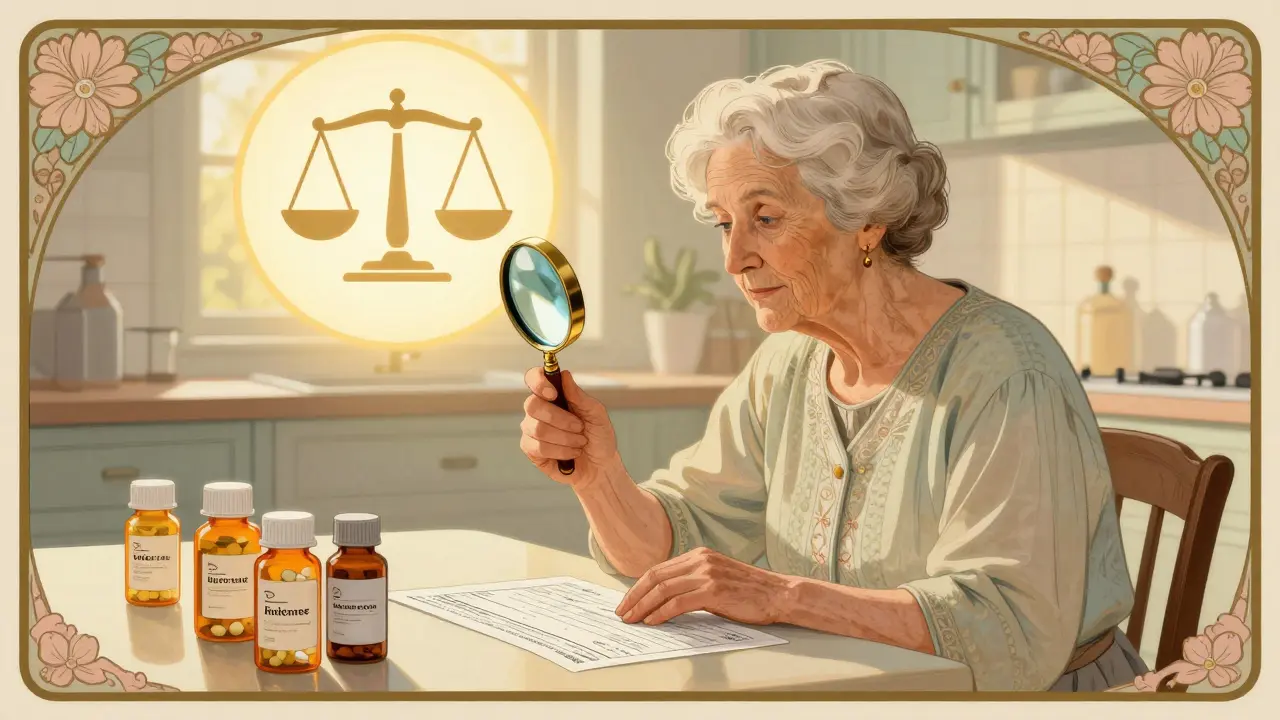
When you’re over 65, taking medication isn’t just about treating a condition-it’s about staying safe. Generic drugs make up nearly 9 out of 10 prescriptions filled for older adults, and for good reason: they’re cheaper, widely available, and legally required to work the same as brand-name versions. But here’s the thing-generic drug safety in older adults isn’t just about whether the active ingredient matches. It’s about how aging changes your body’s response to those ingredients, how multiple drugs interact, and how small differences in inactive ingredients or labeling can lead to big problems.
Why Aging Changes How Drugs Work
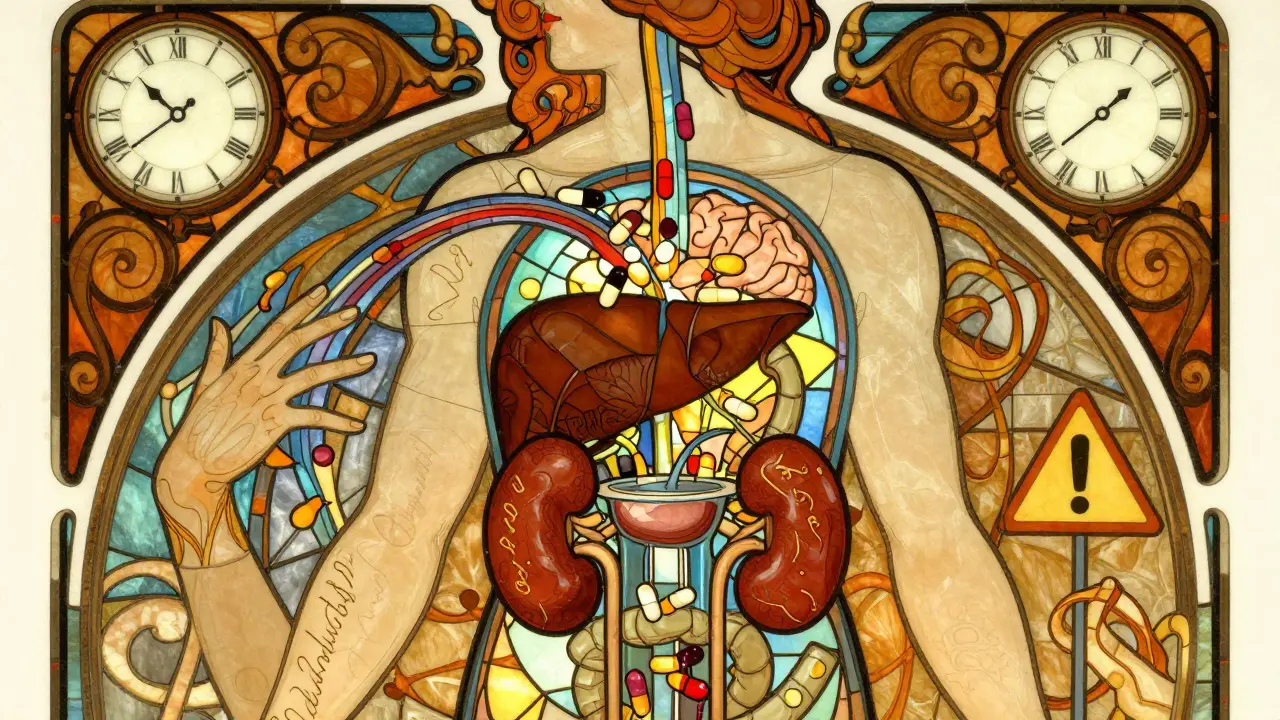
Your body doesn’t process medicine the same way at 70 as it did at 40. As you age, your liver slows down. Your kidneys filter less. Fat increases, water decreases. That means drugs stick around longer, build up in your system, and can become toxic-even at doses that were perfectly safe years ago. A 2023 study found that metabolism can drop by up to 30% in people over 75. A normal dose for a younger person might be an overdose for someone older. This is why doctors often start seniors on lower doses, even for generics. It’s not because the drug is weaker. It’s because the body can’t handle the same amount. Certain drug classes are especially risky. Beta blockers can slow your heart too much, leading to dizziness or fainting. Digoxin, used for heart rhythm, can cause nausea, confusion, or dangerous arrhythmias. Insulin and sulfonylureas for diabetes? They’re linked to low blood sugar, which increases fall risk by 20-25%. And falls in older adults don’t just mean bruises-they mean broken hips, brain injuries, and loss of independence.Polypharmacy: The Silent Danger
Taking five or more medications? You’re not alone. Nearly half of older adults on Medicare fill 48 prescriptions a year, and 89% of those are generics. But here’s the scary part: the risk of an adverse drug reaction jumps from 13% with two drugs to 58% with five, and hits 82% when you’re on seven or more. It’s not the generics themselves that are the problem. It’s the combination. A blood pressure pill, a painkiller, an antidepressant, a sleep aid, and a muscle relaxer might each be fine on their own. Together? They can cause confusion, falls, kidney failure, or even respiratory depression. The Beers Criteria, updated in 2023 by the American Geriatrics Society, lists 50+ medications that should be avoided or used with extreme caution in older adults-regardless of whether they’re generic or brand-name. One of the biggest red flags? Combining opioids with benzodiazepines or gabapentinoids. A 2015 study in JAMA Internal Medicine found this combo increases overdose risk by 154%. And because these drugs are often prescribed for pain, anxiety, or insomnia, they’re common in older adults. The generic versions carry the same danger.Are Generic Drugs Really the Same?
The FDA says yes. Generic drugs must prove they deliver the same amount of active ingredient into your bloodstream as the brand-name version-within 80-125% of the original. That’s a tight range. For most drugs, it works fine. But for drugs with a narrow therapeutic index (NTI), even tiny differences matter. Warfarin is the classic example. It’s used to prevent strokes, but the difference between too little and too much can be life-threatening. A 2023 study found that 42% of older adults believe generic warfarin is less safe than Coumadin. Yet clinical studies show generic warfarin is 98.7% equivalent. The fear isn’t based on science-it’s based on perception. The same goes for levothyroxine (used for thyroid issues). Some patients report changes in TSH levels after switching to generic. While this could be due to minor formulation differences, it’s also possible the change disrupted a stable routine. Consistency matters more than you think. If you’ve been on the same version for years, switching-even to an FDA-approved generic-can cause instability.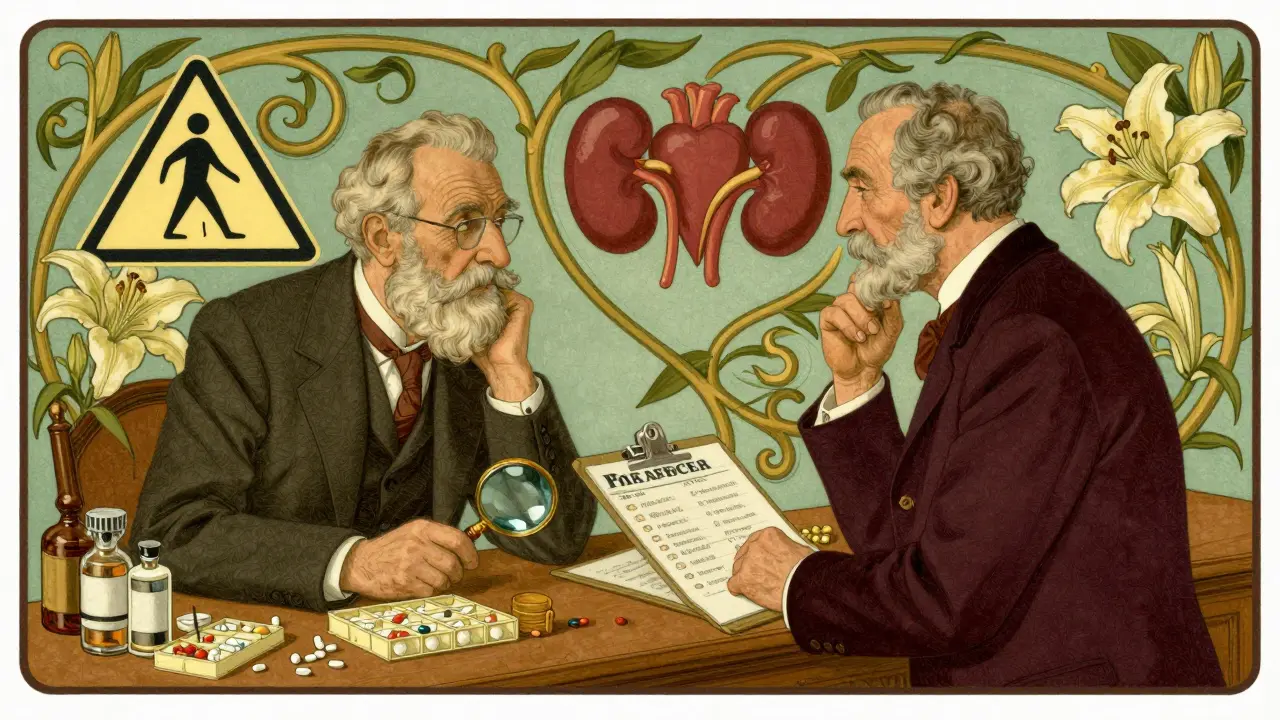
What the Experts Say
Dr. Dima Qato, a leading researcher on elderly medication use, found that when pharmacists take 10 minutes to explain generics to older patients, acceptance and proper use go up by 37%. That’s not a small number. It means education works. Dr. Michael Steinman, a geriatrician at UCSF, put it bluntly: “The issue isn’t generic versus brand. It’s whether the drug is appropriate for someone with multiple chronic conditions.” A pill that’s safe for a 60-year-old with one disease might be dangerous for an 80-year-old with heart failure, kidney disease, and dementia. The FDA stands by its position: generics are just as safe. But they’re also updating their monitoring. In 2022, the FDA launched age-stratified tracking for generics. Early data from their Adverse Event Reporting System shows that while overall safety profiles are similar, older adults over 80 report generic warfarin side effects 1.8 times more often. Why? Possibly because they’re more sensitive, or because they’re taking more drugs that interact with it.What You Can Do to Stay Safe
You don’t have to guess. There are concrete steps you can take to reduce risk:- Get a full medication review every three months. A pharmacist can spot duplicates, interactions, and outdated prescriptions. Studies show this cuts adverse events by 27%.
- Use a pill organizer. Color-coded, time-sorted containers reduce errors by 34%. Automated dispensers that lock and alert you are even better.
- Ask for large-print labels. Nearly two-thirds of seniors have vision problems. If you can’t read the label, you can’t take it safely.
- Keep a current list. Write down every pill, supplement, and over-the-counter drug. Bring it to every doctor visit. This cuts duplicate prescriptions by 41%.
- Check expiration dates. 22% of medication errors in seniors come from expired or improperly stored drugs. Heat, humidity, and light can break down even generics.
- Don’t switch without talking to your doctor. If you’re on a stable dose of warfarin, levothyroxine, or seizure medicine, changing generics without medical guidance can be risky.
When to Be Extra Cautious
The Beers Criteria 2023 update added new red flags:- Rivaroxaban (Xarelto): Avoid in adults 75+ unless absolutely necessary. It increases GI bleeding risk by 28% compared to warfarin.
- SNRIs (like venlafaxine): Linked to a 37% higher fall risk. If you’ve fallen before, this class may not be safe.
- Aspirin for primary prevention: No longer recommended for anyone 70+. The bleeding risk outweighs any heart benefit.
- Cyclobenzaprine (Flexeril): A muscle relaxant that causes dizziness and confusion. It’s on the Beers list for a reason.



Sumit Mohan Saxena
February 26, 2026 AT 20:15Generic medications are an essential component of sustainable healthcare for aging populations, particularly in resource-constrained settings. The FDA’s bioequivalence standards are rigorous and well-documented, and meta-analyses consistently demonstrate non-inferiority in clinical outcomes across therapeutic classes. The perception of inferiority often stems from anecdotal reports and lack of patient education, not pharmacological evidence.
For drugs with narrow therapeutic indices-such as warfarin or levothyroxine-consistent sourcing and pharmacist-led monitoring are critical. Switching formulations without clinical correlation is the true risk, not the generic label itself.
Health systems should prioritize pharmacist-led medication reviews, as they reduce adverse events by over 25%. Pill organizers, large-print labels, and digital adherence tools are low-cost, high-impact interventions that deserve wider implementation.
Ultimately, the issue is not generic vs. brand, but systemic fragmentation in geriatric pharmacotherapy. We need integrated electronic health records that flag potential interactions and alert prescribers to Beers Criteria violations. Until then, education and vigilance remain our best tools.
Sneha Mahapatra
February 28, 2026 AT 18:40It’s funny how we treat medicine like it’s one-size-fits-all, even when we know our bodies change so much with age.
I think about my grandmother-she took the same pills for years, then switched to generic, and suddenly she was dizzy all the time. No one told her it wasn’t about the drug being weaker-it was about her kidneys slowing down, and the timing of her other meds shifting.
It’s not just science. It’s about dignity. Being able to read your own label. Knowing why you’re taking something. Not feeling like a number in a system that’s too busy to slow down.
I wish more doctors sat down and said, ‘Let’s go through this together.’ Not ‘Here’s your script.’
Generics aren’t the enemy. Disconnection is.
Byron Duvall
March 2, 2026 AT 09:55Katherine Farmer
March 2, 2026 AT 10:21How quaint. The notion that ‘education’ solves the systemic collapse of geriatric pharmacotherapy is almost endearing. You’re treating symptoms, not the disease.
The real issue? A healthcare system that incentivizes volume over vigilance. A regulatory body that approves generics based on plasma concentration curves from young, healthy volunteers. A medical education that still teaches ‘one size fits all’ dosing for octogenarians.
And yet, here we are, praising pill organizers like they’re a moral victory. The truth? We’re patching a sinking ship with duct tape and optimism. The solution isn’t more pamphlets-it’s a complete overhaul of how we define ‘appropriate prescribing’ for the elderly.
Also, the 37% improvement from pharmacist counseling? That’s not progress. It’s a damning indictment of how little doctors do.
Brandie Bradshaw
March 2, 2026 AT 14:46Angel Wolfe
March 3, 2026 AT 22:23Sophia Rafiq
March 5, 2026 AT 20:43Eimear Gilroy
March 6, 2026 AT 21:47I’m from Ireland, and here, generics are the default unless a doctor specifically writes ‘brand necessary.’ We’ve done this for over a decade. Adverse events haven’t spiked. In fact, hospitalizations due to medication errors have dropped since we standardized dispensing.
What’s different? Pharmacists are integrated into the care team. They conduct home reviews. They call doctors when a patient’s INR is erratic. We don’t just hand out scripts and hope.
The real lesson? It’s not about the pill. It’s about the system around it. The U.S. has the technology, the data, the expertise. What it lacks is coordination. And that’s a policy failure, not a pharmacological one.
Ajay Krishna
March 8, 2026 AT 17:37I’ve worked as a community pharmacist for 28 years. I’ve seen seniors switch from brand to generic every day. Most have zero issues. But I’ve also seen the ones who don’t-because they didn’t tell their doctor. Or their family. Or their caregiver.
Here’s what works: a simple conversation. ‘I’m switching to generic today. Can we check your labs in 3 weeks?’ That’s it. No jargon. No fear. Just care.
My advice? Don’t fear generics. Fear silence. If you’re not talking to someone about your meds, you’re at risk. Find one person-a pharmacist, a child, a friend-and make them your medication partner.
And if you’re a doctor? Ask: ‘Have you taken this before? Did anything change?’ Not: ‘Here’s your script.’
Charity Hanson
March 8, 2026 AT 23:16Let’s not forget: generics saved my mom’s life. She couldn’t afford brand-name insulin. She was choosing between food and meds. Then we switched to generic. Her A1C dropped. She started walking again. She laughed again.
Yes, some people have bad experiences. But those are outliers. The real villain isn’t the generic-it’s poverty. It’s lack of access. It’s insurance that won’t cover the brand even when it’s medically unnecessary.
Instead of fear-mongering, let’s demand better access. Better insurance. Better communication. Generics aren’t the problem. The system is.
And yes, I still use a pill organizer. It’s colorful. It makes me feel in control. And that matters too.
Noah Cline
March 9, 2026 AT 07:47Let’s cut through the noise. The Beers Criteria exists because clinicians are poorly trained in geriatric pharmacology. The FDA’s bioequivalence standards are statistically valid but clinically naive. A 125% AUC window for NTI drugs is not ‘safe’-it’s a gamble with elderly physiology.
And yet, we’re told to ‘trust the science.’ Which science? The one funded by generic manufacturers? The one that excludes patients over 75 from clinical trials?
The answer isn’t ‘education.’ It’s independent, longitudinal, age-stratified pharmacokinetic studies-funded by public money, not industry. Until then, we’re not protecting seniors. We’re optimizing profit margins under the guise of safety.
Lisa Fremder
March 9, 2026 AT 22:19