
Decongestant Risk Checker
This tool helps you determine if your cold medicine could interact dangerously with blood pressure medications. Based on clinical evidence from the article.
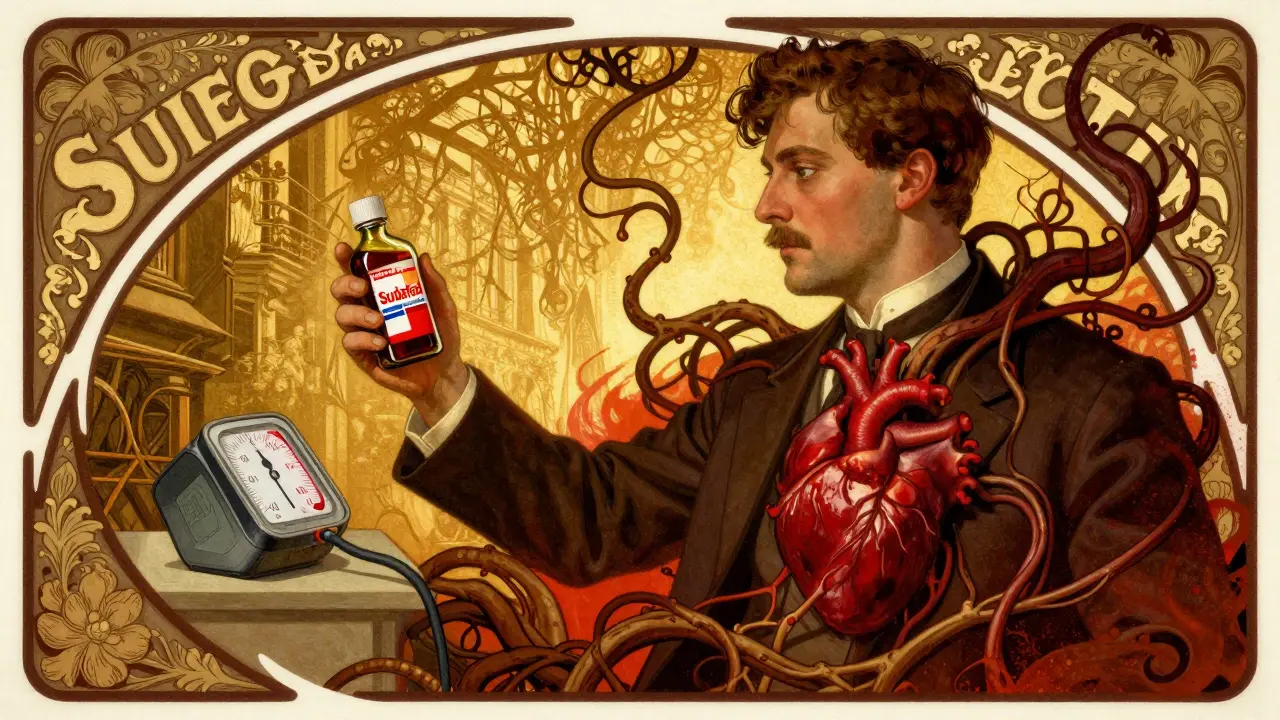
If you’re on blood pressure medication and reach for a cold remedy, you could be putting your heart at risk - even if you think you’re just taking a simple over-the-counter pill. Many people don’t realize that common decongestants like pseudoephedrine and phenylephrine can spike blood pressure, interfere with heart medications, and even trigger dangerous heart rhythms. This isn’t a rare side effect. It’s a well-documented, clinically significant interaction that affects tens of thousands of hypertensive patients every year.
How Decongestants Raise Blood Pressure
Decongestants work by tightening blood vessels in your nose to reduce swelling and clear congestion. That’s why Sudafed or Afrin helps you breathe better. But that same mechanism doesn’t stop at your nasal passages. These drugs also constrict blood vessels everywhere else in your body - including those around your heart and kidneys. When that happens, your heart has to pump harder to push blood through narrower arteries. The result? A rise in blood pressure.
Studies show that pseudoephedrine, the most common decongestant, can increase systolic blood pressure by 2 to 5 mm Hg on average. For someone with well-controlled hypertension, that might seem minor. But for others - especially those with uncontrolled high blood pressure, heart disease, or kidney problems - even a small rise can be dangerous. In some cases, blood pressure spikes above 180/110 mm Hg, putting patients at risk for stroke or heart attack.
Phenylephrine, which replaced pseudoephedrine in many OTC products after 2020, was once thought to be safer. But recent research shows it’s just as risky. A 2023 case study in US Pharmacist documented a 5-year-old child who developed hypertension after taking a phenylephrine-based cold syrup. Her blood pressure normalized only after stopping the medication. That’s not an isolated case. About 5 to 10% of hypertensive patients experience significant pressure spikes after using decongestants.
Which Decongestants to Avoid
Not all decongestants are the same, but most carry the same risks. Here are the key ones to watch out for:
- Pseudoephedrine - Found in Sudafed, Claritin-D, Zyrtec-D, and many multi-symptom cold formulas. Still behind-the-counter in the U.S. due to its strong effect on blood pressure.
- Phenylephrine - Now the main decongestant in most store-brand cold medicines. Despite being marketed as safer, studies confirm it raises blood pressure just like pseudoephedrine.
- Ephedrine - Rare in OTC products now, but still found in some weight-loss or energy supplements. Extremely risky for heart health.
- Oxymetazoline and naphazoline - Nasal sprays like Afrin. While topical, they can still be absorbed into the bloodstream, especially with frequent or long-term use.
These ingredients aren’t always obvious. Many people don’t realize that Tylenol Cold and Flu, Advil Multi-Symptom, Benadryl Allergy Plus Congestion, and Mucinex Sinus Max all contain decongestants. If you’re on blood pressure meds, reading the Active Ingredients list is non-negotiable.
Why Your Blood Pressure Meds Might Not Work
Decongestants don’t just raise blood pressure - they can also block the effects of your prescribed medications. Beta-blockers, ACE inhibitors, and diuretics all work to lower blood pressure. But when you add a decongestant, your body fights back. The vasoconstriction caused by pseudoephedrine or phenylephrine can cancel out weeks of careful medication management.
One 2023 analysis from the American Heart Association found that hypertensive patients who took decongestants while on beta-blockers had a 30% higher chance of their blood pressure rising above target levels. Even worse, some patients didn’t notice the change because they weren’t checking their pressure regularly. That’s how silent spikes turn into emergencies.
It’s not just about the decongestant itself. Some liquid cold remedies contain high levels of sodium - up to 200 mg per dose - which can also raise blood pressure. If you’re on a low-sodium diet for heart health, that’s another hidden risk.

Who’s at Highest Risk?
Not everyone with high blood pressure will have a bad reaction. But certain people are far more vulnerable:
- Those with uncontrolled hypertension (blood pressure consistently above 140/90)
- Patients with heart failure or coronary artery disease
- People with arrhythmias or a history of heart attacks
- Those taking MAO inhibitors (like Nardil or Parnate) for depression - combining these with decongestants can cause life-threatening blood pressure spikes
- Individuals with Prinzmetal angina (a rare form of chest pain caused by artery spasms)
- Elderly patients on multiple medications - the more drugs you take, the higher the chance of a dangerous interaction
Even if your blood pressure is “controlled,” don’t assume you’re safe. A 2023 Harvard Health report found that individual responses vary wildly. One person might see no change, while another’s pressure jumps 20 points after a single dose. That’s why checking your blood pressure before and after taking any OTC cold medicine is critical.
Safe Alternatives for Nasal Congestion
You don’t need decongestants to breathe easier. Here are proven, safer options:
- Saline nasal sprays - These flush out mucus without affecting blood pressure. Use as often as needed.
- Steam inhalation - Breathe in warm steam from a bowl of hot water (add a drop of eucalyptus if you like). Cover your head with a towel to trap the vapor.
- Humidifiers - Keeping the air moist helps reduce nasal swelling naturally.
- Antihistamines without decongestants - Like plain loratadine (Claritin) or cetirizine (Zyrtec). These help with allergy-related congestion without raising blood pressure.
- Nasal strips - Mechanical aids that open nasal passages at night. No chemicals, no risk.
Even these alternatives should be used with caution. Some antihistamines can cause drowsiness, which may affect balance or medication timing. Always check with your doctor or pharmacist if you’re unsure.

What to Do If You’ve Already Taken a Decongestant
If you’ve taken a cold medicine with pseudoephedrine or phenylephrine and you’re on blood pressure meds, here’s what to do:
- Check your blood pressure immediately. Use your home monitor. If it’s above 160/100, don’t wait.
- Call your doctor. Even if you feel fine, a spike in pressure needs evaluation.
- Stop taking the product. Don’t take another dose. If you’re having chest pain, dizziness, or a pounding headache, go to the ER.
- Write down what you took. Include the brand, dose, and time. This helps your doctor assess the risk.
Many patients don’t realize how quickly symptoms can escalate. One case reported in the Journal of Clinical Hypertension involved a 68-year-old man who took a single dose of Sudafed and developed a stroke 12 hours later. He had no prior symptoms. That’s why early action matters.
How Pharmacists Can Help
In the U.S., pseudoephedrine is kept behind the counter. That’s not just for legal reasons - it’s a safety feature. Pharmacists are trained to ask if you have high blood pressure, heart disease, or are on certain medications. Use that moment. Say, “I’m on blood pressure pills. Is this safe?”
Even if you’re buying phenylephrine, ask. Many pharmacists now routinely warn customers about both ingredients. In the UK, while decongestants are still available OTC, pharmacists are increasingly proactive in screening for hypertension. Don’t be shy - your life could depend on it.
Bottom Line: Read Labels. Ask Questions. Monitor Your Pressure
Just because a medicine is sold over the counter doesn’t mean it’s safe for everyone. For people with high blood pressure, decongestants are a hidden threat. They’re in cough syrups, allergy pills, and sinus treatments you might not even think of as “cold medicine.”
Your best defense? Know what you’re taking. Check every label. Talk to your pharmacist. Monitor your blood pressure. And when in doubt, choose a non-medicated option like saline spray or steam. Your heart will thank you.


Nick Cole
January 17, 2026 AT 00:03I took Sudafed last winter thinking it was harmless-ended up in the ER with a headache that felt like my skull was splitting. My BP shot to 190/112. I didn’t even know I was at risk. This post saved my life. Don’t be like me. Always check the label.
Cheryl Griffith
January 17, 2026 AT 19:06My grandma’s on three different blood pressure meds and still buys those little blue capsules for her colds. I printed out this article and taped it to her medicine cabinet. She rolls her eyes but last week she asked me to help her pick a cold remedy. Progress.
Travis Craw
January 19, 2026 AT 11:06kinda wild how we trust otc stuff more than our doctors lol. i mean, you’d never take a pill from a stranger but you’ll swallow something from a shelf like it’s candy. guess we just don’t wanna think about it.
Christina Bilotti
January 20, 2026 AT 11:44Oh wow, you mean those little blue pills aren’t just for people who don’t know how to blow their nose? Shocking. I thought phenylephrine was just a placebo that Big Pharma invented so they could charge more for Sudafed. Turns out it’s just as dangerous? Who knew? 🙃
brooke wright
January 21, 2026 AT 04:20my neighbor took that Mucinex Sinus Max and had a panic attack and called 911. they said it was the decongestant. he didn’t even know he had high blood pressure. now he’s on meds and blames the drugstore. we all need to be better about this.
vivek kumar
January 21, 2026 AT 11:38As someone from India where OTC meds are sold without any screening, this is terrifying. Pharmacists here hand out pseudoephedrine like candy. No ID check, no questions. People die from this daily and nobody talks about it. Why is this not a public health campaign? Why is it still legal?
evelyn wellding
January 22, 2026 AT 00:46Saline spray + steam = my new BFFs 😊 I used to be a Sudafed addict but now I just breathe in hot towel vibes and feel like a zen monk. My BP is down, my sinuses are clear, and I didn’t even need a prescription. Win-win! 🙌
Chelsea Harton
January 22, 2026 AT 08:31decongestants are just capitalism pretending to care about your nose.
Corey Chrisinger
January 23, 2026 AT 13:00It’s funny how we treat our bodies like machines you can just tweak with chemicals. We’ll pop a pill to fix a symptom without asking why the system broke down in the first place. Maybe we need to look at inflammation, stress, sleep-not just nasal passages. But nah, easier to just buy the blue pill.
Bianca Leonhardt
January 25, 2026 AT 09:58People who don’t check labels are just one bad dose away from a stroke. It’s not just ignorance-it’s arrogance. You think you’re too healthy to be affected? That’s exactly how you end up in a hospital with no idea why.
Ryan Hutchison
January 25, 2026 AT 21:03America’s biggest problem? We let corporations sell poison as medicine. In Europe, they regulate this stuff. In the US? You need a license to buy a gun but you can walk out with pseudoephedrine like it’s gum. We’re not free-we’re being exploited.
Samyak Shertok
January 27, 2026 AT 10:00Oh so now we’re blaming decongestants? What’s next? Blaming gravity for making us fall? Maybe if people didn’t live in air-conditioned boxes and ate processed food, they wouldn’t need decongestants at all. But no, let’s just blame the medicine instead of our entire lifestyle. Classic.
Riya Katyal
January 28, 2026 AT 18:41so you’re telling me i’ve been taking phenylephrine for years thinking it was ‘safer’ and i was just… being lied to? by everyone? the government? the pharma companies? my pharmacist? i feel so used.
Jody Fahrenkrug
January 29, 2026 AT 03:27my dad’s 74 and takes 8 meds. he reads every label now. he says if he can’t pronounce it, he doesn’t take it. i’m proud of him.
john Mccoskey
January 31, 2026 AT 01:33Let’s be brutally honest: the entire OTC pharmaceutical industry is built on exploiting cognitive dissonance. You want to feel better, so you consume a substance that promises relief while simultaneously undermining your long-term health. The marketing is flawless-‘fast-acting,’ ‘clinically proven,’ ‘doctors recommend.’ But the fine print? Buried under three layers of legalese and bright colors. The system doesn’t want you to know. It wants you to keep buying. And the saddest part? You’ll keep buying because you’ve been trained to believe that a pill is the only solution. You’re not lazy. You’re manipulated. And until we restructure how medicine is sold-as a commodity, not a care tool-we’ll keep seeing 68-year-olds having strokes after taking a single dose of something they bought at CVS. This isn’t an accident. It’s a feature.