
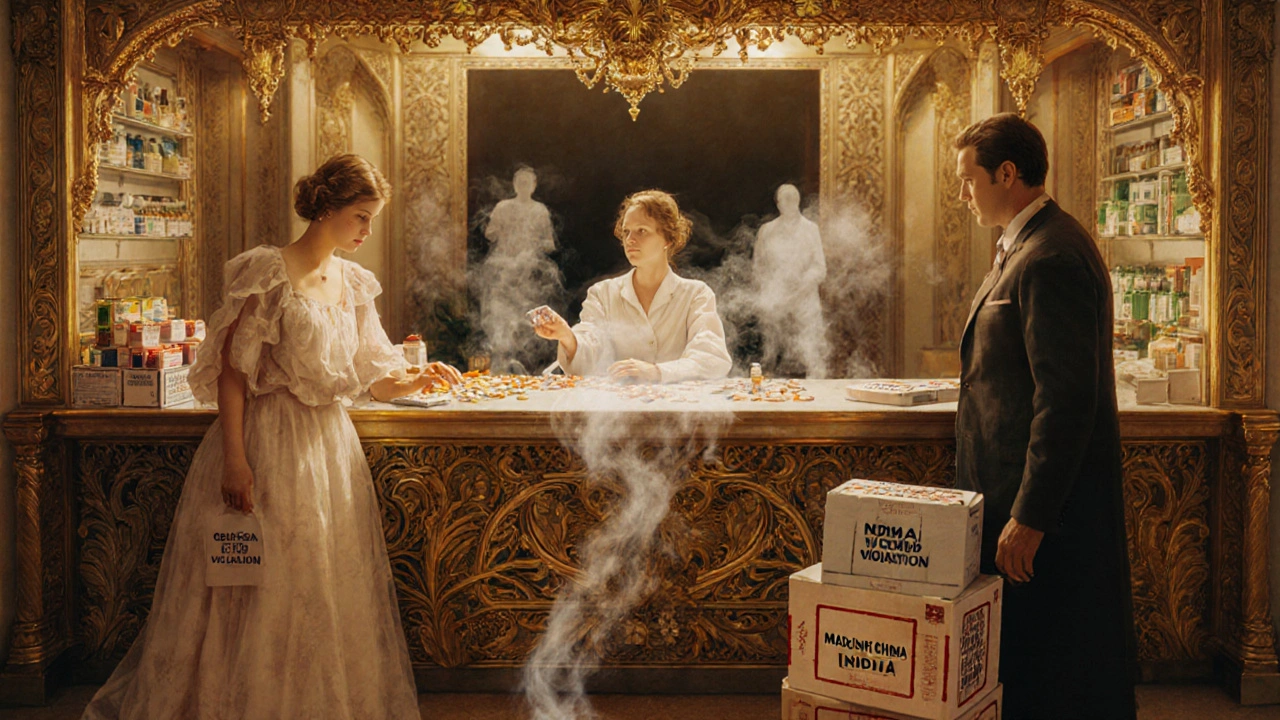
When you pick up a generic pill from the pharmacy, you expect it to work just like the brand-name version. But behind that simple promise lies a complex, global system where quality can break down at any point - and too often, it does. Generic drugs make up over 90% of prescriptions filled in the U.S., yet many of them are made in factories thousands of miles away, under conditions that rarely get checked until something goes wrong. The truth is, generic drug quality isn’t guaranteed. It’s negotiated, compromised, and sometimes ignored - all while patients take the risk.
What Really Goes Wrong in Generic Drug Factories?
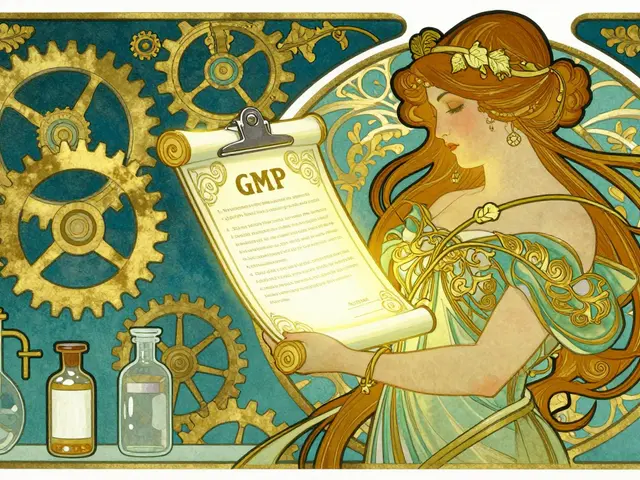
The biggest problem isn’t that generic drugs are fake. It’s that they’re often made with sloppy processes that don’t meet basic safety standards. The FDA calls these failures cGMP violations - short for Current Good Manufacturing Practices. These aren’t fancy guidelines. They’re the bare minimum rules for keeping medicine clean, consistent, and safe. When a factory skips steps like proper cleaning between batches, fails to test for impurities, or doesn’t train staff on basic hygiene, the result isn’t just a defective product. It’s a patient getting sick. One of the most alarming examples came in 2018, when the FDA found a cancer-causing chemical called NDMA in blood pressure pills made by a Chinese company. That single issue led to 28 recalls across 22 countries. The chemical wasn’t supposed to be there. It formed because of a flawed chemical reaction - something that should’ve been caught during development. But the manufacturer didn’t test for it. They didn’t even look. Other common failures include:- Using raw materials from unapproved or unreliable suppliers
- Not testing how quickly the drug dissolves in the body - critical for heart medications like nitroglycerin
- Failing to monitor temperature and humidity during storage, which can ruin stability
- Using outdated or broken equipment that can’t maintain consistent dosing
- Altering formulas without notifying regulators - sometimes to cut costs
Why Are Foreign Plants So Often the Problem?
About 80% of the active ingredients in U.S. drugs come from China and India. Forty percent of finished pills - the actual tablets and capsules - are made overseas. That’s not a coincidence. It’s economics. Labor is cheaper. Regulations are looser. And inspections? They’re rare. Here’s the catch: the FDA can’t just show up at a factory in Gujarat or Shanghai without telling them first. Because of diplomatic rules, they have to give advance notice. That means factories clean up, hide problems, and even train workers to lie during inspections. In one case documented in a 2022 FDA warning letter, an employee was caught throwing quality control documents into a trash can full of acid - a clear attempt to destroy evidence. Meanwhile, U.S. facilities get unannounced inspections. And they get inspected more often. In 2022, foreign plants had nearly 30% more violations per inspection than American ones. Chinese facilities averaged 28.6% more issues. Indian ones? 19.3% more. That’s not because U.S. workers are better. It’s because the system is rigged. A 2023 study from Ohio State University found that generic drugs made in India were linked to 23.7% more severe side effects than those made in the U.S. That’s not speculation. That’s data from hospital records and adverse event reports.
How Do These Problems Affect Patients?
You might think, “It’s just a generic. It’s cheaper. A little variation doesn’t matter.” But for some drugs, even tiny differences can be deadly. Take narrow therapeutic index (NTI) drugs - medications where the difference between a safe dose and a toxic one is razor-thin. Examples include blood thinners like warfarin, seizure drugs like phenytoin, and transplant medications like tacrolimus. In 2022, 37% of all FDA rejections for generic drugs were for NTI products. Why? Because the generic version didn’t release the same amount of drug into the bloodstream as the brand. That’s not a minor flaw. It’s a medical emergency. One study published in JAMA Internal Medicine found that 15.2% of generic drugs on the FDA’s Watch List showed real therapeutic differences. Tacrolimus capsules from one Indian manufacturer varied by 28.4% in blood levels compared to the brand. That’s not a typo. That’s almost a third more drug in some patients’ systems - enough to cause kidney failure. Hospital pharmacists reported that 67% of them had seen a patient’s condition worsen after switching to a new generic batch. Over 40% blamed Indian-made products. On Drugs.com, generic valsartan from one Chinese manufacturer got an average rating of 3.2 stars. The U.S.-made version? 4.1. The reviews? “Didn’t lower my blood pressure.” “Felt dizzy.” “Like the medicine stopped working.” And then there’s the quiet crisis: drug shortages. In 2022, 58.7% of all drug shortages in the U.S. were tied to quality problems at foreign plants. Heparin. Nitroglycerin. Antibiotics. These aren’t optional meds. They’re life-saving. And when a factory fails an inspection, production stops. Patients go without.Why Doesn’t the FDA Do More?
The FDA is stretched thin. In 2022, they inspected just 13% of foreign drug facilities. That’s one in eight. The agency has over 3,000 foreign sites to monitor. They can’t visit them all. Even if they wanted to. The system is broken in three ways:- They don’t test the products. Only 0.02% of imported drug shipments get lab-tested. The rest are cleared based on paperwork.
- They rely on self-reported data. Companies submit their own test results. There’s no independent verification.
- They can’t inspect without notice. Foreign governments won’t allow surprise visits. So factories get a heads-up - and time to hide.

What’s Being Done - And Why It’s Not Enough
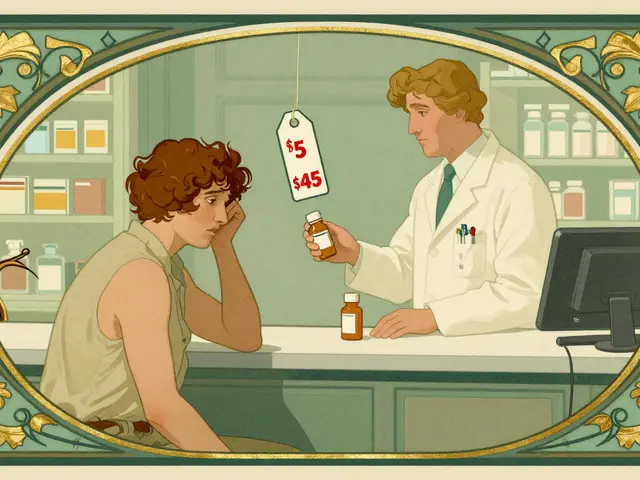
There are solutions. But they’re expensive, slow, and often ignored. One is Quality by Design (QbD). It’s a science-based approach where manufacturers define exactly how the drug should behave - from the raw materials to the final pill - and build controls into every step. It prevents problems before they happen. But only 23.8% of generic manufacturers use it. Why? Because it costs $2.7 million per plant and takes 18 to 24 months to implement. In a market where prices drop 18% a year, who wants to spend that much? The FDA has tried to fix things. In 2022, they got $56.7 million extra to boost foreign inspections. Their goal? Increase inspections from 1,200 to 1,800 by 2027. That’s still less than one-third of all foreign plants. Meanwhile, the European Medicines Agency started unannounced inspections in January 2023 - and saw a 41% spike in critical findings. The U.S. still hasn’t followed. The real problem? Money. Generic drug makers are under insane pressure to cut costs. The top 10 companies now control nearly 60% of the U.S. market. They compete on price - not quality. And when you’re selling a pill for 50 cents, you don’t spend $2 million on lab equipment. You cut corners.What You Can Do
You can’t control what happens in a factory in India or China. But you can make smarter choices.- Ask your pharmacist where your generic drug is made. Some pharmacies track this. If they don’t know, ask them to find out.
- Stick with U.S.-made generics when possible. They’re not always cheaper, but they’re safer.
- Watch for changes - if your medication suddenly stops working, or you feel new side effects, tell your doctor. It might not be your body. It might be the pill.
- Report problems to the FDA’s MedWatch system. Every report adds pressure. If enough people report the same issue, the FDA has to act.
Are all generic drugs unsafe?
No. Many generic drugs are safe and effective. The issue isn’t generics themselves - it’s the manufacturing practices at some foreign facilities. FDA-approved generics from reputable manufacturers meet the same standards as brand-name drugs. But the risk increases when the drug comes from a facility with a history of violations or from a country with poor oversight.
How can I tell where my generic drug is made?
The country of manufacture is listed on the drug’s packaging or the manufacturer’s website. You can also ask your pharmacist - many now track this information. If you’re unsure, look up the drug’s name and manufacturer on the FDA’s website. They list approved manufacturers and their locations.
Why do some generic drugs work better than others?
Even though generics must be bioequivalent, small differences in manufacturing - like how the drug dissolves, what binders are used, or how it’s coated - can affect how your body absorbs it. For drugs with a narrow therapeutic index, like warfarin or thyroid meds, these tiny differences can make a big impact. Some patients find one generic works, but another doesn’t - and that’s not just in their head.
What’s the difference between a warning letter and a recall?
A warning letter is the FDA’s formal notice that a facility violated safety rules. It doesn’t mean the drug is pulled from shelves. A recall happens when the FDA or manufacturer decides the product is unsafe or ineffective and removes it from the market. Many warning letters never lead to recalls - which is why so many unsafe drugs stay on shelves.
Can I trust generics made in the U.S.?
Yes. U.S.-made generics are subject to unannounced inspections and stricter oversight. While no system is perfect, the risk of quality issues is significantly lower. If you take a high-risk medication - like blood thinners, seizure drugs, or immunosuppressants - choosing a U.S.-made generic is one of the safest choices you can make.
Gus Fosarolli
November 27, 2025 AT 18:25So let me get this straight - we’re trusting our lives to pills made in factories where workers throw quality docs into acid baths, and the FDA gets a RSVP before showing up? 😅 That’s not regulation, that’s a sitcom script. I’d rather get my meds from a guy in a van with a cooler labeled 'probably fine'.
Evelyn Shaller-Auslander
November 29, 2025 AT 01:22my dr switched me to a generic and i felt like i was drugged… turned out it was made in india. never again.
Leigh Guerra-Paz
November 29, 2025 AT 03:41I just want to say - I’m so grateful for people who take the time to dig into this stuff. I had no idea that the difference between a pill made in Ohio and one made in Gujarat could be the difference between life and death. Especially for people on warfarin or tacrolimus - tiny variations matter SO much. I’ve started asking my pharmacist where my meds come from now, and honestly? It feels like a small act of self-defense.
Also, I just looked up my blood pressure med - it’s made in the U.S.! I’m so relieved. I didn’t even know that was an option. Thank you for the heads-up about MedWatch too - I just filed a report after my last refill made me dizzy for three days. If enough of us do this, maybe something will change.
Jordyn Holland
November 30, 2025 AT 23:46Oh wow. So the FDA is basically a polite waiter at a restaurant where the kitchen is on fire, and they’re like, 'Would you like a side of arsenic with that?' Classic American healthcare - let’s outsource our safety to countries with zero accountability and then blame the patient for not reading the fine print.
Meanwhile, the CEO of Teva is on a yacht in Monaco, sipping champagne made from the savings of 10 million people who took a 50-cent pill instead of a $5 one. I’m not mad. I’m just disappointed.
Jasper Arboladura
December 1, 2025 AT 20:27Statistically, the bioequivalence thresholds for generics are set at 80-125% AUC and Cmax. That’s a 45% window. For NTI drugs, that’s not bioequivalence - it’s a lottery. The FDA’s own data shows 15.2% of drugs on the Watch List deviate beyond therapeutic tolerance. This isn’t anecdotal. It’s math. And the regulatory framework is mathematically negligent.
Joanne Beriña
December 3, 2025 AT 07:41AMERICA MADE THE BEST DRUGS. WE DON’T NEED TO OUTSOURCE OUR HEALTH TO CHINA AND INDIA. THIS IS A NATIONAL SECURITY ISSUE. WHY ARE WE LETTING FOREIGN COUNTRIES CONTROL OUR MEDICINES? WE NEED TO BAN ALL IMPORTS AND MAKE EVERYTHING HERE. NOW.
ABHISHEK NAHARIA
December 4, 2025 AT 19:23It is a fallacy to assume that all foreign manufacturing is substandard. India has produced life-saving medicines for decades, and the regulatory infrastructure is evolving. The problem lies not in geography but in corporate greed and regulatory capture. To blame a nation is to ignore the systemic rot in Western pharmaceutical economics.
Hardik Malhan
December 5, 2025 AT 03:57Manufacturing scale and supply chain complexity are the real bottlenecks. cGMP compliance isn't optional - it's operational. But with 80% API sourcing overseas, the cost structure forces trade-offs. The FDA’s inspection model is outdated. Need real-time data streams from manufacturing lines, not annual audits.
Casey Nicole
December 5, 2025 AT 14:03Ugh. So basically the whole system is rigged and we’re just supposed to be grateful for our 50-cent pills? I’m so tired of being told to ‘just be grateful’ while my body falls apart because some factory in Bangalore didn’t clean their tanks. I’m not grateful. I’m furious.
And don’t even get me started on how the FDA lets them get away with this. It’s not incompetence - it’s corruption. And they know it.
Kelsey Worth
December 6, 2025 AT 02:54okay but… what if the reason some generics feel different is because our bodies are weird? like maybe i just react differently to fillers? i had a bad experience but then switched back and it was fine? maybe it’s not always the factory?
shelly roche
December 7, 2025 AT 18:27As someone who works in global health, I’ve seen how Indian manufacturers are actually leading in affordable HIV and TB meds - millions of lives saved. But yeah, the pressure to cut costs is real. We need to reward quality, not punish it with price wars. Let’s push for a ‘Quality Seal’ program - like Fair Trade for medicine. Patients deserve that transparency.
Also, if you’re on a high-risk med, ask for the brand. Insurance usually covers it if you document side effects. You’re not being dramatic - you’re being smart.
Nirmal Jaysval
December 9, 2025 AT 18:07you think this is bad? wait till you see how they make ayurvedic pills in delhi - no regulation at all. but hey, at least you know what’s in it: turmeric and hope
Emily Rose
December 11, 2025 AT 13:45Thank you for writing this. I’ve been telling my patients for years that switching generics isn’t harmless - especially for seizure meds and heart drugs. One woman had a seizure after her pharmacy switched her to a cheaper version. She didn’t know why. We traced it to an Indian manufacturer with a history of violations. Now I give them a printed list of approved manufacturers. It’s not enough - but it’s something.
Benedict Dy
December 12, 2025 AT 23:28There is no systemic failure. There is only economic optimization. The FDA’s 0.02% testing rate is a rational response to volume. The cost of full lab testing of every shipment would raise drug prices by 300%. The trade-off is deliberate. Patients are not victims - they are participants in a market. If you want safety, pay for it.
Emily Nesbit
December 13, 2025 AT 11:16According to the 2022 FDA Drug Quality Report, 78% of warning letters issued to foreign facilities were for data integrity violations - falsified records, backdated logs, deleted HPLC runs. This isn’t negligence. It’s fraud. And the fact that it’s still happening under a regulatory agency with the authority to ban imports suggests either incompetence or complicity.