

When you pick up a generic pill at the pharmacy, you might wonder: is this really the same as the brand-name version? The answer isn’t just yes - it’s backed by strict science, detailed testing, and a regulatory system built over decades. The FDA doesn’t just approve generic drugs because they’re cheaper. They approve them because they must meet the same quality, strength, purity, and stability standards as their brand-name counterparts. This isn’t guesswork. It’s a process with measurable benchmarks, controlled labs, and real-world data.
What Makes a Generic Drug "Equivalent"?
Two things make a generic drug legally and clinically equivalent to a brand-name drug: pharmaceutical equivalence and bioequivalence. Pharmaceutical equivalence means the generic has the same active ingredient, in the same amount, in the same form - whether it’s a tablet, capsule, injection, or inhaler. It also must be meant for the same use. If the brand drug treats high blood pressure, so does the generic. Same dose. Same route. Same labeling.
But that’s only half the story. Two pills can have identical ingredients and still behave differently in your body. That’s where bioequivalence comes in. The FDA requires that the generic drug gets absorbed into your bloodstream at the same rate and to the same extent as the brand-name drug. This isn’t about how the pill looks or tastes. It’s about how your body uses it.
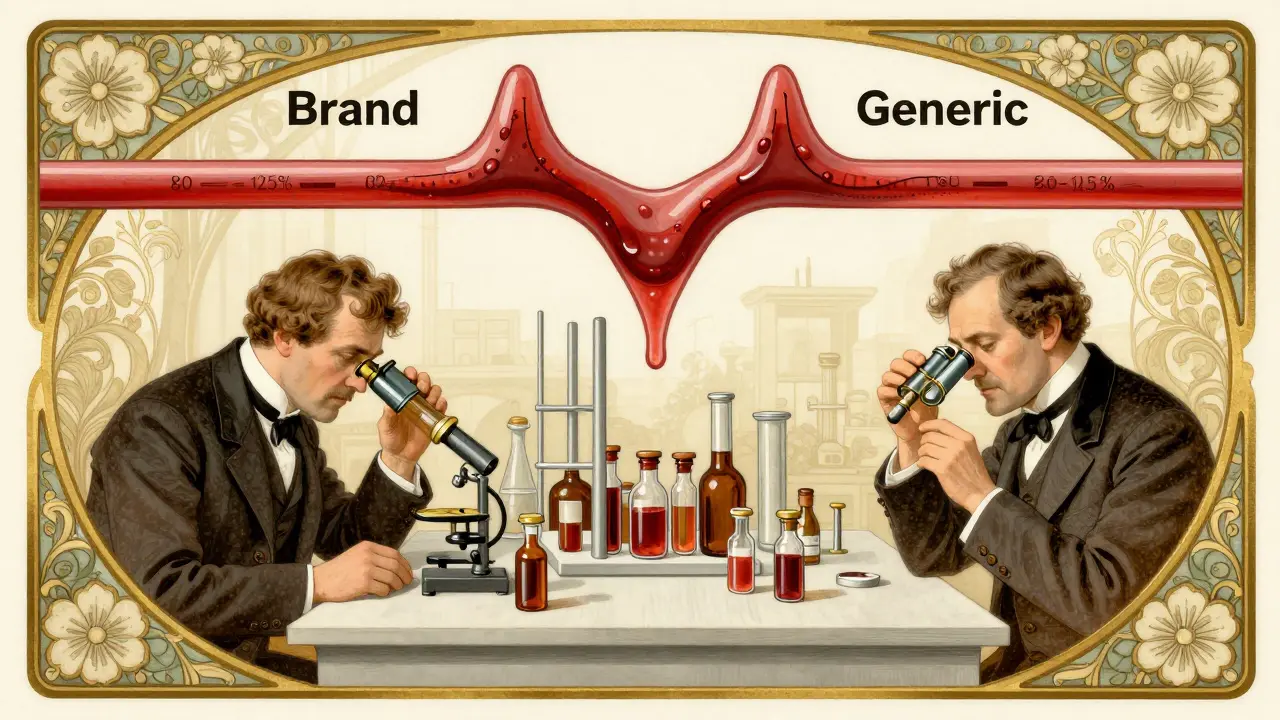
To prove this, manufacturers run studies with healthy volunteers - usually between 24 and 36 people. They measure two key things: Cmax (the highest concentration of the drug in the blood) and AUC (how much of the drug is absorbed over time). The results for the generic must fall within 80% to 125% of the brand-name drug’s results. This 80-125% range is the FDA’s official acceptance window. If the generic stays inside those lines, it’s considered bioequivalent. No more, no less.
The Role of cGMP: Manufacturing Under Strict Rules
Even if a drug works the same way, it can’t be approved if it’s made in a dirty or sloppy facility. That’s where Current Good Manufacturing Practices (cGMP) come in. These rules, written into federal law (21 CFR Parts 210 and 211), apply to every drug maker in the U.S., whether they produce brand-name pills or generics.
cGMP covers everything: how raw materials are stored, how machines are cleaned, how workers are trained, and how each batch is tested. Every step must be documented. Every machine must be calibrated. Every test method must be validated. The FDA doesn’t just ask for paperwork - they send inspectors. Each year, they conduct about 3,500 inspections worldwide, targeting both U.S. and foreign factories. Many of these facilities make both brand-name and generic versions of the same drug. In fact, about half of all generic drugs in the U.S. are made by the same companies that produce the original brands.
Think of it this way: if you buy a generic version of a heart medication, it might have been made on the same production line as the brand-name version, just under a different label. The difference isn’t in quality - it’s in price.
Testing for Complex Drugs: More Than Just Blood Levels
Not all drugs are as simple as a pill you swallow. Some, like inhalers, injectables, topical creams, or long-acting implants, are harder to copy. You can’t just measure blood levels and call it done. For these complex products, the FDA has developed over 2,143 product-specific guidances as of May 2023. These documents spell out exactly how to prove equivalence - whether that means matching particle size, spray pattern, viscosity, or how the drug releases from a patch.
For example, a generic asthma inhaler must deliver the exact same amount of medicine to the lungs, in the same size particles, at the same speed. If the spray pattern is off by even a little, it won’t work right. So instead of relying only on blood tests, manufacturers must run physical tests - like measuring how the drug flows through the device or how it sticks to surfaces inside the inhaler. These are called "Q3 sameness" tests: quality, performance, and stability.
Even then, some products remain tricky. The FDA found that 17% of complex generics need special testing beyond standard methods. That’s why they’ve launched the Complex Generic Drugs Scientific Exchange, hosting 18 public workshops since 2017 with scientists, manufacturers, and regulators. They’ve also allocated $15.7 million to develop new testing tools for these hard-to-copy drugs.
The Approval Process: ANDAs and the Long Road to Market
Getting a generic drug approved isn’t quick. It starts with an Abbreviated New Drug Application, or ANDA. Unlike brand-name drugs, which require full clinical trials, generics don’t need to repeat safety studies. Instead, they submit data proving pharmaceutical and bioequivalence, along with detailed manufacturing info.
The FDA’s Office of Generic Drugs reviews each ANDA. They look at chemistry, manufacturing, labeling, and stability data. Stability testing alone can take over a year. Manufacturers must show their drug remains effective and safe over its shelf life - typically 12 to 24 months - under real storage conditions. They also run accelerated tests at 40°C and 75% humidity for six months to predict how the drug will hold up over time.
Each batch of drug produced must be tested before release. That means checking for identity, strength, purity, and quality - every single lot. The FDA requires this because even small changes in manufacturing can affect how the drug performs. The agency approved 892 original ANDAs in fiscal year 2022 alone, but also issued 478 complete response letters - meaning the application wasn’t approved on the first try.
Since the Generic Drug User Fee Amendments (GDUFA) took effect in 2012, review times have improved. Today, the FDA aims to complete a standard review in 10 months. Before GDUFA, it often took two years or more.
Real-World Impact: Cost Savings and Patient Outcomes
Generic drugs now make up over 90% of all prescriptions filled in the U.S. But they account for only about 23% of total drug spending. In 2022 alone, they saved the healthcare system $37 billion. That’s money that goes back into people’s pockets, insurance premiums, and public health programs.
Most patients don’t notice a difference. A 2022 Consumer Reports survey of 1,200 adults found 89% were satisfied with generic drugs, and 62% said they chose generics specifically to save money. Reddit threads, pharmacy forums, and clinical studies back this up. In one 2023 Reddit thread with over 1,400 responses, 83% of users reported no noticeable difference between generic and brand-name drugs.
But there are exceptions. Some drugs have a narrow therapeutic index - meaning even tiny changes in blood levels can cause problems. Levothyroxine, used for thyroid disorders, is one of them. A 2021 study in JAMA Internal Medicine found that 12.3% of patients switching between different generic versions experienced thyroid level shifts that required dose adjustments. For drugs like warfarin (a blood thinner) or certain seizure medications, doctors sometimes recommend sticking with one brand or generic version.
That’s not because generics are unsafe. It’s because the body is sensitive to very small changes in these drugs. The FDA acknowledges this and encourages patients and providers to report any unusual effects. They monitor adverse events closely and can require additional testing if patterns emerge.
Myths vs. Facts
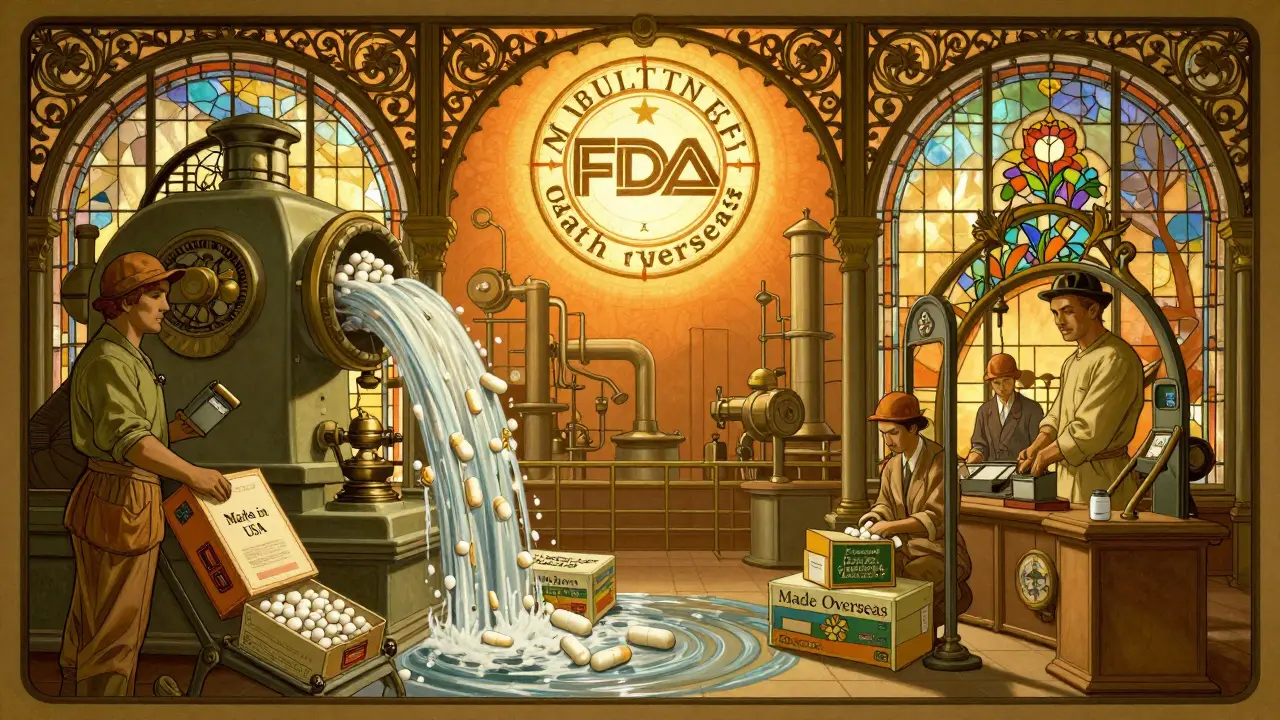
- Myth: Generics are made in inferior factories. Fact: The FDA inspects all facilities - brand and generic - using the same standards. Many generics are made in the same plants as brand-name drugs.
- Myth: Generics don’t work as well. Fact: Over 90% of prescriptions are generics, and studies show they work just as well in real-world use.
- Myth: Color and shape changes mean the drug is different. Fact: Inactive ingredients (like dyes or fillers) can vary. That’s why generics look different. But the active ingredient is identical.
- Myth: The FDA approves generics too quickly. Fact: The process is rigorous. Each application undergoes detailed review, and many are rejected or sent back for more data.
What You Can Do
If you’re taking a generic drug and feel something’s off - whether it’s a change in how you feel, side effects, or effectiveness - talk to your doctor or pharmacist. Don’t assume it’s "just in your head." Keep a log: when you took the drug, what you felt, and when you switched versions. This helps your provider identify patterns.
For drugs with narrow therapeutic windows - like levothyroxine, warfarin, or anti-seizure meds - ask if sticking with one manufacturer is recommended. You can also ask your pharmacy to fill your prescription with the same generic brand each time.
Remember: the FDA doesn’t approve generics to cut costs. They approve them because they’ve proven they’re safe, effective, and consistent. The system works - for most people, most of the time.
Are generic drugs as safe as brand-name drugs?
Yes. The FDA requires generic drugs to meet the same strict standards for safety, strength, purity, and stability as brand-name drugs. They must prove bioequivalence and be made under the same cGMP rules. Millions of people use generics every day without issues.
Why do generic drugs look different from brand-name drugs?
The active ingredient is the same, but the inactive ingredients - like dyes, fillers, or coatings - can differ. These changes affect color, shape, or taste, but not how the drug works. U.S. law allows this difference to avoid trademark conflicts with brand-name products.
Can I switch between different generic versions of the same drug?
For most drugs, yes. But for drugs with a narrow therapeutic index - like levothyroxine, warfarin, or certain seizure medications - switching between generics may cause small changes in blood levels. Talk to your doctor if you notice new side effects after switching.
How does the FDA ensure quality in overseas manufacturing?
The FDA inspects foreign manufacturing facilities just like U.S. ones. About half of all generic drugs sold in the U.S. are made overseas, and the agency conducts thousands of inspections each year - in China, India, and elsewhere. Facilities must comply with cGMP standards or risk being blocked from importing into the U.S.
Do generic drugs take longer to work than brand-name drugs?
No. Bioequivalence testing ensures that generics reach the bloodstream at the same rate and extent as the brand-name version. If a brand drug works in 30 minutes, the generic will too. Differences in how fast you feel the effects are usually due to individual body chemistry, not the drug itself.





Aileen Nasywa Shabira
March 18, 2026 AT 16:27Kendrick Heyward
March 18, 2026 AT 17:02lawanna major
March 20, 2026 AT 11:05Also, the fact that 90% of prescriptions are generics and people are mostly fine? That’s not luck. That’s science working.
Ryan Voeltner
March 21, 2026 AT 12:28Linda Olsson
March 21, 2026 AT 23:59Ayan Khan
March 22, 2026 AT 14:32Emily Hager
March 23, 2026 AT 22:36Melissa Starks
March 24, 2026 AT 12:39And yeah, I know about the narrow therapeutic index drugs - levothyroxine is a whole other beast. But for 95% of people? The system works. Stop panicking over color changes. The pill doesn’t care if it’s blue or white. Your body just wants the active ingredient to show up. And it does.
Lauren Volpi
March 24, 2026 AT 21:59Kal Lambert
March 25, 2026 AT 00:13Melissa Stansbury
March 25, 2026 AT 14:22cara s
March 26, 2026 AT 01:06But the 3%? That’s the one that sticks with you. The woman who had a seizure after switching generics. The man whose INR went off the charts. We don’t talk about them enough. We should. Because those are the ones that force the system to improve. Not the headlines. Not the memes. The quiet, terrifying, real stories.
Amadi Kenneth
March 26, 2026 AT 20:18