
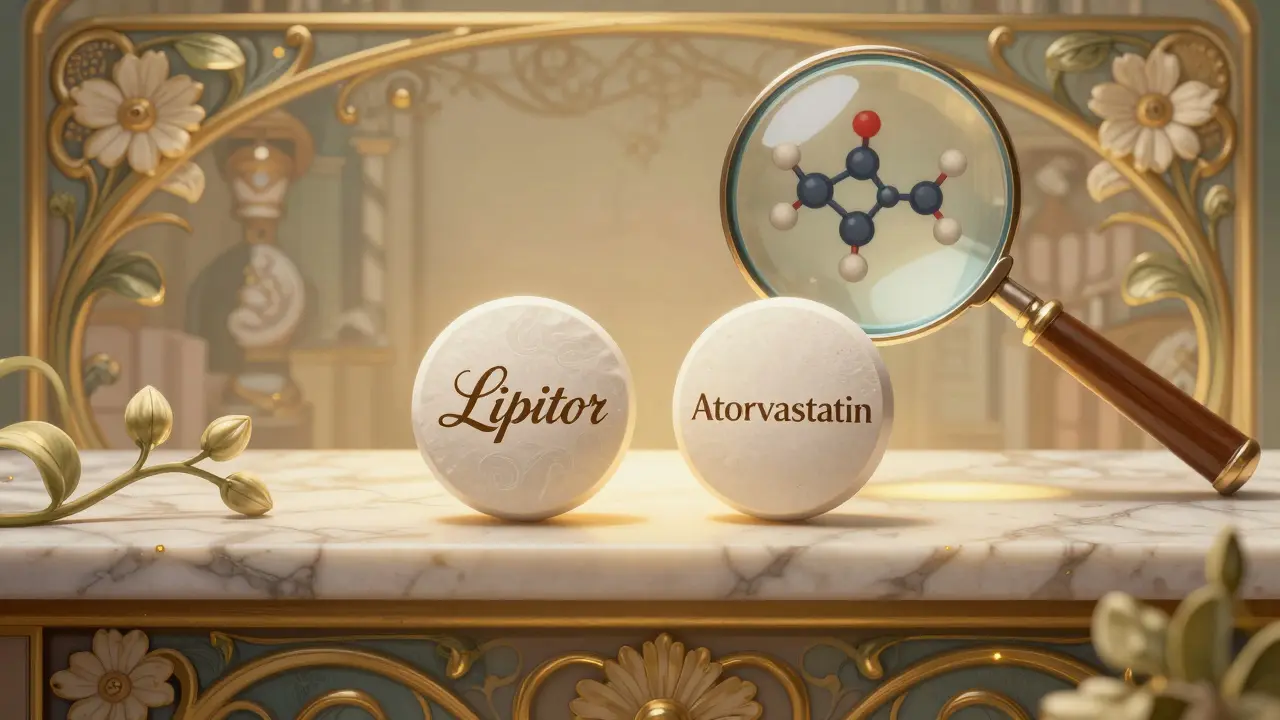
When you pick up a prescription at the pharmacy, you might see two options: a well-known brand name like Lipitor or a much cheaper label that says atorvastatin . That’s a generic drug. And here’s the truth - it’s not a cheaper version of the medicine. It’s the exact same medicine.
What Exactly Is a Generic Drug?
A generic drug is a medicine that contains the same active ingredient as the original brand-name drug. It works the same way in your body. It treats the same condition. It has the same risks and benefits. The only real differences are in the name, color, shape, or flavor - and the price.
The U.S. Food and Drug Administration (FDA) defines it simply: a generic drug must be identical or bioequivalent to the brand-name version in dosage form, safety, strength, route of administration, quality, performance, and intended use. That means if you take a generic version of a blood pressure pill, your body absorbs it, processes it, and responds to it exactly like the brand-name version.
Generics become available after the patent on the original drug expires. That usually happens about 20 years after the drug is first invented. Once that happens, other companies can legally make and sell the same medicine without paying royalties to the original developer.
How Are Generic Drugs Approved?
Getting a brand-name drug approved takes years and costs billions. Companies run animal tests, clinical trials with thousands of patients, and submit massive dossiers to the FDA. For generics? Not so much.
The key is the Abbreviated New Drug Application, or ANDA. This streamlined process was created by the Hatch-Waxman Act of 1984. Instead of redoing all the original studies, generic manufacturers only need to prove one thing: bioequivalence.
Bioequivalence means the generic drug delivers the same amount of active ingredient into your bloodstream at the same rate as the brand-name drug. The FDA requires that the concentration of the drug in your blood - measured by two key numbers, AUC and Cmax - falls within 80% to 125% of the brand-name drug’s levels. That’s not a wide range. It’s tight. It’s designed to ensure no meaningful difference in how the drug works.
Manufacturers also have to prove they use the same active ingredient, same strength, same form (tablet, capsule, injection, etc.), and same route (oral, topical, etc.). Even the shelf life has to match. Generics go through months of stability testing to prove they won’t break down faster than the original.
Why Are Generic Drugs So Much Cheaper?
Generic drugs cost 80% to 85% less than their brand-name counterparts. In the U.S., generics make up 90% of all prescriptions filled - but only 13% of total drug spending. That’s how much money they save.
The reason is simple: generics don’t pay for research, marketing, or advertising. The original company spent years and billions developing the drug, testing it, and promoting it. Generic manufacturers skip all that. They just make the same molecule, following the same strict quality rules.
When multiple generic companies enter the market - usually five or more - prices drop even further. The Federal Trade Commission found that competition can bring prices down to just 9% of the original brand price. That’s why your co-pay for a generic might be $5, while the brand costs $150.
Over the past decade, generics saved the U.S. healthcare system more than $2 trillion. That’s not a small number. It’s life-changing for people who need daily medications for diabetes, high cholesterol, or hypertension.
Are Generic Drugs as Safe and Effective?
Yes. Absolutely.
The FDA approves every generic drug using the same high standards as brand-name drugs. In fact, the same factories sometimes make both. The agency inspects about 3,500 generic manufacturing facilities every year - all around the world - to make sure they follow Current Good Manufacturing Practices (cGMP). These rules are identical for generics and brands.
Multiple studies back this up. The Institute of Medicine reviewed 38 clinical trials on generic cardiovascular drugs and found no meaningful difference in effectiveness. The American Medical Association, the American College of Physicians, and the FDA all agree: generics are just as safe and effective.
Dr. Janet Woodcock, former head of the FDA’s drug review division, put it plainly: "The FDA would not allow generics to be marketed unless they were therapeutically equivalent to the brand."
What About the Differences in Color or Shape?
You might notice your generic pill looks different from the brand. Maybe it’s blue instead of yellow, or oval instead of round. That’s normal - and required.
Trademark laws prevent generic manufacturers from copying the exact appearance of the brand-name drug. So they change the color, shape, or coating. But none of that affects how the drug works. The active ingredient is unchanged.
Some people get confused when they see a different-looking pill. They think it’s weaker or less effective. That’s a myth. Pharmacists are trained to explain this. If you’re ever unsure, ask them. They can tell you exactly why it looks different - and reassure you it’s safe.
Are There Any Exceptions?
For almost all drugs, generics work perfectly. But there are a few edge cases.
Drugs with a narrow therapeutic index - like warfarin (a blood thinner), levothyroxine (for thyroid disease), or certain seizure medications - require very precise dosing. Even tiny changes in blood levels can cause problems. For these, some doctors prefer to stick with one version - brand or generic - and avoid switching back and forth.
That doesn’t mean generics are unsafe. It means extra care is needed. If your doctor recommends staying on one version, they’ll usually write "dispense as written" on the prescription. That tells the pharmacy not to substitute.
Another gray area is biologics - complex drugs made from living cells, like those used for rheumatoid arthritis or cancer. These can’t be copied exactly. Instead, we get biosimilars, which are "highly similar" but not identical. They’re still cheaper than the original, but not as dramatically so - usually 20% to 30% less.
Where Are Generic Drugs Made?
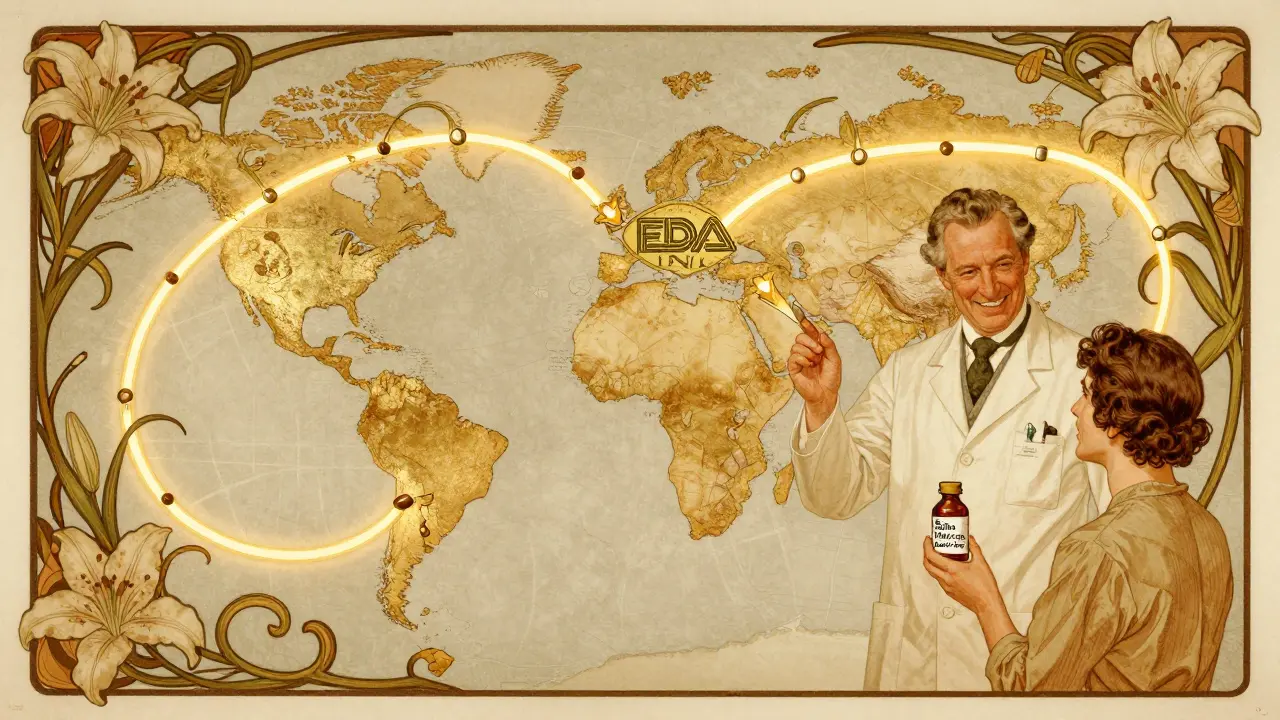
Most of the active ingredients in generic drugs come from India and China. About 80% of the raw materials are produced there. That’s because manufacturing costs are lower, and these countries have large, well-established pharmaceutical industries.
The FDA inspects these foreign facilities just as often as U.S. ones. In fact, more than half of the 3,500 annual inspections happen overseas. The agency has a global presence to ensure quality.
But this reliance on foreign supply chains has raised concerns. When a factory in India or China shuts down for inspection or due to quality issues, shortages can happen. The FDA reported a 22% increase in drug shortages in 2022, partly due to these supply chain risks.
What’s Next for Generic Drugs?
The future of generics looks strong. Between 2023 and 2027, over 350 brand-name drugs with $138 billion in annual sales will lose their patents. That means a flood of new generics is coming.
The FDA is speeding up approvals under its GDUFA III program, aiming to review 90% of applications within 10 months. They’re also tightening rules for complex generics - like inhalers, eye drops, and topical creams - to make sure they work just as well.
Meanwhile, some brand-name companies are making their own generics - called authorized generics - to stay in the game. These are made by the original company but sold under a generic label. They’re often the first to enter the market after patent expiry.
One thing won’t change: generics will continue to be the most cost-effective way to get the medicine you need. For millions of people, they’re not just an option - they’re the only way to afford treatment.
What You Should Know
- Generics are not "second-rate" - they’re FDA-approved to work exactly like the brand.
- Price differences come from development costs, not quality.
- Always ask your pharmacist if you’re unsure about a change in pill appearance.
- For most drugs, switching between brand and generic is safe and common.
- If you take a drug with a narrow therapeutic index, talk to your doctor before switching.
Are generic drugs as effective as brand-name drugs?
Yes. Generic drugs are required by the FDA to have the same active ingredient, strength, dosage form, and route of administration as the brand-name version. They must also prove bioequivalence - meaning they deliver the same amount of medicine into your bloodstream at the same rate. Studies show no meaningful difference in effectiveness for the vast majority of drugs.
Why are generic drugs cheaper if they’re the same?
Brand-name drug companies spend billions on research, clinical trials, and marketing to get their drug approved and promoted. Generic manufacturers don’t repeat those costs. They only need to prove bioequivalence, which is far less expensive. That’s why generics cost 80%-85% less - not because they’re inferior, but because they don’t carry the same overhead.
Can I switch from a brand-name drug to a generic?
For most medications, yes - and it’s often recommended. Pharmacists can substitute generics unless your doctor writes "dispense as written" on the prescription. If you’re taking a drug with a narrow therapeutic index - like warfarin or levothyroxine - talk to your doctor first. For most other drugs, switching is safe and common.
Do generic drugs have different side effects?
The active ingredient is identical, so the side effects are the same. However, inactive ingredients - like fillers, dyes, or coatings - may differ. These can rarely cause allergic reactions in sensitive individuals. If you notice a new reaction after switching to a generic, tell your doctor or pharmacist. But for most people, there’s no change in side effects.
Are all generic drugs made in the U.S.?
No. About 80% of the active ingredients in generic drugs come from facilities in India and China. The FDA inspects these overseas factories just as rigorously as U.S. ones. Quality standards are the same, regardless of location. The agency has inspectors stationed around the world to ensure compliance.


Sean Bechtelheimer
March 24, 2026 AT 14:02Seth Eugenne
March 26, 2026 AT 11:09Namrata Goyal
March 26, 2026 AT 11:18Alex Arcilla
March 27, 2026 AT 15:19Grace Kusta Nasralla
March 29, 2026 AT 14:30Korn Deno
March 30, 2026 AT 21:09Stephen Alabi
March 31, 2026 AT 18:16Pat Fur
April 2, 2026 AT 02:09Anil Arekar
April 2, 2026 AT 13:36Elaine Parra
April 3, 2026 AT 09:02Chris Crosson
April 4, 2026 AT 20:08Chris Farley
April 6, 2026 AT 04:50