
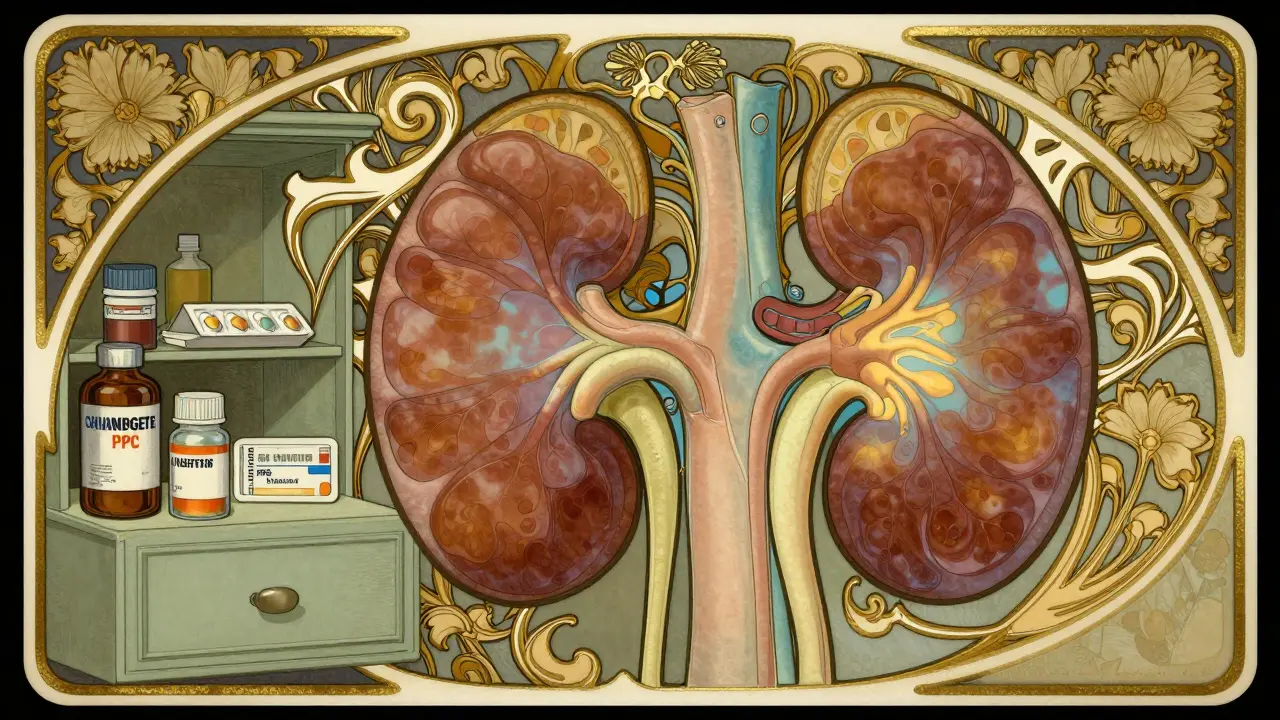
AIN Medication Risk & Symptom Checker
Select the medication group you are currently taking or concerned about to see typical onset times, red-flag symptoms, and general recovery outlooks.
---
Imagine taking a common heartburn pill or a standard course of antibiotics, only to find out a few weeks later that your kidneys are struggling to function. It sounds unlikely, but for some, the body's immune system overreacts to a medication, treating the kidneys like an enemy and sparking a severe inflammatory response. This is Acute Interstitial Nephritis, a condition where the spaces between the kidney tubules swell up and block the organ's ability to filter waste from your blood.
The scary part? This isn't always a sudden "crash." For many, the signs are subtle, leading to misdiagnoses or delayed treatment. However, if you catch it early, the damage is often reversible. The key is knowing which drugs are the usual suspects and how to spot the red flags before the inflammation turns into permanent scarring.
| Drug Class | Typical Onset | Common Signs | Recovery Rate |
|---|---|---|---|
| Antibiotics (Beta-lactams) | 1-2 weeks | Fever, rash, eosinophilia | High (80-90%) |
| Proton Pump Inhibitors (PPIs) | 10-12 weeks | Subtle kidney decline | Moderate (60-70%) |
| NSAIDs (Ibuprofen, etc.) | 3-6 months | Swollen legs, low urine | Variable |
What exactly is happening in the kidneys?
To understand Acute Interstitial Nephritis is an immune-mediated inflammation of the renal tubulo-interstitium, typically triggered by a hypersensitivity reaction to medication. Think of your kidneys as a complex filtration system. While most kidney diseases attack the filters themselves (the glomeruli), AIN attacks the "packaging" or the interstitial spaces around the tubes. When your immune system misidentifies a drug as a threat, it sends inflammatory cells-specifically eosinophils-to flood these spaces. This causes the tissue to swell, which squeezes the tubules shut and prevents your kidneys from cleaning your blood effectively.
This process can lead to Acute Kidney Injury (AKI), a sudden drop in function. If the inflammation isn't stopped by removing the drug, the swelling can turn into permanent fibrosis, or scarring. In the worst cases, this leads to Chronic Kidney Disease (CKD), where the kidneys never fully recover.
Spotting the signs: It's not always a "classic" reaction
For years, doctors looked for the "hypersensitivity triad": a fever, a skin rash, and an elevated white blood cell count (eosinophilia). If you have all three, it's a huge red flag. But here is the catch: in the real world, fewer than 10% of patients actually show all three symptoms. You can't wait for a rash to appear before worrying about your kidneys.
Instead, look for these more common, though less specific, signs:
- Changes in Urination: About half of all patients notice they are peeing less than usual or that their urine looks different.
- Fluid Retention: Swelling in the legs or ankles (edema) is common, especially in those taking NSAIDs for long periods.
- General Malaise: Feeling unusually tired, slightly feverish, or just "off" after starting a new medication.
- Sterile Pyuria: This is a medical finding where white blood cells are in the urine, but there's no actual bacterial infection present. It's a common clue that the inflammation is internal, not an infection.
The usual suspects: Which medications cause AIN?
Not all drugs are created equal when it comes to kidney inflammation. The trigger often determines how quickly the disease hits and how likely you are to recover.
Antibiotics are the most frequent culprits, specifically Beta-lactams like penicillin and ampicillin. These reactions tend to happen fast-usually within a couple of weeks-and often come with the classic fever and rash. Because the reaction is so distinct, these cases are often easier to diagnose and have a high recovery rate.
Proton Pump Inhibitors (PPIs), used for acid reflux (like omeprazole), are a more "silent" threat. They don't usually cause a rash or fever. Instead, they cause a slow creep of inflammation over several months. Because the onset is so gradual, PPI-induced AIN is frequently missed until the kidney function has already dropped significantly.
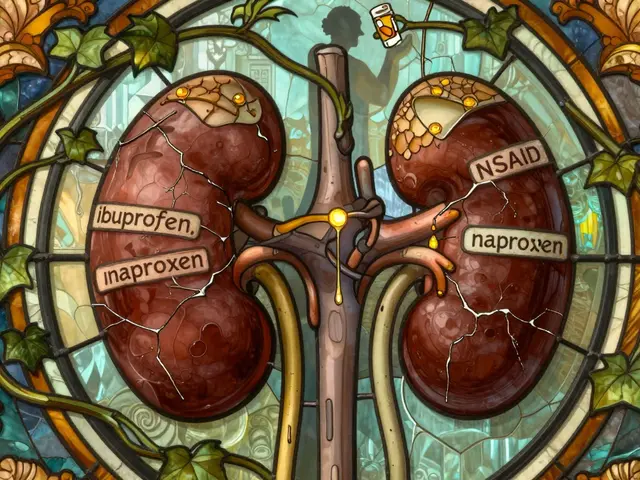
NSAIDs (like ibuprofen or naproxen) are different again. These are usually seen in people over 50 who take them daily for arthritis. Unlike antibiotics, NSAID-induced AIN can cause high levels of protein to leak into the urine, sometimes reaching "nephrotic-range" levels, which makes the patient look more like they have a different kind of kidney disease.
A newer concern involves Immune Checkpoint Inhibitors used in cancer therapy. These are powerful drugs that "unmask" the immune system to fight tumors, but sometimes they cause the immune system to attack the kidneys instead. These cases often require more aggressive, long-term steroid treatment to resolve.
How doctors diagnose and treat the inflammation
If a doctor suspects AIN, the first step is usually a urine test. They look for Eosinophiluria (eosinophils in the urine), though this is only present in about 30-70% of cases. They also check serum creatinine levels-if this number jumps up by 0.3 mg/dL in 48 hours, it's a sign of acute injury.
The only way to be 100% sure is a Kidney Biopsy. A tiny needle takes a sample of the kidney tissue to see if there is "tubulitis" (inflammation of the tubules). This is the gold standard and is usually recommended if the kidney function doesn't improve quickly after stopping the drug.
The treatment plan generally follows two main steps:
- Immediate Cessation: The absolute most important step is stopping the offending drug. Doing this within 48-72 hours of suspicion gives the kidneys the best chance to heal.
- Corticosteroids: If the kidneys don't recover on their own after stopping the drug, doctors may prescribe Prednisone. This helps dampen the immune response and reduce swelling. While some doctors use them early, others wait to see if the kidney recovers naturally first.
The road to recovery: What to expect
Recovery isn't instant. Even after you stop the drug, the inflammation takes time to clear. For younger patients, it might take 6 to 8 weeks to see kidney function return. For those over 65, it often takes 12 to 16 weeks.
It is important to be realistic: complete recovery to 100% baseline function isn't always guaranteed. Many patients end up with a small amount of residual impairment. However, the alternative-leaving the inflammation untreated-can lead to permanent failure in up to 25% of cases. This is why being an advocate for your own health and questioning new medications when you feel "off" is so critical.
Can I take the medication again if I had AIN?
Generally, no. Once you have developed a hypersensitivity reaction to a specific drug, your immune system "remembers" it. Taking the drug again can trigger a much faster and more severe reaction, potentially leading to total kidney failure or anaphylaxis. Always inform your doctors about a history of drug-induced AIN.
How do I know if my kidney function is recovering?
Recovery is monitored through blood tests, specifically serum creatinine and Estimated Glomerular Filtration Rate (eGFR). Your doctor will likely check these every few days during the acute phase and then weekly as you stabilize. An increasing eGFR and decreasing creatinine indicate the inflammation is subsiding.
Are over-the-counter meds as risky as prescriptions?
Yes. Many people forget to tell their doctors they are taking daily ibuprofen or naproxen because they are "just over-the-counter." These NSAIDs are a significant cause of AIN, especially in older adults or those with other health issues.
Will I need dialysis if I have AIN?
Most people do not need dialysis, but it can happen if the kidney injury is severe or if the diagnosis is delayed. Dialysis serves as a temporary bridge to keep the blood clean while the medications are cleared and the inflammation is treated with steroids.
How long does the steroid treatment typically last?
If steroids like prednisone are used, they are typically administered in a tapering dose over 4 to 6 weeks. The goal is to suppress the inflammation enough to stop the damage without causing long-term side effects from the steroids themselves.
Next steps and troubleshooting
If you are currently taking a new medication and feel unusual fatigue or notice a change in your urine, don't wait for a rash. Start by keeping a detailed log of every medication, including supplements and over-the-counter pills. Schedule a basic metabolic panel (BMP) and a urinalysis with your provider.
If your doctor dismisses your concerns as a simple urinary tract infection (UTI) but the antibiotics for the UTI aren't working, ask them to check for "sterile pyuria." If white blood cells are present but no bacteria are growing, it's time to ask for a nephrology referral to rule out AIN.



Carol Yang
April 24, 2026 AT 23:05Wow, crazy how something as simple as a heartburn pill can do that. Good thing there is a way to fix it though!
Daniel Runion
April 25, 2026 AT 14:49Typical!!! They always make it sound so "reversible"... but they never mention the actual quality of life drop after those steroids!!! Total joke!!!
Ben Jima
April 26, 2026 AT 21:55It is really crucial to keep a detailed log of every supplement you take. Many people forget that herbal remedies or high-dose vitamins can sometimes interact with these medications and exacerbate the stress on the renal system. If you are monitoring your health at home, staying hydrated is a basic but essential step to support kidney filtration while you wait for medical tests to come back.
William Zhigaylo
April 27, 2026 AT 15:32The utter negligence of the pharmaceutical industry is appalling. We are expected to trust these chemicals with our lives, yet the potential for permanent organ failure is brushed aside as a "hypersensitivity reaction." It is a systemic failure of safety protocols that leaves the patient to suffer the consequences while corporations profit from these dangerous concoctions.
Nikita Shabanov
April 27, 2026 AT 23:40Stopping the drug immediately is indeed the priority. In clinical practice, the speed of cessation often dictates the outcome of the biopsy results, as the inflammation can begin to subside quickly once the trigger is removed.
Nila Sawyer
April 28, 2026 AT 16:05Oh my goodness, I am just so glad this information is out there for everyone to see because it's so important to stay positive and proactive about our health! 🌟 It's truly inspiring to know that the body has such a strong capacity to heal itself if we just catch things early and give it the right support with the help of amazing doctors! 💖 Keep fighting and staying strong everyone, you've got this! 💪✨
Brittney Prince
April 30, 2026 AT 06:05Bet these "usual suspects" are just a cover for some new experiment they're running on us. They want us thinking it's the pills when it's actually something in the water or the air, just a way to keep us scared and dependent on their steroids.
Sharyl Foster
April 30, 2026 AT 14:00Please, like the post says, most people don't get the rash. Everyone thinks they're safe if they aren't breaking out in hives, which is just basic lack of medical literacy. It's a slow burn, especially with the PPIs, and by the time you notice the swelling, you're already halfway to a dialysis machine. Not that anyone actually reads the pamphlets that come with the meds anyway.
Michael Deane
April 30, 2026 AT 23:59I don't care what these fancy medical journals say, we used to just take an aspirin and get on with our day without worrying about every little thing in our blood, but now everyone's just too soft and the government wants to control every single pill we put in our mouths just to keep us under their thumb in this godforsaken system where nobody knows how to just be a man and deal with a bit of pain!
sachin singh
May 2, 2026 AT 18:44The mention of sterile pyuria is very interesting. It provides a clear pathway for diagnosis when the typical signs of infection are absent, and it is encouraging that such a specific marker exists to help clinicians avoid misdiagnosis in complex cases.