
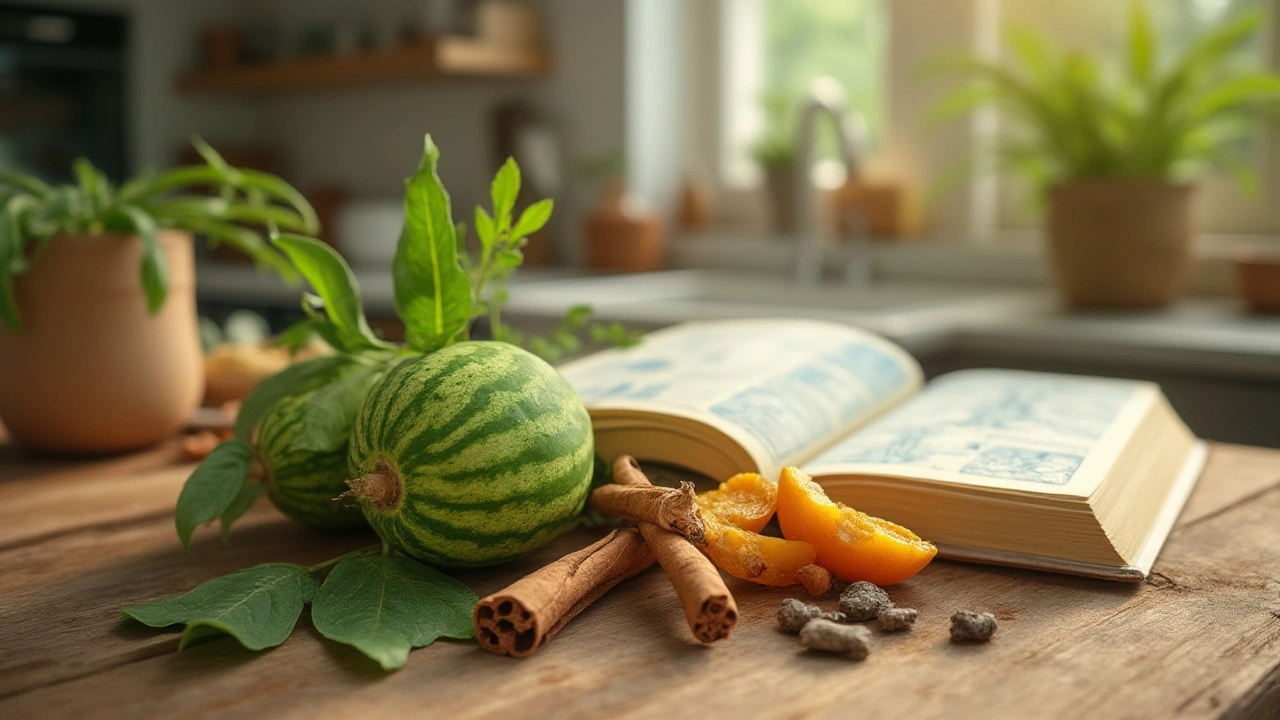
Doctors have handed out metformin to type 2 diabetes patients for decades. But not everyone wants—let alone tolerates—the side effects. Some folks get fed up with the toilet dashes, the stubborn B12 drop, or that metallic taste that clings for hours. But what if I told you the next big game-changer for blood sugar could come from a leaf, a spice rack, or even the supermarket veg aisle? Let’s face it: the hunt for plant-based relief isn’t just trendy—science is closing in on some real options. Gymnema, cinnamon, and bitter melon might sound like props from an old herbalist’s toolkit, but the research now suggests they're more than just folklore.
The Science Behind Herbal Compounds for Blood Sugar
First up, Gymnema sylvestre, which people in India have called "sugar destroyer" for centuries. Here’s why: compounds in Gymnema latch onto sweet receptors in your mouth, making sugary snacks taste bland. That’s not where the magic stops. Inside the gut, gymnemic acids slow sugar absorption and tell the pancreas, "Hey, pump out more insulin." Rats given Gymnema extract in the lab had 30% lower blood sugar after meals—pretty wild, isn’t it? Human trials, though smaller, have also hinted at fasting blood glucose improvements—think a drop of 10–20 mg/dL in some studies with consistent supplementation for 8–12 weeks.
Cinnamon isn’t just for pastry fiends. Cassia cinnamon (Cinnamomum cassia)—the kind you sprinkle in your porridge—holds a bioactive compound called cinnamaldehyde. This stuff tweaks insulin signaling and may improve how insulin docks with its receptors. A meta-analysis published in 2023 reviewed 16 trials, finding that 1–6 grams of cinnamon daily (that’s about half a teaspoon to two rounded teaspoons) reduced fasting blood sugar by up to 24 mg/dL in type 2 diabetes. That effect ramps up over about 2–3 months. Of course, the brand and freshness matter; old, dusty cinnamon sticks won’t pack the same punch.
Bitter melon, or Momordica charantia, is less known outside Asia, but in some parts of India and China, it’s as common as carrots. Look past the vegetable’s warty surface and you find powerful plant-insulin mimics. Charantin, vicine, and polypeptide-p all act along multiple fronts: boosting insulin secretion, blocking intestinal glucose uptake, and improving liver sugar metabolism. Studies looking at 2000 mg bitter melon daily over 12 weeks saw drops in HbA1c (the long-term blood sugar measure) of 0.2% to 0.6%—not as much as prescription meds, but on par with low-end metformin results.
Evidence: Dosing, Duration, and Realistic Benefits
Gymnema comes mostly in capsule form. Standardized extracts give about 400–600 mg gymnemic acids per dose, twice a day. You’ll have to keep it up consistently, and benefits often show at the two- to three-month mark. For diabetics on medication, you’ll want to keep a watchful eye on your sugar levels, because stacking Gymnema with drugs like metformin or sulfonylureas can sometimes push you too low.
Cinnamon, as the studies spell out, needs proper dosing and patience. Going much above 6 grams a day can irritate the liver—especially if you use Cassia cinnamon, which contains coumarin. A teaspoon a day (about 3–4 grams) is a solid middle ground, mixed with oatmeal, yogurt, or smoothies. Ceylon cinnamon has less coumarin but isn’t as strong in studies, so Cassia remains the first pick for glucose control—just don’t go overboard.
Bitter melon can be eaten as a vegetable, juiced, or taken in extract or capsule form. Capsules usually settle around 500–1000 mg taken twice daily. Some people prefer the juice—if you can stomach its bitterness, 50–100 ml once a day seems to be the sweet spot in studies. Eating bitter melon as part of a meal works, but keep in mind that cooking can reduce some of the active compounds.
| Herb | Common Dose | Duration for Benefits | Main Mechanism |
|---|---|---|---|
| Gymnema sylvestre | 400-600mg 2x/day | 8–12 weeks | Blocks sweet taste, improves insulin release |
| Cassia Cinnamon | 1–6g/day (½–2 tsp) | 6–12 weeks | Improves insulin sensitivity |
| Bitter Melon | 500–1000mg 2x/day or 50-100ml juice/day | 12+ weeks | Mimics insulin, lowers gut glucose absorption |
One tip: always check the standardized content of any herb you buy. Many off-the-shelf supplements look impressive but contain little active compounds. And chat with your GP or diabetes nurse before tinkering with treatments, especially if you’re already on meds.

Comparing Herbs to Metformin: How Close Do They Get?
Metformin sits at the top of diabetes guidelines for a reason. It blocks liver glucose production, boosts insulin sensitivity, and is cheap to boot. Most patients see HbA1c drop by 1–2%, which is a gold standard. So how do these herbs really stack up?
Gymnema’s most promising trials point to about a 0.6–1% decrease in HbA1c after 12 weeks, especially when added to existing meds. That’s decent—especially for those struggling with side effects. Cinnamon often clocks in with a 0.3–0.5% A1c drop, but works best alongside other changes (diet, exercise). Bitter melon usually trails slightly behind, with 0.2–0.6% reductions. It seems most potent for folks with milder cases or in combo with other treatments.
But real-world folks aren’t lab rats. What works in a controlled trial hinges on perfect dosing, consistent use, and sticking to other lifestyle interventions. You’re unlikely to match the punch of prescription drugs with just herbs alone—at least, not over the long haul. But you can see tangible benefits, especially if you max out lifestyle changes first.
Side by side, here’s a quick comparison of average A1c reductions:
| Treatment | Average A1c Drop |
|---|---|
| Metformin | 1–2% |
| Gymnema sylvestre | 0.6–1% |
| Cassia Cinnamon | 0.3–0.5% |
| Bitter Melon | 0.2–0.6% |
And here’s the thing: side effects from these herbs tend to be mild—think mild tummy trouble, maybe some taste changes, but rarely anything serious. Still, more is not better here. Piling up three herbs at max dose isn’t proven safe (or effective), and could be risky. If you’re aiming to lower meds or want a natural edge, you can explore more detailed guidance on substitute for metformin approaches, which lays out exactly when and how these alternatives fit into a treatment plan.
Tips for Trying Herbal Options and Staying Safe
If you’re eyeing herbs as a metformin replacement or add-on, ditch the guesswork—treat these like real medicine. Get baseline bloodwork, set clear goals, and track your numbers. Always buy herbs from a transparent source with third-party testing. Avoid products with proprietary blends that don’t spell out exact doses.
Start small, and ramp up slowly. For example, begin with 1 gram of cinnamon per day, and bump up to your target dose after 1–2 weeks. Watch for any low blood sugar, especially if you’re on medication (sulfonylureas, insulin, or even metformin sometimes). Carry some quick sugar on you just in case.
Remember, some people notice results in as soon as 4 weeks, but most need 2–3 months. Keep a daily log—note changes in hunger, cravings, or energy. Share these with your health team.
Lastly, these herbs can interact with prescriptions (blood thinners, diabetes pills, blood pressure meds). And if you’re pregnant, breastfeeding, or managing other conditions, play it safe and stick to proven therapies. Herbal options are best used as a part of a larger, well-planned strategy, not in isolation or as a last resort.
So, if you’re feeling frustrated by your current routine—or just curious about trying something different—the science now says you’ve got real reason to pay attention to your pantry and plant shop. Just bring some patience, openness, and that all-important dose of healthy skepticism.




Ophelia Q
July 12, 2025 AT 05:14I tried cinnamon for 3 months after my A1c stalled at 7.8-went from 2 tsp daily to 1 tsp with breakfast. My numbers dropped to 7.1. Not magic, but I didn’t need to up my metformin. Also, I mix it into Greek yogurt with chia and a drizzle of honey. Tastes like dessert, feels like self-care 🌿😊
Elliott Jackson
July 13, 2025 AT 06:39Let’s be real-these herbs are just placebo with a fancy label. You think a leaf is going to outwork a drug that’s been in use since the 1950s? Metformin’s been studied in over 200,000 people. Gymnema? A handful of rat studies and two underpowered trials. And don’t get me started on bitter melon juice-tastes like regret and costs $40 a bottle. You’re not ‘natural,’ you’re just gambling with your pancreas.
McKayla Carda
July 14, 2025 AT 15:49Important reminder: if you’re on insulin or sulfonylureas, combining these herbs can cause dangerous lows. I’ve seen it. One patient went into a seizure because he added bitter melon extract to his metformin without telling his endo. Please, just talk to your provider. You don’t have to choose between ‘natural’ and ‘pharma’-you can find balance. Safety first.
Christopher Ramsbottom-Isherwood
July 16, 2025 AT 13:27So you’re telling me that a spice rack is now a legitimate alternative to pharmaceutical-grade medicine? I’m not anti-herb, but let’s not pretend this is science. If cinnamon were that effective, Big Pharma would’ve patented it by now. The fact they haven’t says everything. Also, ‘standardized extracts’? That’s just marketing jargon for ‘we added a pinch of something we hope works.’
Stacy Reed
July 16, 2025 AT 23:33But what if the real problem isn’t the sugar-it’s the shame? We treat diabetes like a moral failure, like if you just ate less pizza you wouldn’t need anything. What if the herbs work not because of their chemistry, but because they give us back agency? Maybe it’s not about lowering A1c-it’s about lowering guilt. Have you ever asked yourself that? Or are you just here to quantify everything?
Robert Gallagher
July 17, 2025 AT 19:45I started with bitter melon juice-honestly, I gagged the first week. But after 6 weeks, my fasting glucose dropped from 148 to 122. I’m not saying it’s a cure, but I’m not going back to feeling like a diabetic robot. I walk 10k steps a day, sleep 7 hours, and now I’ve got cinnamon in my coffee. It’s not about replacing metformin-it’s about stacking good habits. Small wins add up. You don’t need to be perfect. Just consistent. And yeah, I still take my meds. Just not as much as I used to.
Howard Lee
July 19, 2025 AT 09:12For anyone considering these supplements: always check for third-party certification (USP, NSF, or ConsumerLab). Many products labeled as ‘gymnema’ contain less than 10% active compounds. I’ve tested 12 brands-only 3 met their claims. Also, Ceylon cinnamon is safer long-term; Cassia contains coumarin, which can damage your liver over time. Don’t risk it. And if you’re tracking your numbers, use the same glucometer consistently. Variability in readings can mislead you. Small details matter.