
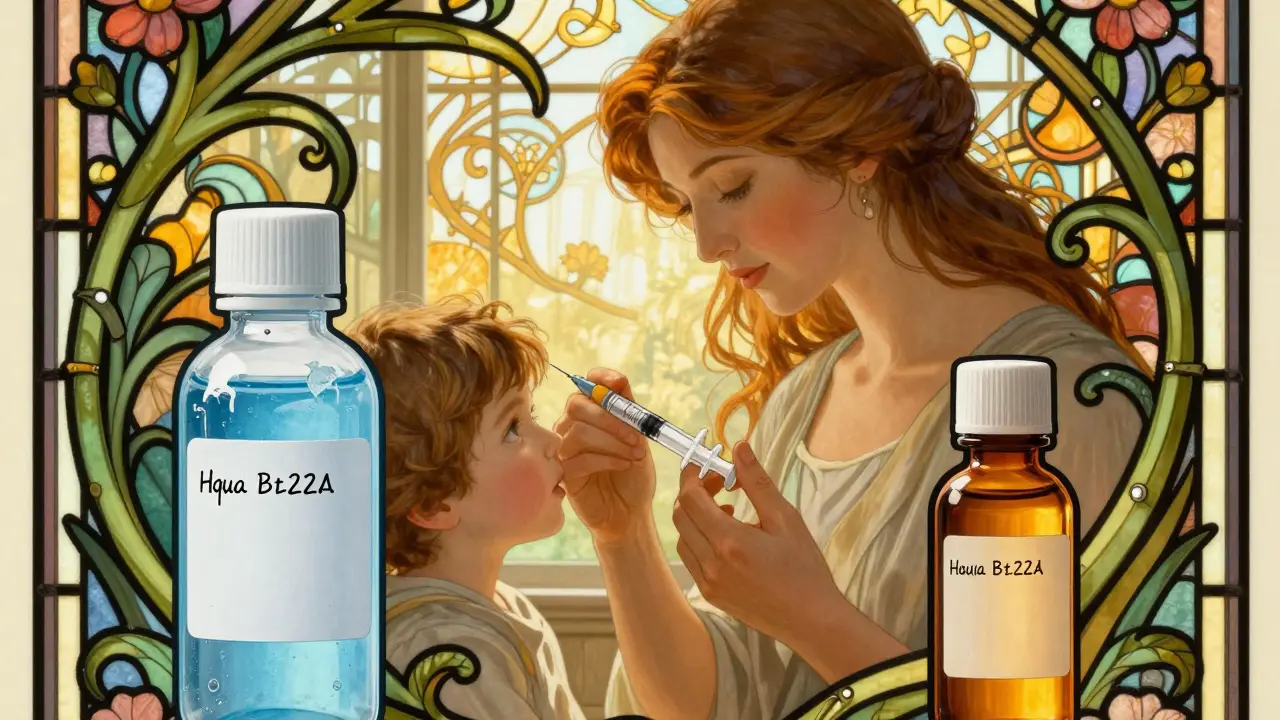
Not All Liquid Antibiotics Need the Fridge
Many people assume that if a medicine is liquid, it must go in the refrigerator. That’s not true - and getting it wrong can make your antibiotic less effective or even useless. Some liquid antibiotics need cold storage. Others break down faster in the fridge. The only way to know for sure? Check the label or ask your pharmacist. Don’t guess. Your child’s infection depends on it.
Why Storage Matters More Than You Think
Antibiotics don’t just expire on a date printed on the bottle. Their strength starts dropping the moment they’re mixed with water - and how you store them speeds that up. Heat, sunlight, and freezing temperatures can change the chemical structure of the drug. If the antibiotic loses potency, the infection won’t clear. That means your child keeps feeling sick, the bacteria keep growing, and you might end up needing a stronger antibiotic - or worse, a hospital visit.
The FDA requires drugmakers to test how long their medicines stay stable under different conditions. But once the bottle leaves the pharmacy, it’s in your hands. Studies show that up to 30% of households store medications improperly. For antibiotics, that’s not just a mistake - it’s a health risk.
Amoxicillin: The Most Common Case
Amoxicillin is one of the most prescribed antibiotics for kids. When reconstituted, it can be stored two ways:
- Refrigerated (2-8°C / 36-46°F): Lasts up to 14 days.
- Room temperature (20-25°C / 68-77°F): Lasts up to 14 days too - but it might taste worse.
That’s right. You don’t have to refrigerate it. But if you do, it stays a little more stable and tastes better. The key? Throw it out after 14 days, no matter where you stored it. Don’t save it for next time. Bacteria don’t wait.
Amoxicillin-Clavulanate (Augmentin): A Different Story
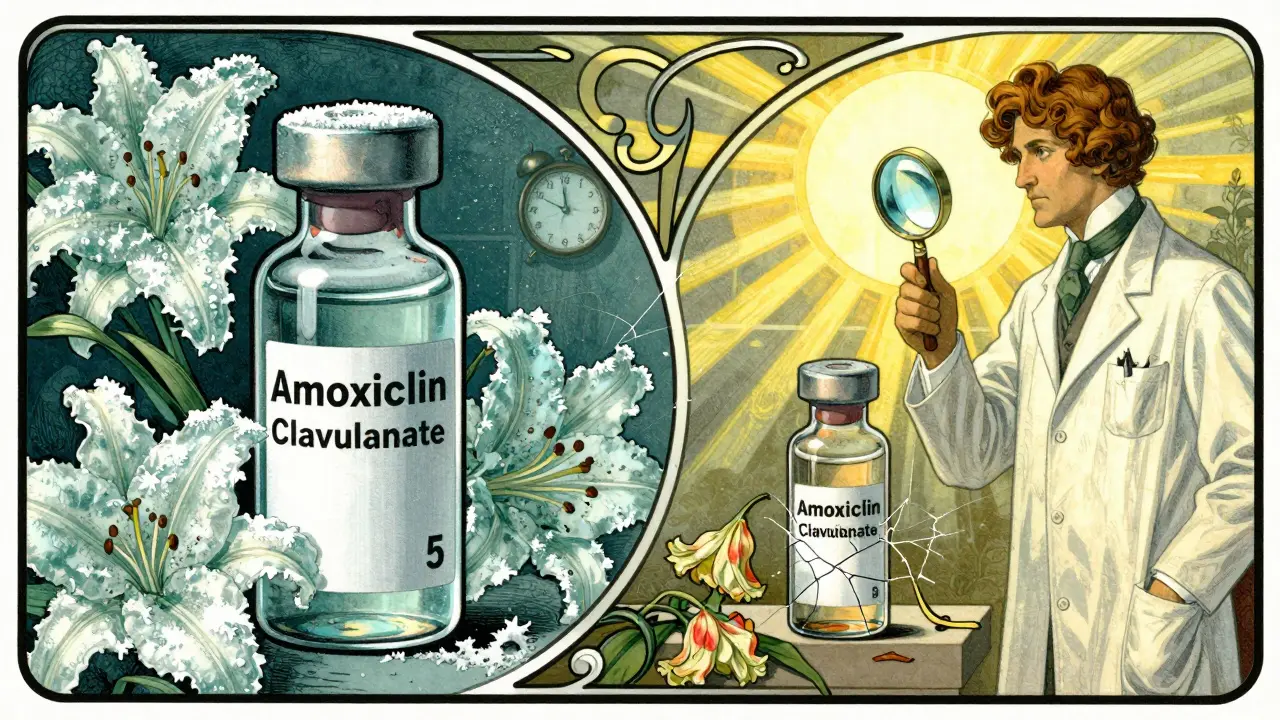
This combo drug has two parts: amoxicillin and clavulanate. The clavulanate part is fragile. It breaks down faster than amoxicillin, especially at higher temperatures.
- Refrigerated: Use within 10 days.
- Room temperature: Use within 5 days.
A 2013 study found that at room temperature (27-29°C), clavulanate lost effectiveness after five days - even though the amoxicillin was still fine. That means your child gets less of the part that fights resistant bacteria. If you can’t keep it cold, plan to finish the full course faster. Don’t stretch it out.
What About Other Antibiotics?
Not all liquid antibiotics behave the same. Here’s what to watch for:
- Cephalexin: Can be stored at room temperature for up to 14 days. No refrigeration needed.
- Azithromycin: Once mixed, it’s stable at room temperature for up to 10 days. Keep it away from heat.
- Clindamycin: Must be refrigerated. Discard after 14 days.
- Trimethoprim-Sulfamethoxazole: Keep refrigerated. Discard after 14 days.
There’s no universal rule. Each drug has its own stability profile. Always read the instructions that come with the bottle. If you’re unsure, call the pharmacy. They’ve seen it all.
Temperature Rules You Can’t Ignore
Refrigeration isn’t just about keeping things cold - it’s about keeping them stable.
- Don’t freeze: Freezing can destroy the structure of liquid antibiotics. It doesn’t preserve them - it ruins them.
- Avoid heat: Don’t leave antibiotics on a windowsill, in a hot car, or near the stove. Even a few hours in 90°F heat can hurt potency.
- Keep it dark: Sunlight breaks down many drugs. Store bottles in a cabinet, not on the counter.
- Stay dry: Moisture causes pills to crumble and liquids to degrade. Keep the cap tight.
Humidity and temperature swings are the silent killers of medicine. A bathroom cabinet is a bad idea - steam from showers ruins drugs. A bedroom drawer or kitchen cabinet away from the sink is better.
How to Measure Doses Accurately
Even if you store the antibiotic perfectly, giving the wrong dose defeats the purpose. Never use a kitchen spoon. They vary too much - one tablespoon might be 12 mL, another 18 mL.
Use what the pharmacy gives you:
- Oral syringe (best option - precise and easy to use)
- Dosing cup with clear markings
- Dropper (for infants)
Shake the bottle well before each dose. Suspensions settle. If you don’t shake, you might give a dose with no medicine at all - or too much. Always check the label for shaking instructions.
When to Throw It Out
Expiration dates on reconstituted antibiotics aren’t suggestions - they’re safety limits.
- Most last 7-14 days after mixing.
- Some, like amoxicillin-clavulanate, last only 5-10 days.
- Never use it past the date on the label.
Look for signs it’s gone bad:
- Change in color (yellowing, darkening)
- Unusual smell (sour, rancid, chemical)
- Clumping or thickening
- Separation that doesn’t mix back with shaking
If any of these happen, toss it. Don’t risk it. Antibiotics aren’t like milk - you can’t tell they’re spoiled just by tasting them.

Traveling With Liquid Antibiotics
If you’re flying or driving for a few days, plan ahead.
- Keep it in your carry-on - never checked luggage. Temperatures in cargo holds can drop below freezing or spike over 100°F.
- Use a small insulated bag with a cool pack if refrigeration is required.
- Ask your pharmacist for a travel-sized container if you’re only taking part of the bottle.
- Carry the original label with you - it shows the expiration date and storage instructions.
Don’t leave it in a hot car while running errands. Even 30 minutes in 95°F heat can reduce potency.
What to Do With Leftover Antibiotics
Never flush them down the toilet or toss them in the trash. That pollutes water and risks accidental ingestion by kids or pets.
Use a drug take-back program. Most pharmacies, hospitals, and police stations have drop-off bins. If none are available:
- Mix the liquid with an unpalatable substance like coffee grounds, dirt, or cat litter.
- Pour it into a sealed container - like a jar or plastic bag.
- Throw it in the trash.
Remove or black out your name and prescription info from the label before tossing the bottle.
Bottom Line: Follow the Label, Not the Assumption
There’s no one-size-fits-all rule for storing liquid antibiotics. Amoxicillin? Fine at room temp. Amoxicillin-clavulanate? Refrigerate and use fast. Clindamycin? Must stay cold. The difference isn’t subtle - it’s life-or-death.
Always read the storage instructions on the bottle. Ask your pharmacist if anything’s unclear. Write down the discard date right on the bottle with a marker. Keep it out of reach of children. And never, ever save leftover antibiotics for next time. Infections change. Bacteria evolve. What worked last month might not work now - and could make things worse.
When in Doubt, Call the Pharmacy
Pharmacists see hundreds of these questions every week. They know which antibiotics are stable at room temp and which will fall apart if you forget the fridge. Don’t feel bad for asking. It’s their job to help you get it right.



Katie Taylor
December 23, 2025 AT 23:18Isaac Bonillo Alcaina
December 25, 2025 AT 02:28niharika hardikar
December 25, 2025 AT 06:02Blow Job
December 25, 2025 AT 14:19EMMANUEL EMEKAOGBOR
December 27, 2025 AT 05:41Jillian Angus
December 27, 2025 AT 18:57Bhargav Patel
December 29, 2025 AT 04:21Lu Jelonek
December 30, 2025 AT 10:00siddharth tiwari
December 31, 2025 AT 20:42suhani mathur
December 31, 2025 AT 21:23Diana Alime
January 2, 2026 AT 21:08Andrea Di Candia
January 3, 2026 AT 22:02