
Opioid Risk Stratification Calculator
This tool uses the Opioid Risk Tool (ORT) questionnaire to help determine appropriate monitoring frequency for patients on opioid therapy. Based on clinical guidelines, it identifies low, moderate, or high-risk patients to guide appropriate testing frequency.
Note: This tool is for informational purposes only and does not replace clinical judgment. Consult a healthcare provider for medical decisions.
Low Risk
Annual urine drug testing is recommended.
Moderate Risk
Urine drug testing every 6 months is recommended.
High Risk
Quarterly urine drug testing with specimen validity checks is recommended.
Specimen Validity Checks
To ensure test accuracy, labs check for:
- Specific gravity (1.003-1.030)
- Temperature (90-100°F)
- Creatinine levels (20 mg/dL+)
- pH (4.5-9.0)
These checks help prevent false results from diluted or substituted samples.
When patients are prescribed opioids for chronic pain, doctors aren’t just handing out pills. They’re managing a high-stakes balance between pain relief and the risk of misuse, addiction, or overdose. That’s where urine drug screens and risk stratification come in-not as punishment, but as a tool to keep people safe.
Why Urine Drug Screens Are Part of Opioid Treatment
Urine drug testing isn’t about catching people doing something wrong. It’s about knowing what’s actually in their system. Many patients take their prescribed medication exactly as directed. Others may be using street drugs like fentanyl or heroin without telling their doctor. Some might even be sharing pills with family members. Without objective data, doctors are guessing. The CDC recommends urine testing for anyone on long-term opioid therapy. Why? Because opioids are dangerous when mixed with other substances. In 2021, over 80,000 overdose deaths in the U.S. involved opioids. Many of those deaths happened because patients were taking prescribed painkillers alongside benzodiazepines, alcohol, or illicit drugs like fentanyl-something they never mentioned during a 10-minute visit. Urine tests give a snapshot of what’s been used in the past few days. They help confirm the patient is taking the right medication, at the right dose, and nothing else. This isn’t just about rules. It’s about survival.How Urine Drug Screens Work: Immunoassays vs. Mass Spectrometry
Not all urine tests are the same. There are two main types: screening tests and confirmation tests. The first step is usually an immunoassay. These are fast, cheap, and widely used-costing around $5 per test. They work by detecting broad categories of drugs, like “opiates” or “benzos.” But here’s the catch: they’re not precise. Up to 30% of results can be false positives. A common over-the-counter painkiller like ibuprofen can trigger a false positive for marijuana. Some cold medicines can look like amphetamines. Even worse, many immunoassays miss fentanyl entirely. Fentanyl is 50 to 100 times stronger than morphine, and it doesn’t trigger the same chemical reaction in standard tests. A patient on a fentanyl patch might test negative, leading a doctor to wrongly assume they’re not taking their medication. That’s where confirmatory testing comes in. Gas Chromatography/Mass Spectrometry (GC/MS) or Liquid Chromatography/Mass Spectrometry (LC-MS) can identify exact drugs and their metabolites. These tests cost between $25 and $100, but they’re accurate. They can tell the difference between oxycodone and hydrocodone, detect synthetic opioids, and even spot if someone spiked the sample. The problem? Most clinics only do the cheap screening test. A 2022 survey found that 68% of pain doctors see false-negative hydrocodone results at least once a month. Patients get accused of noncompliance-even though they’re taking their pills exactly as prescribed.The Hydrocodone Problem and Other Detection Gaps
Hydrocodone is one of the most commonly prescribed opioids in the U.S. But standard opiate immunoassays were designed to detect morphine, not hydrocodone. Studies show that 72% of urine samples that tested negative for opiates actually contained hydrocodone or its metabolite, hydromorphone. This isn’t a minor flaw. It’s a systemic issue. Patients are being labeled as non-adherent when they’re not. They’re threatened with discontinuation of treatment. Some even lose access to care. One Reddit user, "ChronicPainWarrior22," shared how they failed a random test despite taking their oxycodone daily. The lab didn’t test for oxycodone specifically-just “opiates.” Other gaps exist too. Synthetic cannabinoids (like Spice or K2) often don’t show up on standard cannabinoid screens. MDMA and methylphenidate can slip through amphetamine tests. Even buprenorphine, used to treat opioid use disorder, doesn’t always trigger a positive on routine panels. Newer tests are starting to fix this. In 2023, the FDA approved the first fentanyl-specific immunoassay with 98.7% sensitivity. But adoption is slow. Most labs still use outdated panels.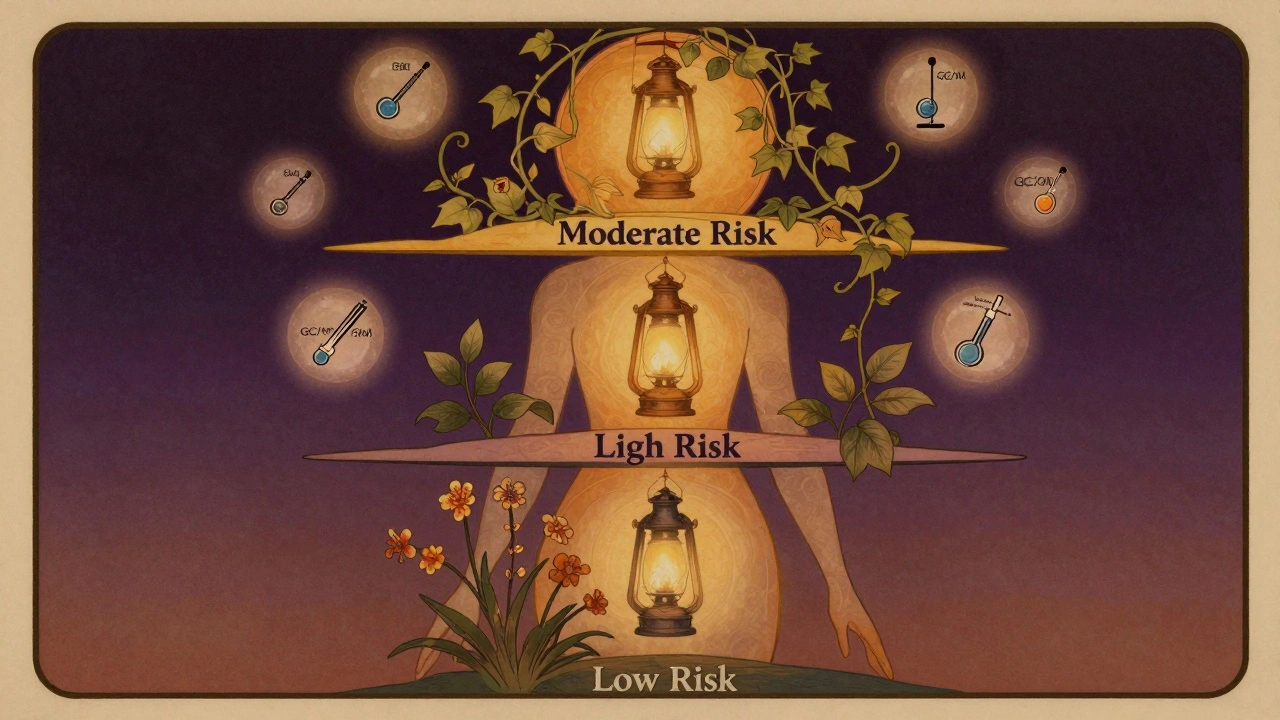
What Makes Someone High Risk? Risk Stratification Explained
Not every patient needs the same level of monitoring. That’s where risk stratification comes in. The Opioid Risk Tool (ORT) is a simple five-question survey used in clinics across the U.S. It asks about personal or family history of substance use, mental health conditions, and age. Based on the answers, patients are categorized as low, moderate, or high risk. - Low-risk patients (score 0-3): Annual urine testing is usually enough. - Moderate-risk patients (score 4-7): Testing every six months. - High-risk patients (score 8+): Quarterly testing, with specimen validity checks (to rule out dilution or substitution). This approach isn’t just smarter-it’s more ethical. Universal testing for everyone creates mistrust. It treats patients like suspects. Risk-based testing focuses resources where they’re needed most. A 2023 study in JAMA showed clinics using this tiered model reduced unnecessary tests by 40% while catching more cases of illicit drug use. High-risk patients who got frequent testing were 37% less likely to have prescriptions lost or stolen.Specimen Validity: Is the Sample Even Real?
A urine test is only as good as the sample. That’s why labs check for three things: - Specific gravity: If it’s too low (below 1.003), the sample might be diluted-either by drinking too much water or intentionally tampering. - Temperature: The sample should be between 90-100°F when tested. Cold samples suggest substitution. - Creatinine level: Below 20 mg/dL means the urine is too diluted to be valid. Some people try to cheat the system by adding bleach, vinegar, or commercial products to their urine. Labs test for pH too-if it’s below 4.5 or above 9.0, the sample is flagged. These checks aren’t about suspicion. They’re about accuracy. A false result can lead to wrong decisions-like stopping a patient’s pain medication or accusing them of addiction when they’re not.What Doctors Should Do (And What They Shouldn’t)
Here’s what works: - Start testing at the beginning of treatment, not after problems arise. - Use risk stratification to set testing frequency. - Always confirm positive or unexpected results with GC/MS or LC-MS. - Talk to patients about results-don’t punish them. Here’s what doesn’t work: - Relying on immunoassays alone for critical decisions. - Using quantitative results to judge if someone took “enough” of their medication. Drug levels in urine don’t match prescribed doses-everyone metabolizes differently. - Testing randomly without a plan. If you test every patient every month, you’re wasting money and eroding trust. - Ignoring fentanyl. If a patient is on a fentanyl patch, your test must be able to detect it. A 2019 study found that 30% of urine tests ordered in pain clinics were clinically unnecessary. That’s not just wasteful-it’s harmful. Patients feel surveilled. They stop showing up. They stop trusting their doctor.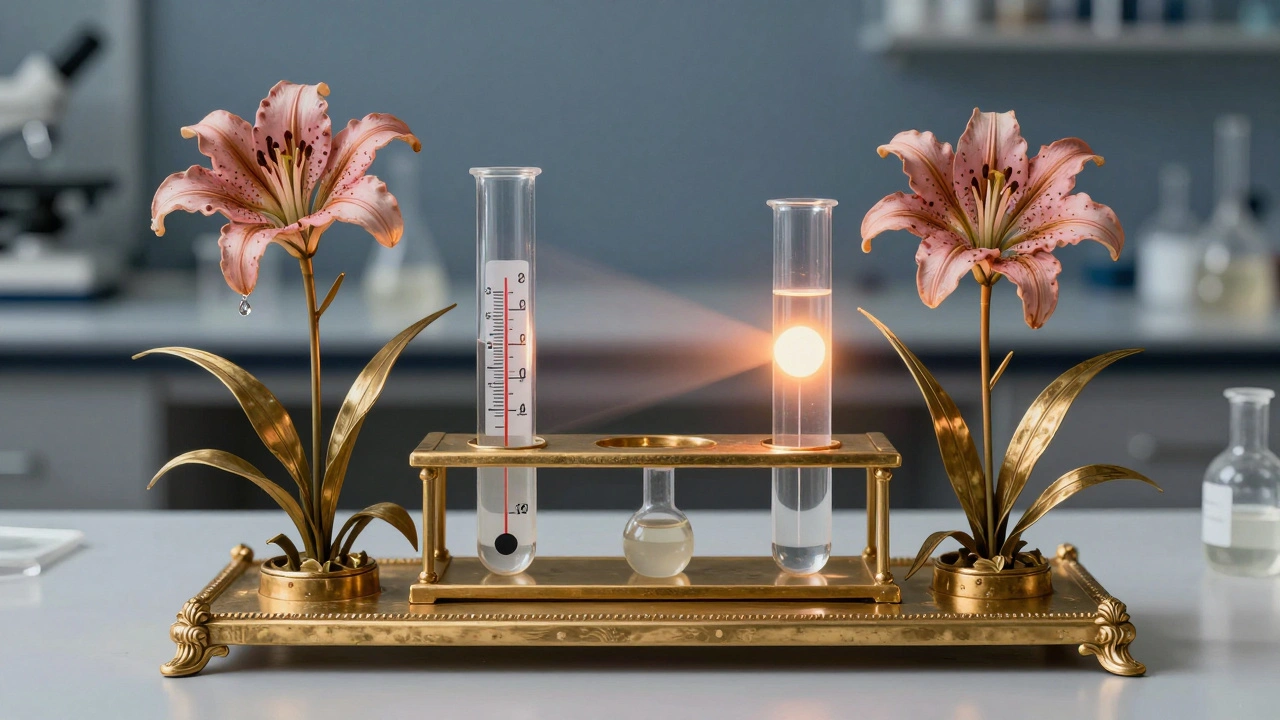
The Future: Faster, Smarter, More Targeted Testing
The field is changing. New FDA-approved tests can now detect fentanyl in standard immunoassays. Point-of-care devices are being tested-machines that can give results in under an hour, with lab-level accuracy. AI tools are being developed to predict adherence patterns based on past behavior, prescription history, and even social factors. But the biggest shift isn’t technological-it’s philosophical. More clinics are moving away from “test everyone” to “test who needs it.” The American Medical Association’s 2023 guidelines now recommend risk-based testing as the standard. This isn’t about control. It’s about care. Opioid treatment isn’t just about prescribing pills. It’s about understanding the whole person-their pain, their history, their risks, and their needs.Frequently Asked Questions
Are urine drug tests mandatory for opioid treatment?
No, they’re not federally required, but 38 U.S. states have laws mandating urine testing for patients on long-term opioid therapy, especially at higher doses. Most reputable pain clinics use them as a standard of care because they improve safety and outcomes.
Can a urine test show how much of a drug I took?
No. Urine tests detect whether a drug is present, not how much you took or when you took it. Drug levels vary based on metabolism, body weight, kidney function, and other factors. A high level doesn’t mean abuse. A low level doesn’t mean noncompliance. Only qualitative results (present or absent) are clinically useful for monitoring.
Why do I keep testing negative for my prescribed hydrocodone?
Standard opiate immunoassays are designed to detect morphine, not hydrocodone. Many labs still use outdated panels that miss hydrocodone and hydromorphone. Ask your provider if they’re using a test that specifically includes hydrocodone or if they can send the sample for confirmatory GC/MS testing.
I’m on a fentanyl patch, but my test keeps coming back negative. What’s going on?
Fentanyl doesn’t trigger standard opiate screens because its chemical structure is different from morphine. Until recently, most labs couldn’t detect it at all. Now, newer tests can-but not all clinics use them. Ask if your lab uses a fentanyl-specific immunoassay or LC-MS confirmation. If not, your results are unreliable.
Will a positive test for marijuana get me kicked off my opioid prescription?
Not necessarily. A positive test for marijuana doesn’t automatically mean you’ll lose your prescription. Doctors look at the full picture: Are you managing your pain? Are you safe? Are you honest? Many providers will work with you to reduce or stop marijuana use, especially if it’s affecting your breathing or mental health-but they won’t abandon you just because of one test result.




Sandridge Nelia
December 3, 2025 AT 03:10I’ve been on long-term opioids for 8 years and honestly, urine tests saved my life. Not because I was using anything sketchy, but because my doc caught me accidentally mixing my pain med with a muscle relaxer I didn’t realize was dangerous. That test led to a conversation, not a lecture. I’m still here because they cared enough to check.
Also, please stop using outdated immunoassays. I’ve had 3 false negatives on hydrocodone. I’m not cheating. The test is broken. Fix the tool, not the patient.
Mark Gallagher
December 4, 2025 AT 05:46Why are we even doing this? You’re telling me a 10-minute visit can’t assess compliance? This is government overreach disguised as medicine. If you’re taking your meds as prescribed, you shouldn’t need a lab to prove it. This is the slippery slope to mandatory drug testing for every diabetic, hypertensive, or asthmatic. Next they’ll test your blood for sugar before giving you insulin. Wake up.
Gerald Nauschnegg
December 4, 2025 AT 09:58OMG YES. I work in a pain clinic and this is 100% true. We just switched to LC-MS for high-risk patients last year and our dropout rate dropped by half. Patients feel respected instead of accused. Also, fentanyl detection? Huge. We had one guy come in crying because his test kept saying he wasn’t taking his patch - turns out his lab didn’t test for it at all. He was on 100mcg/hr. We almost lost him because of a $5 test.
Also, if you’re using immunoassays for hydrocodone, you’re doing it wrong. Stop it. Please.
Adrianna Alfano
December 6, 2025 AT 01:53As someone who’s been through this system… I’m so tired of being treated like a criminal. I take my meds. I go to therapy. I don’t drink. But I still get flagged because my test came back "negative" for hydrocodone. My doctor didn’t even look at my pill bottle. He just said "you’re noncompliant".
And then I found out the lab doesn’t even test for hydrocodone. Like… what? I’m not the problem. The system is.
Also I cried reading this. Thank you for writing it. 💔
Casey Lyn Keller
December 7, 2025 AT 09:18This is all just a way for clinics to make more money. Labs make bank on these tests. Doctors get paid per test. Patients get scared into compliance. Meanwhile, real solutions like better pain management or mental health access? Nah. Too expensive. Let’s just keep testing people like they’re suspects. Classic.
Jessica Ainscough
December 7, 2025 AT 22:19I appreciate this breakdown. I’m a nurse and I’ve seen too many patients get punished for lab errors. The risk stratification part? That’s the way forward. Not everyone needs monthly tests. My grandma on low-dose oxycodone gets tested once a year. My coworker with a history of addiction gets tested every 3 months. Fair. Smart. Human.
Also, confirmatory testing should be standard. Not optional. Period.
May .
December 8, 2025 AT 11:45Sara Larson
December 9, 2025 AT 14:22THIS. 🙌 I’m so glad someone finally said it. I was so scared to speak up because I thought I’d be labeled an addict. But I’m not. I’m just someone with chronic pain who takes their meds. And I’ve been failed by the system so many times.
Thank you for explaining the science. Thank you for not judging. Please share this with every pain clinic in the country. 💙
Josh Bilskemper
December 10, 2025 AT 19:35Urine screens are a joke. The CDC? Outdated. The Opioid Risk Tool? Flawed. You’re relying on self-reported mental health history and family background to predict behavior? That’s not medicine. That’s astrology with a lab coat. Real medicine uses biomarkers, not questionnaires. And you’re still using immunoassays? Pathetic. You’re not managing risk. You’re managing liability.
Storz Vonderheide
December 12, 2025 AT 17:42As someone who’s worked in addiction medicine for 15 years, I can say this: the goal isn’t to catch people. It’s to help them stay alive.
When we started using risk-based testing instead of blanket screening, our patients started showing up more. They trusted us more. They told us when they were using weed or benzos because they knew we weren’t going to cut them off for one test.
And yes - we upgraded to LC-MS for everyone. It cost more. But we saved more lives. That’s the ROI.
To the doc reading this: if your lab doesn’t test for fentanyl or hydrocodone, change labs. Your patients are counting on you.
And to the patient reading this: bring your pill bottles. Ask for confirmation testing. You deserve care, not suspicion.