

Opioid Tolerance Risk Calculator
This tool helps you understand your overdose risk when returning to opioids after a period of abstinence. Based on CDC data, 74% of fatal overdoses in people with opioid use disorder occur in the first weeks after release from incarceration.
When someone takes opioids for pain, they often expect relief to last. But for many, that relief fades. Not because the medicine stopped working, but because their body changed. This is opioid tolerance - and it’s one of the most misunderstood and dangerous aspects of long-term opioid use.
What Opioid Tolerance Actually Means
Opioid tolerance isn’t about addiction. It’s not about craving pills or lying to doctors. It’s a biological process. Your body adapts. Over time, the same dose of morphine, oxycodone, or fentanyl stops doing what it used to. The pain doesn’t fade as easily. The calm doesn’t come as quickly. So, you take more. And then more again.
This isn’t rare. About 30% of people on long-term opioid therapy need higher doses within the first year, according to the CDC. That’s not a failure of the patient. It’s how the nervous system responds to repeated exposure. The brain’s opioid receptors - the ones that latch onto the drug to block pain - start to shut down. Some get less sensitive. Others are pulled inside the cell, out of reach. A few disappear entirely.
It’s like turning up the volume on a speaker to drown out noise. At first, it works. But after a while, even max volume doesn’t cut through. You keep turning it up - until the speaker blows.
How Your Body Builds Tolerance
At the molecular level, tolerance happens at the mu-opioid receptor, coded by the OPRM1 gene. This receptor is the main target for most prescription opioids. When you take the drug, it binds here, triggering dopamine release and blocking pain signals. But with constant use, your cells respond by changing the receptor itself.
Studies show three key changes:
- Desensitization: The receptor stops responding as strongly, even when the drug is bound.
- Internalization: The receptor is pulled into the cell, away from where the drug can reach it.
- Downregulation: The cell makes fewer receptors overall.
These aren’t just theoretical. Inflammation plays a role too. Proteins like TLR4 and NLRP3 inflammasomes get activated by opioids, which speeds up tolerance. That’s why some patients develop tolerance faster than others - genetics, chronic inflammation, and even gut health can influence how quickly this happens.
And it’s not the same for every effect. You might lose pain relief after a few weeks but still feel the sedative effects of the drug. Or you might stop feeling euphoria while still being at risk for breathing problems. That’s why doctors can’t just assume a higher dose means better pain control - it might just mean more side effects.
Tolerance vs. Dependence vs. Addiction
People mix these up all the time. They’re not the same.
- Tolerance = needing more to get the same effect.
- Dependence = your body relies on the drug to function normally. Stop it, and you get withdrawal - sweating, shaking, nausea, anxiety.
- Opioid Use Disorder (OUD) = a pattern of harmful use despite negative consequences. Cravings, loss of control, neglecting responsibilities.
You can have tolerance without dependence. You can have dependence without addiction. But when tolerance keeps pushing doses higher, dependence and addiction often follow. The CDC makes this clear: tolerance is a gateway, not the endpoint.
And here’s the scary part: tolerance can vanish.
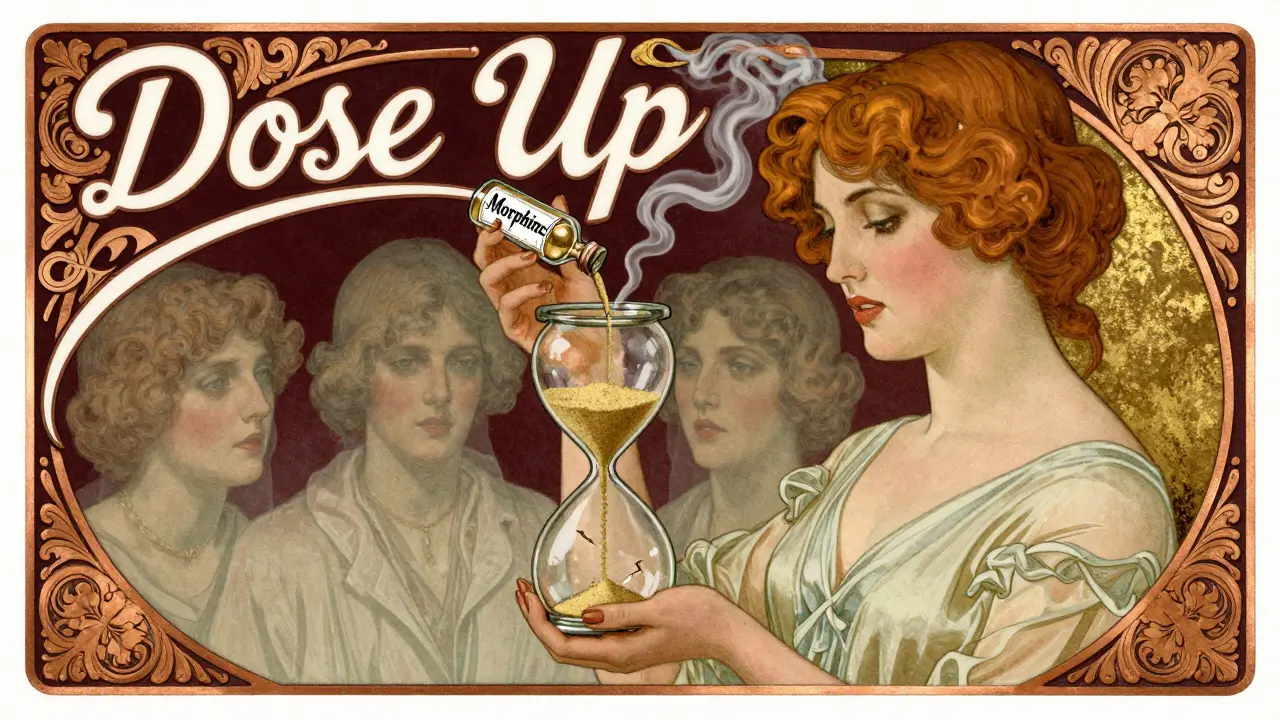
The Hidden Danger: Lost Tolerance
If you stop taking opioids - even for a few days - your body forgets how to handle them. Receptors bounce back. Sensitivity returns. That’s why people who’ve been in rehab, jail, or simply taken a break are at extreme risk.
Studies show that 74% of fatal overdoses in people with opioid use disorder happen in the first few weeks after release from incarceration. Why? Because they go back to their old dose - the one that worked before. But their tolerance is gone. Their body doesn’t know how to cope. A single pill can be fatal.
This isn’t hypothetical. In 2022, over 81,000 overdose deaths in the U.S. involved synthetic opioids like fentanyl. Many of those users had tolerance to prescription opioids but had no idea how potent street drugs are. One batch of fentanyl can be 50 times stronger than another. No one knows what they’re taking. And if they think they can handle their old dose? They’re dead wrong.
What Doctors Do About It
Good clinicians don’t just raise the dose. They look at alternatives. The CDC recommends reevaluating treatment before exceeding 50 morphine milligram equivalents (MME) per day. That’s about 10 mg of oxycodone four times a day. Beyond that, the risks rise sharply - and the pain relief doesn’t improve much.
Doctors may:
- Switch opioids - rotating from morphine to hydromorphone or methadone can reset tolerance slightly.
- Add non-opioid meds - gabapentin, NSAIDs, antidepressants - to reduce opioid needs.
- Use blood tests to check levels - not to catch abuse, but to see if the dose matches what’s in the bloodstream.
- Test combination therapies - like low-dose naltrexone paired with opioids. Early trials show this can cut dose escalation by 40-60%.
There’s also new research into drugs that block inflammatory pathways linked to tolerance. If they work, future pain meds might not cause tolerance at all.
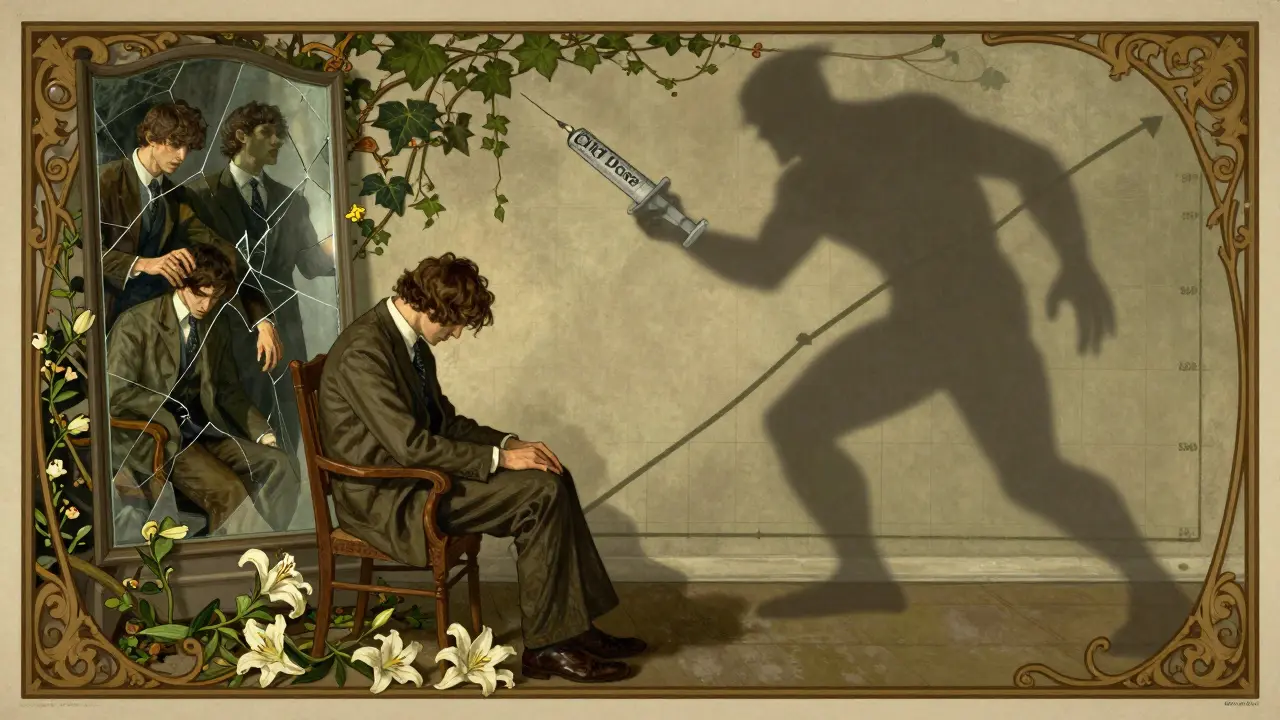
What Patients Need to Know
If you’re on opioids for pain:
- Don’t assume higher doses = better results. Talk to your doctor about non-opioid options.
- Never skip doses to "save" pills. That can trigger withdrawal, which makes tolerance drop faster.
- If you’ve stopped opioids - even for a week - assume your tolerance is gone. Never go back to your old dose.
- Ask about naloxone. It can reverse an overdose. Keep it on hand.
If you’re in recovery:
- Your tolerance is lower than you think. Start with 1/4 or 1/5 of your old dose if you relapse - and don’t do it alone.
- Use medication-assisted treatment (MAT) like methadone or buprenorphine. They stabilize your system and prevent overdose.
- Know your triggers. Tolerance loss isn’t just physical - it’s psychological. Stress, loneliness, trauma - they all make you vulnerable.
The Bigger Picture
Opioid tolerance isn’t just a medical issue. It’s a public health crisis wrapped in biology. The CDC’s 2023 campaign tells people in recovery: "Your tolerance is lower now - start with a fraction of your previous dose." That message saves lives.
But it only works if people hear it. And if doctors stop seeing tolerance as a reason to prescribe more - and start seeing it as a sign to change course.
There’s no shame in needing help. But there’s deadly risk in assuming the old rules still apply.
Is opioid tolerance the same as addiction?
No. Tolerance means your body needs more of the drug to get the same effect. Addiction - or opioid use disorder - means you can’t control your use, even when it harms your health, relationships, or job. You can have tolerance without addiction. But tolerance often leads to higher doses, which increases the risk of addiction.
Can you develop tolerance to opioids in just a few weeks?
Yes. Some people develop noticeable tolerance within 1-2 weeks of regular use. Others take months. It depends on genetics, metabolism, dosage, and how often the drug is taken. Daily use speeds up tolerance. Occasional use slows it.
Why do doctors sometimes increase opioid doses instead of switching treatments?
Sometimes, it’s because pain is severe and alternatives haven’t worked. But guidelines warn against this. The CDC says before exceeding 50 MME per day, doctors should reassess goals and consider non-opioid options. Too often, dose increases happen out of habit - not because they’re safer or more effective.
Does tolerance go away if you stop taking opioids?
Yes. Tolerance fades over days to weeks after stopping. This is why people who’ve been in rehab, jail, or detox are at high risk of overdose if they return to their old dose. Their body no longer tolerates it. That’s why recovery programs emphasize starting with a tiny fraction of your previous dose.
Are there new treatments to prevent opioid tolerance?
Yes. Researchers are testing drugs that block inflammation pathways (like TLR4 and NLRP3) linked to tolerance. Early trials with low-dose naltrexone combined with opioids show a 40-60% reduction in dose escalation. The FDA is also encouraging drug makers to develop new pain medications that don’t trigger tolerance as quickly.


Robert Shiu
February 18, 2026 AT 12:42Man, this hits different. I’ve seen too many people I care about get stuck in this cycle - not because they wanted to, but because the pain was real and the system didn’t give them alternatives. Tolerance isn’t weakness. It’s biology. And the fact that we still treat it like a moral failing? That’s the real tragedy.
My cousin was on oxycodone for a back injury. Started at 20mg, ended up at 120mg in 11 months. Then he got laid off, lost insurance, couldn’t refill. Took a break. Came back six months later thinking he could handle his old dose. Didn’t make it. We need to stop pretending this is about willpower.
And yeah - naloxone should be as common as aspirin. Free, everywhere. Pharmacies, schools, gas stations. If we can hand out condoms like candy, why not this?
Greg Scott
February 20, 2026 AT 06:47Yeah I’ve been there. Docs just keep cranking up the dose like it’s a video game level. ‘Try this new one.’ ‘Add gabapentin.’ ‘Here’s a higher strength.’
Never once: ‘Let’s try physical therapy.’ Or ‘Maybe your pain isn’t opioid-responsive.’
It’s easier to write a script than have a hard conversation. And that’s the problem.
Michaela Jorstad
February 21, 2026 AT 07:17Thank you for this. So many people don’t understand the difference between tolerance and addiction - and it’s dangerous. I’m a nurse, and I’ve seen patients cry because their doctor said, ‘You’re just addicted,’ when what they really needed was a plan to taper, not judgment.
Also - low-dose naltrexone? I’ve had patients on it for months. Their pain didn’t get worse. Their dose dropped by 30%. It’s not magic, but it’s real.
Please, if you’re reading this and you’re on opioids: ask your doctor about it. Don’t wait until it’s too late.
James Roberts
February 21, 2026 AT 14:12Oh, so now we’re pretending tolerance is some kind of mystery? Newsflash: it’s been known since the 1970s. The real scandal isn’t tolerance - it’s that we’ve been ignoring the science for decades while profiting off pills.
And now we’re shocked when someone overdoses after jail? Wow. What a surprise. The system is designed to fail people. Not biology. Not genetics. The system.
Also, ‘start with 1/5 your old dose’? That’s still too high. Start with 1/10. And have someone with you. Please. Just… please.
Chris Beeley
February 21, 2026 AT 19:30Look, I’ve studied neuropharmacology at UCL, and I can tell you this: the entire opioid paradigm is outdated. The mu-opioid receptor isn’t even the whole story. TLR4 activation by morphine? That’s been known since 2007. But American medicine? Still stuck in 1999.
Meanwhile, in Europe, they’ve been using multimodal analgesia for years - ketamine, cannabinoids, even transcranial stimulation. But no, we’re too busy pushing oxycodone because the reps give free lunches.
And don’t get me started on naloxone distribution. It’s like handing out life vests on a sinking ship… and only to people who fill out a 12-page form.
Scott Dunne
February 23, 2026 AT 02:24It is quite remarkable how this issue has been politicised. In Ireland, we do not have this epidemic. We have a healthcare system that prioritises evidence-based practice over pharmaceutical lobbying.
It is simply unacceptable that in the United States, a nation with such advanced medical research, patients are being subjected to escalating doses without adequate oversight. This is not a biological failure - it is a systemic one.
Furthermore, the notion that tolerance ‘vanishes’ is misleading. It is not forgotten. It is suppressed. And when suppressed, it re-emerges with lethal force - a consequence of poor regulation and inadequate public health infrastructure.
Oana Iordachescu
February 23, 2026 AT 04:52EVERYTHING IS A LIE. They told us opioids were safe. Then they told us tolerance was normal. Now they say ‘start with 1/5 your old dose’ - but what if that’s still too much? What if the government is hiding the real data? I’ve seen studies where 97% of overdose deaths happened within 30 days of release - but the CDC only reports ‘synthetic opioids.’
Who’s really behind this? Big Pharma? The prison-industrial complex? Are they testing this on us? I’ve got a cousin who got out of jail… and died 11 days later. They didn’t even tell him his tolerance was gone. Why?
…I think they want us to die. So they can keep selling naloxone. 💔💉
Caleb Sciannella
February 24, 2026 AT 10:41It is of considerable interest to note that the biological mechanisms underlying opioid tolerance - particularly the downregulation of mu-opioid receptors via internalization and desensitization - are not only consistent with classical pharmacological principles but also mirror adaptive responses observed in other receptor systems, such as beta-adrenergic receptors in chronic heart failure. The parallelism suggests that tolerance, rather than being a pathological deviation, is an evolutionary-conserved homeostatic mechanism.
Furthermore, the role of neuroinflammation, mediated by TLR4 and NLRP3 inflammasomes, introduces a compelling dimension: if opioid-induced glial activation contributes to tolerance, then anti-inflammatory adjuncts may not merely modulate - but fundamentally alter - the trajectory of long-term opioid use. This opens the door to a paradigm shift: from dose escalation to immune modulation.
It is regrettable, however, that clinical translation has been hampered by regulatory inertia and the entrenched culture of opioid-centric pain management. The delay in adopting multimodal, non-opioid strategies represents not merely a failure of policy, but a profound ethical lapse in patient care.
Danielle Gerrish
February 25, 2026 AT 22:02I JUST GOT OUT OF REHAB. 6 MONTHS CLEAN. I thought I was strong. I thought I could handle it. I took one pill. Just one. To see if I still felt anything. I didn’t even feel high. I just felt… empty. And then I started crying. Not because I wanted it. But because I realized how much I’d lost. My job. My kid. My dignity.
My doctor said ‘start with 1/5.’ I took 1/10. I’m still scared. Every day. But I’m alive.
If you’re reading this and you’re thinking about going back - please, don’t. Call someone. Text me. I’ll answer. I’ve been there. And I’m still here.
Liam Crean
February 26, 2026 AT 03:45Just wanted to say - I’m a chronic pain patient. Been on meds for 8 years. I’ve had 3 dose increases. Each time, I asked for alternatives. Each time, I was told, ‘It’s working, right?’
It’s not about whether it’s working. It’s about whether it’s still safe.
I switched to gabapentin + physical therapy last year. My pain is 20% worse. My life is 80% better.
There’s no glory in being high. Just quiet suffering.
Thanks for writing this. I needed to see it.
Davis teo
February 27, 2026 AT 15:24Y’ALL. I just got off the phone with my sister. She’s in jail. She’s been there 4 months. They gave her methadone. Now she’s out next week. She asked me - ‘Will I still be able to take my old dose?’
I didn’t know what to say.
I told her ‘NO.’
And then I cried.
Someone please tell her this. Someone please tell her she’s not broken. She’s just scared. And she’s not alone.
James Roberts
February 28, 2026 AT 01:56^^^ This. This right here. This is why we need to stop pretending this is about ‘personal responsibility.’
It’s about a system that lets people go from hospital → jail → street → dead in 72 hours.
And we act surprised?
Start with 1/10. Have someone with you. Carry naloxone. Don’t do it alone.
That’s not advice. That’s a lifeline.