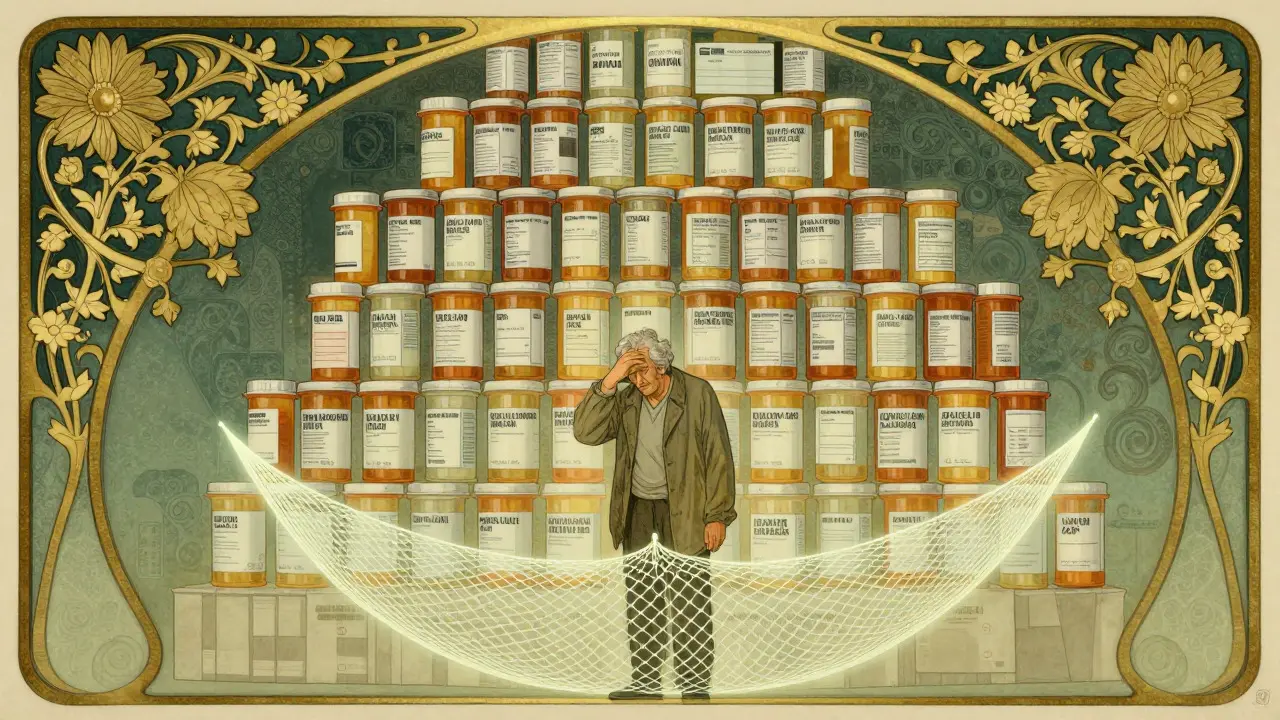
Prescription drug bills can feel like a second mortgage. For millions of Americans, especially seniors and those with chronic conditions, the choice between filling a script and paying for groceries is a daily reality. But there is a safety net that many people miss because it is fragmented across fifty different states and federal agencies. Government medication assistance programs exist to bridge this gap, yet navigating them often feels like solving a puzzle without the picture on the box.
You are not alone in feeling overwhelmed. The system includes State Pharmaceutical Assistance Programs (SPAPs), Medicaid drug benefits, and federal initiatives like Medicare’s Extra Help. Each has its own rules, income limits, and application processes. This guide breaks down exactly how these programs work, who qualifies, and how you can use them to keep your monthly costs manageable. We will look at real-world examples from states like New Jersey and Pennsylvania, explain the critical changes happening in 2025 under the Inflation Reduction Act, and give you a step-by-step path to getting help.
Understanding the Landscape: Federal vs. State Programs
To lower your medication costs, you first need to know which bucket you fall into. There are two main types of government assistance: federal programs that apply nationwide and state-run programs that vary by where you live. Understanding the difference is crucial because they often stack on top of each other, but only if you enroll correctly.
Medicare Extra Help is a federal program administered by the Social Security Administration that helps pay for Medicare Part D premiums, deductibles, and co-pays. It is the gold standard for federal assistance. If you qualify, your out-of-pocket costs drop significantly. For 2025, the income limit for an individual is $23,475, and the resource limit (like savings or stocks) is $17,600. For married couples filing jointly, the income limit is $31,725, and the resource limit is $35,130. These numbers increased by about 3.9% from 2024, reflecting inflation adjustments.
If you meet these criteria, you pay $0 for plan premiums and deductibles. Your co-pays are capped at just $4.90 for generic drugs and $12.15 for brand-name drugs. Plus, if you don’t have a Part D plan, the government automatically enrolls you in one. However, not everyone qualifies for Extra Help due to strict asset limits. This is where state programs come in.
State Pharmaceutical Assistance Programs (SPAPs) are state-run initiatives designed to help residents afford prescriptions, often targeting elderly or disabled populations. As of 2025, 32 states operate some form of SPAP. These programs fill the gaps left by federal coverage. For example, while Extra Help has strict income caps, some state programs allow higher incomes or cover medications that Medicare doesn’t. The budgets for these programs vary wildly; Wyoming spends around $15 million annually, while Pennsylvania’s PACE program operates with a budget of $215 million.
Real-World Examples: How SPAPs Work in Different States
Because SPAPs are state-specific, your eligibility and benefits depend entirely on your zip code. Let’s look at two prominent examples to see how they differ in practice.
In New Jersey, the Pharmaceutical Assistance to the Aged and Disabled (PAAD) is a long-standing state program established in 1967 that covers prescription drugs for eligible seniors and disabled residents. PAAD requires beneficiaries to be enrolled in Medicare Part D. In return, it pays for the premium of standard plans (up to the regional benchmark of $34.70 in 2025) and sets very low co-pays: $5 for generics and $7 for brand-name drugs. This structure saved one user over $400 a month on diabetes medications after losing employer coverage. However, PAAD does have limitations. If your doctor prescribes a new specialty drug not on the PAAD formulary, the appeals process can take six to eight weeks, leaving you without medication during that time.
Pennsylvania offers a different model through its Pharmaceutical Assistance Contract for the Elderly (PACE) is a state program that covers Medicare Part D premiums and medications not covered by Medicare, with higher income limits than federal programs. PACE allows individuals with incomes up to $27,470 and couples up to $36,900 in 2025 to qualify. This is higher than the Extra Help limits, making it accessible to more middle-income seniors. Crucially, PACE requires you to apply for Medicare Extra Help first. If you get Extra Help, PACE covers the remaining costs. If you don’t qualify for Extra Help, PACE steps in to cover your premiums and drug costs. This layered approach ensures broader coverage but adds complexity to the application process.
| Program | Administered By | 2025 Income Limit (Individual) | Key Benefit | Co-Pay Structure |
|---|---|---|---|---|
| Medicare Extra Help | Social Security Administration | $23,475 | Federal coverage, auto-enrollment | $4.90 generic / $12.15 brand |
| NJ PAAD | New Jersey State | Varies (Medicare eligible) | Pays Part D premiums | $5 generic / $7 brand |
| PA PACE | Pennsylvania State | $27,470 | Covers non-Medicare drugs | Based on income tier |

The Impact of the Inflation Reduction Act on Drug Costs
If you have been following healthcare news, you have likely heard about the Inflation Reduction Act. For patients relying on medication assistance, this law brings significant changes starting in 2025. The most impactful change is the cap on annual out-of-pocket costs for Medicare Part D beneficiaries.
Starting in 2025, the annual out-of-pocket cap is set at $2,000. Once you hit this limit, catastrophic coverage kicks in, meaning you pay nothing more for your drugs for the rest of the year. This replaces the previous threshold of $7,050, representing a 44% reduction in maximum exposure. For someone taking expensive specialty drugs, this cap is a lifeline. The Congressional Budget Office estimates these provisions will reduce prescription drug spending by $169 billion over ten years.
Additionally, the law allows individuals with Medicaid or Extra Help to change their drug coverage once per month, rather than waiting for the annual enrollment period. This flexibility helps dual-eligible beneficiaries switch to better plans as their health needs change. However, challenges remain. Specialty drug costs are still growing at 12.3% annually, outpacing the budget increases for many state programs. Some states have responded by tightening formularies or increasing prior authorization requirements, which can make access harder even as prices are capped.
How to Apply: A Step-by-Step Guide
Knowing you qualify is only half the battle. Applying for these programs requires patience and documentation. Here is how to navigate the process efficiently.
- Gather Financial Documents: You will need recent tax returns, proof of income (pay stubs or benefit letters), and statements for assets like bank accounts or investments. For Extra Help, the SSA-1020 form is required. Keep copies of everything.
- Check State-Specific Requirements: Visit your state’s Department of Aging or Health website. Look for SPAP applications. Note that some states, like Pennsylvania, require you to have applied for federal Extra Help before they will process your state application.
- Contact SHIP for Free Help: The State Health Insurance Assistance Program (SHIP) is a federally funded program offering free, local counseling on Medicare and related insurance issues. With 14,000 certified counselors across all 50 states, SHIP agents can help you understand your eligibility and fill out forms. They handled 4.2 million requests in 2024 alone. Don’t try to do this alone if you find the paperwork confusing.
- Submit Early: Processing times vary. Extra Help takes an average of 90 days. New Jersey’s PAAD averages 30 days, but complex cases can take longer. Submitting early prevents gaps in coverage. One beneficiary reported paying $872 out of pocket for heart medication while waiting three months for Extra Help approval.
- Appeal if Denied: If you are denied, ask for the reason in writing. Often, errors in asset calculation or missing documents cause denials. You have the right to appeal. For formulary issues, like in NJ PAAD, start the appeal process immediately when a drug is rejected.

Common Pitfalls and How to Avoid Them
Even with good intentions, many eligible people fail to enroll. The Medicare Rights Center found that 42% of eligible beneficiaries don’t enroll due to confusion. Here are common traps to avoid:
- Moving States Without Updating Coverage: If you relocate, your state program may not transfer. A 2024 study showed 63% of beneficiaries moving between states experienced coverage gaps. Contact your new state’s program immediately upon moving.
- Ignoring Asset Limits: Extra Help has strict resource limits ($17,600 for individuals). Selling assets temporarily to qualify can backfire if discovered. Be honest and thorough in reporting.
- Assuming All Drugs Are Covered: Both Medicare and state programs have formularies (lists of covered drugs). Always check if your specific medication is on the list before switching plans. California’s Medi-Cal Rx, for instance, covers 127 additional specialty drugs not included in standard Medicare Part D, but you must verify your drug is among them.
- Missing Re-certification Deadlines: Most programs require annual re-certification. Missing this deadline can result in loss of benefits. Set calendar reminders for your anniversary date.
Looking Ahead: Changes in 2026 and Beyond
The landscape of medication assistance continues to evolve. CMS Administrator Chiquita Brooks-LaSure announced that standardized application forms for Extra Help will roll out by January 2026. This aims to cut processing times by 30% and boost enrollment among eligible but unenrolled populations. If you are applying in late 2025 or early 2026, watch for these new forms to simplify your experience.
Furthermore, the National Academy for State Health Policy projects that twelve additional states will establish or expand SPAPs by 2027, focusing on closing gaps for specialty drugs. California, Texas, and Florida are leading these efforts. However, sustainability concerns persist. MedPAC warned in March 2025 that rising drug prices threaten the long-term viability of some state programs, with seven states projected to face funding shortfalls by 2026. This means keeping an eye on legislative updates in your state is essential.
What is the difference between Medicare Extra Help and a State Pharmaceutical Assistance Program (SPAP)?
Medicare Extra Help is a federal program with strict income and asset limits that helps pay for Medicare Part D costs. SPAPs are state-run programs that vary by location and often have different eligibility criteria, sometimes covering higher incomes or specific drugs not covered by Medicare. Many states require you to apply for Extra Help first before receiving state aid.
How much does Medicare Extra Help cost in 2025?
For those who qualify, Medicare Extra Help covers 100% of your Part D premium and deductible. You pay a small co-pay for each prescription: up to $4.90 for generic drugs and up to $12.15 for brand-name drugs. There are no monthly fees for the Extra Help program itself.
Can I get help if my income is too high for Extra Help?
Yes. If you exceed the federal income limits for Extra Help, you may still qualify for your state’s SPAP. For example, Pennsylvania’s PACE program allows individuals with incomes up to $27,470 to receive assistance. Check your state’s specific guidelines, as limits vary widely.
What happens if I move to a different state while on a state assistance program?
Your current state program usually ends when you leave. You must apply for assistance in your new state immediately. There is often a gap in coverage during the transition, so it is critical to contact your new state’s Department of Aging or Health as soon as you move to minimize disruption.
Is there free help available to fill out these applications?
Yes. The State Health Insurance Assistance Program (SHIP) offers free, unbiased counseling in all 50 states. SHIP counselors can help you understand your options, complete forms, and navigate appeals. You can find your local SHIP office through the Medicare.gov website or by calling 1-800-MEDICARE.