
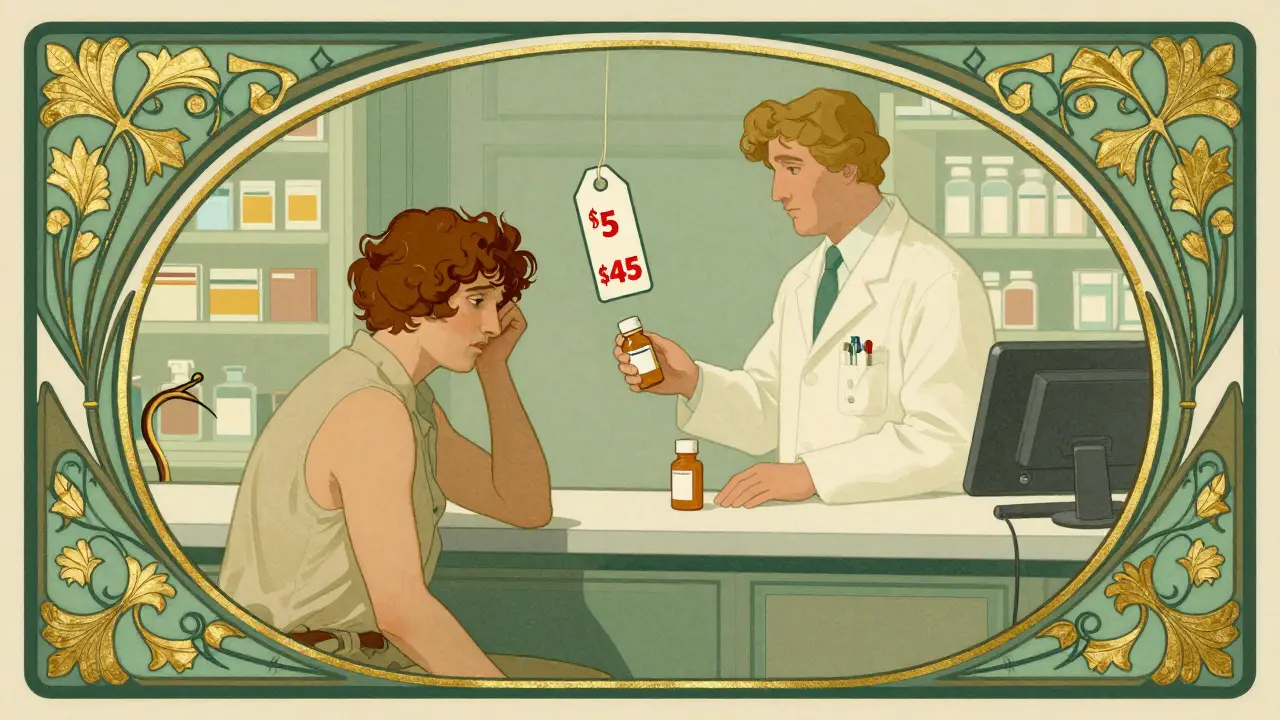
You walk into the pharmacy expecting a $5 charge for your generic medication, only to find out the cost has jumped to $45. You check the bottle; it's still the same generic version. Why the sudden spike? The answer usually lies in a complex system called tiered copays is a structured approach to prescription drug cost-sharing where medications are categorized into multiple price levels, each requiring a different out-of-pocket payment from the patient. While we're taught that generics are always the cheapest option, the reality of modern insurance means not all generics are created equal in the eyes of your insurer.
The Quick Breakdown: How Drug Tiers Work
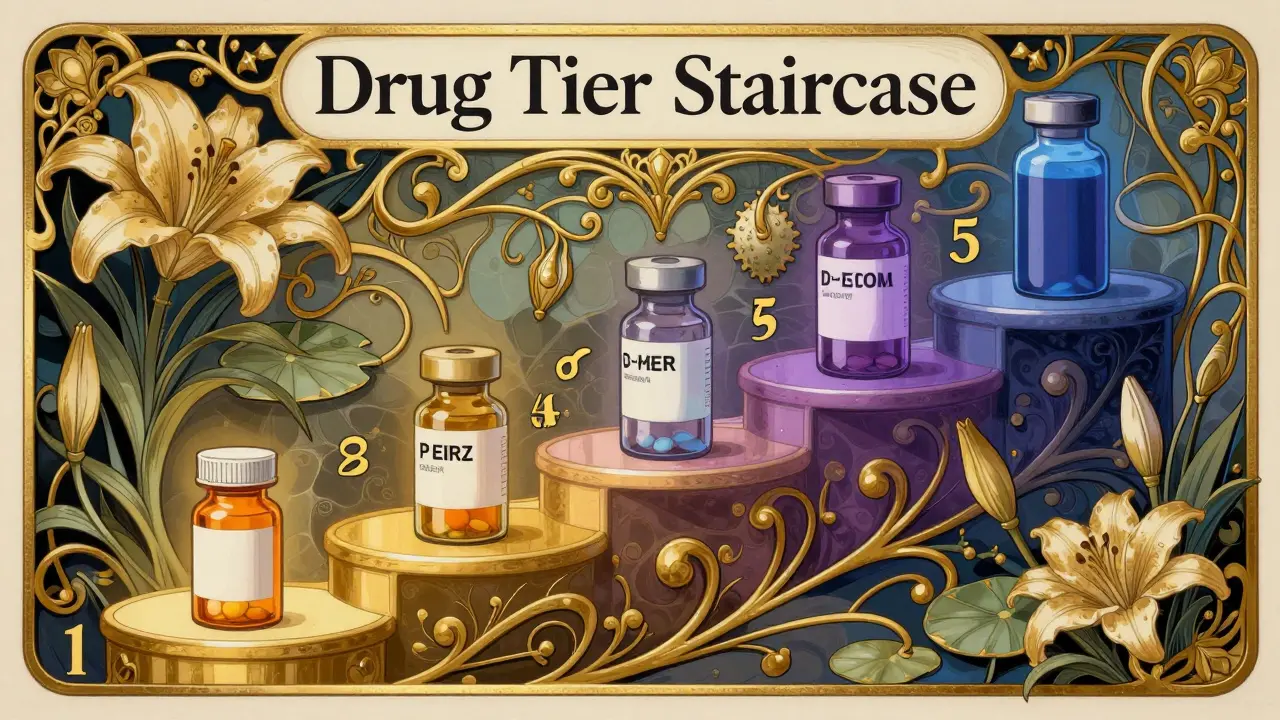
Most insurance plans, including nearly all Medicare Part D and employer-sponsored plans, use a formulary-which is essentially a master list of drugs the insurance company agrees to cover. To manage costs, they group these drugs into tiers. Generally, the lower the tier, the lower your cost. Here is a typical setup you'll see in 2026:
| Tier | Drug Type | Typical Cost Range | Example |
|---|---|---|---|
| Tier 1 | Preferred Generic | $0 - $15 | Standard blood pressure meds |
| Tier 2 | Preferred Brand / Non-Preferred Generic | $25 - $50 | Common brand-name prescriptions |
| Tier 3 | Non-Preferred Brand | $60 - $100 | Older or less discounted brands |
| Tier 4 | Preferred Specialty | 20% - 25% Coinsurance | Certain biologics for RA |
| Tier 5 | Non-Preferred Specialty | 30% - 40% Coinsurance | Rare disease treatments |
Why Your Generic Isn't in Tier 1
It feels like a contradiction: if a drug is generic, shouldn't it automatically be in the cheapest tier? Not necessarily. There are three main reasons why a generic might end up in a higher, more expensive tier.
First, there's the concept of "preferred" versus "non-preferred" generics. If three different companies make the same generic version of a drug, your insurer might only designate one as the preferred option. Even though the chemicals are identical and the clinical efficacy is the same, using the non-preferred version can bump you from Tier 1 to Tier 2, increasing your cost by 5-15%.
Second, some generics are classified as specialty drugs. This happens when a medication requires complex handling (like refrigeration) or treats a very rare condition. Approximately 12-18% of generics fall into this category. If your generic is a biologic-like certain adalimumab versions for rheumatoid arthritis-you might face coinsurance of 25-40% instead of a flat copay, potentially costing you thousands of dollars per month.
Finally, there are the "hidden" contracts. This is where Pharmacy Benefit Managers (or PBMs) come in. PBMs like CVS Caremark or Express Scripts negotiate rebates with manufacturers. If a manufacturer doesn't offer a big enough discount to the PBM, that drug-even a generic-might be moved to a higher tier. In fact, about 68% of generic tier shifts are caused by expiring rebate contracts, not by any change in the drug's safety or quality.
The Impact of the "Rebate Game"
It's a frustrating reality: your copay is often a reflection of a corporate negotiation, not a medical necessity. When a drug moves from Tier 2 to Tier 3, it isn't because the medicine became less effective; it's because the financial deal behind the scenes changed. This has a real-world impact on patients. Data shows that when diabetes medications move to a higher tier, adherence drops by over 7% because patients simply can't afford the jump in price.
This creates a confusing environment where pharmacists might perform a "therapeutic interchange." This is when a pharmacist substitutes your medication for a preferred generic without you realizing it. While this often saves money, it can occasionally lead to efficacy issues if your body responds differently to a specific brand of generic.
How to Lower Your Out-of-Pocket Costs
You don't have to just accept a surprise bill. There are several ways to fight back against high tier pricing.
- Check the Formulary: Most plans update their drug lists annually (Medicare plans usually update on October 1). Review the list to see if your drug has shifted tiers.
- Ask for a Therapeutic Alternative: Talk to your doctor about a different drug in the same class that is in Tier 1. Many patients save $30 to $150 a month by switching to a preferred alternative that does the exact same thing.
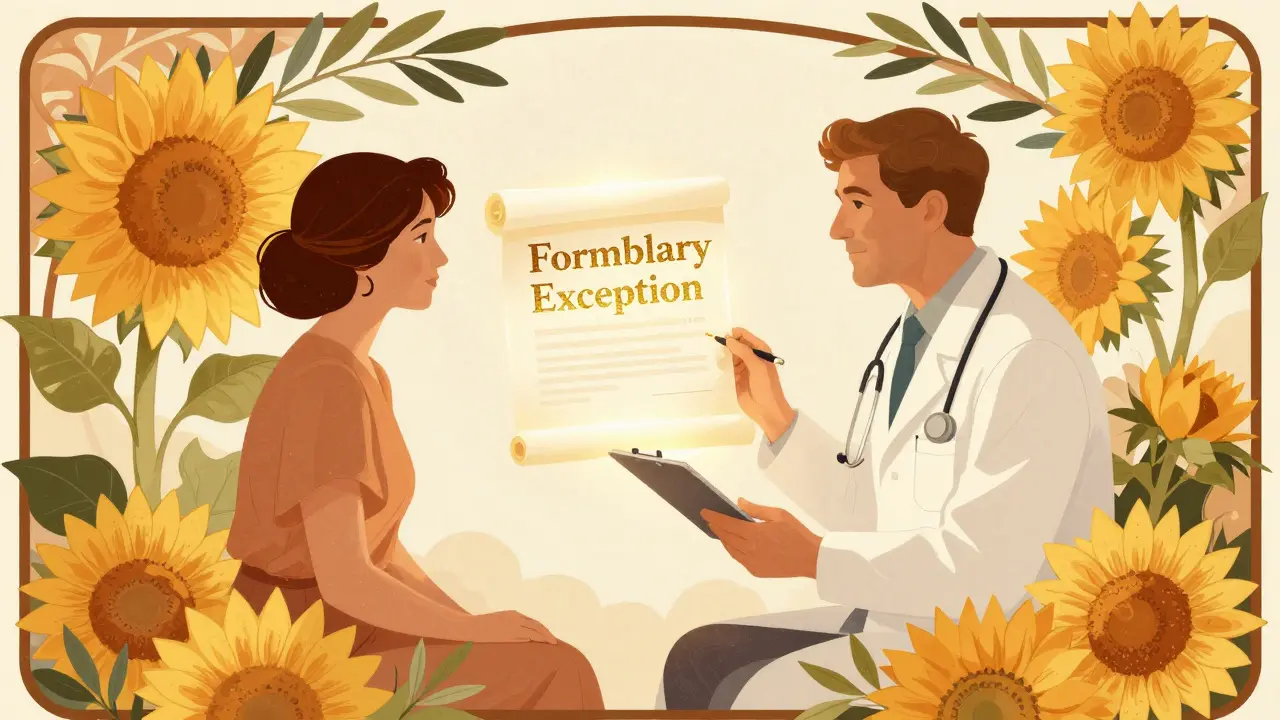
- File for an Exception: If your doctor can prove that the Tier 1 generic doesn't work for you or causes side effects, you can request a "formulary exception." This can move a non-preferred drug into a lower cost tier for your specific case.
- Use Cost-Comparison Tools: Tools like GoodRx or insurer-specific lookups can show you if there's a cheaper way to get the drug, sometimes even without using insurance.
- Manufacturer Assistance: For specialty generics in Tiers 4 or 5, check for manufacturer assistance programs. These can cover a significant portion of the cost for eligible patients.
What to Expect in the Near Future
The landscape is shifting. With the 2025 Medicare Part D redesign under the Inflation Reduction Act, out-of-pocket costs are now capped at $2,000 annually. While this provides a huge safety net, it doesn't eliminate tiered copays; it just puts a ceiling on how much the total damage can be.
We're also seeing a rise in "generic value tiers." Some insurers are moving high-volume generics (like atorvastatin for cholesterol) to a $0 copay to encourage use, while simultaneously pushing less common generics into higher tiers. As biosimilars-generic versions of complex biologic drugs-become more common, expect more complex tiering in the specialty categories.
Is a "preferred generic" better than a "non-preferred generic"?
Clinically, usually no. Most generics are chemically identical and must meet the same FDA standards for bioequivalence. The "preferred" label is a financial designation based on the contract between the insurance company and the manufacturer, not a measure of quality or effectiveness.
Can my drug tier change in the middle of the year?
Yes. Insurance companies can modify their formularies mid-year, which often happens when rebate contracts expire or new drugs enter the market. This is why you might see a sudden price jump at the pharmacy counter even if you haven't changed your prescription.
What is the difference between a copay and coinsurance?
A copay is a flat fee (e.g., $10) regardless of the drug's cost. Coinsurance is a percentage of the drug's total price (e.g., 25%). Coinsurance is almost always used for high-cost specialty drugs in Tiers 4 and 5, making them significantly more expensive.
How do I start a formulary exception process?
Your doctor must submit a request to your insurer explaining why the preferred alternatives are medically inappropriate for you. This usually requires documentation of failed trials of lower-tier drugs or a history of adverse reactions.
Why are some generic biologics so expensive?
Generic biologics (biosimilars) are much more complex to manufacture than traditional chemical generics. Because they are expensive to produce and often treat severe, chronic conditions, insurers place them in specialty tiers with high coinsurance rather than flat low-dollar copays.
Next Steps for Patients
If you've noticed your costs rising, don't just pay the bill. Start by asking your pharmacist for the exact tier of your medication. If it's not Tier 1, ask if there is a "preferred" version of the same generic that your plan covers more favorably. For those on specialty medications, prioritize checking for manufacturer coupons or assistance programs immediately, as these can often offset the high coinsurance associated with Tiers 4 and 5.



Sam Hayes
April 5, 2026 AT 17:53goodrx is a lifesaver for this stuff sometimes the cash price is actually lower than the insurance copay just double check before paying
Will Baker
April 6, 2026 AT 13:04Oh great, so the system is designed to just fleece us based on a corporate handshake. Totally shocking. I bet the PBMs are just thrilled we're figuring out their little game while they laugh all the way to the bank with our deductibles.
Rob Newton
April 8, 2026 AT 11:04Typical American healthcare failure.
Dee McDonald
April 10, 2026 AT 07:15Everyone needs to start demanding a full list of preferred generics from their providers immediately! Stop letting them decide for you! We have to be proactive about our health and our wallets or nothing will ever change in this broken system! Get your doctor on the phone and push for those Tier 1 alternatives right now!
The Charlotte Moms Blog
April 11, 2026 AT 22:04The lack of transparency here is absolutely appalling!!! Who even monitors these PBMs??? It's just one giant scam designed to keep families in debt!!!
Vicki Marinker
April 13, 2026 AT 17:57It is quite amusing that people expect logic from a profit-driven healthcare model. The structural inefficiency is the point, not a flaw. One would think the obviousness of this exploitation would discourage such naive surprise at the pharmacy counter, yet here we are.
Will Baker
April 14, 2026 AT 04:50Exactly. Why do we even pretend there's a 'medical' reason for these tiers when it's just a spreadsheet in a boardroom? It's almost poetic how they make us pay more for the same chemical compound just because some executive wanted a bigger bonus this quarter.
Aysha Hind
April 15, 2026 AT 19:01Wake up people! These 'tiers' are just a smokescreen for the big pharma shadow play. They aren't just negotiating rebates; they're controlling who gets what medicine to keep us docile. This whole formulary mess is a curated social experiment in financial desperation. It's all a shell game to hide the real money moving into offshore accounts while we argue over $40 copays!
HARSH GUSANI
April 16, 2026 AT 09:51In India we have much better access to generics without this crazy tier game 🇮🇳 The West is just failing because they love money more than people 👎💰
Hudson Nascimento Santos
April 17, 2026 AT 14:05The intersection of healthcare and capitalism creates a paradox where the 'value' of a drug is detached from its utility and attached instead to its negotiability. It makes one wonder if the concept of a 'right to health' can ever truly exist within a framework that views a life-saving pill as a tiered commodity. We are essentially assigning a monetary value to the quality of life based on which manufacturer has the best lobbyist.
Lawrence Rimmer
April 18, 2026 AT 06:12This is just a symptom of the deeper decay of the social contract. We've traded actual care for a bureaucratic nightmare of tiers and rebates. It is a banal form of suffering where the tragedy is found in the paperwork. Most people just accept it because the effort to fight the system is more exhausting than the cost of the drug itself. Why bother fighting a machine that is designed to ignore you? The absurdity of the 'preferred generic' is just the cherry on top of a very bleak cake. We live in a world where the chemistry is the same but the price is a lottery. It is an exercise in futility to expect fairness from a system built on exploitation. The formulary is not a list of medicine, it is a list of profit margins. We are just line items in a corporate ledger. There is no nobility in this system, only a cold, calculated pursuit of wealth. It is a hollow existence for the patient and a goldmine for the PBM. The whole thing is a joke without a punchline. It is just sad.