
If you’ve been told you have age-related macular degeneration (AMD), you’ve probably heard about AREDS2 vitamins. But do they actually work? And more importantly-should you be taking them? The answer isn’t simple, and taking them without knowing your exact stage of AMD could be a waste of money-or even risky.
What Are AREDS2 Vitamins?
AREDS2 isn’t just another supplement brand. It’s the result of a massive, 10-year clinical trial led by the National Eye Institute (NEI), part of the NIH. The original AREDS study in 2001 showed that a mix of antioxidants and zinc could slow the progression of AMD. But in 2013, after testing dozens of variations, researchers came up with an improved version: AREDS2.
The final formula includes:
- 500 mg of vitamin C
- 400 IU of vitamin E
- 10 mg of lutein
- 2 mg of zeaxanthin
- 80 mg of zinc (as zinc oxide)
- 2 mg of copper (as cupric oxide)
The biggest change from the original AREDS formula? They removed beta carotene-because it raised lung cancer risk in smokers and former smokers-and swapped it for lutein and zeaxanthin. Those two nutrients are found naturally in green leafy vegetables and egg yolks, and they help filter harmful blue light in the retina.
Who Should Take AREDS2 Vitamins?
This is where most people get it wrong. AREDS2 vitamins are not for everyone. They’re only recommended for two specific groups:
- People with intermediate AMD in one or both eyes (many medium-sized drusen or at least one large drusen)
- People with advanced AMD (geographic atrophy) in one eye, and intermediate AMD in the other
If you have early AMD-just a few small drusen-taking AREDS2 won’t help. It won’t stop you from developing AMD later. It won’t improve your vision. And it won’t prevent the disease. A 2023 analysis from Vision-and-Eye-Health.com confirmed: “The AREDS2 formula does not offer benefits for individuals with early AMD, nor does it prevent the onset of the condition.”
That’s a crucial distinction. Many people buy these supplements hoping to protect their eyesight down the road. But the science doesn’t back that up. If you don’t have intermediate or advanced AMD, you’re not gaining anything-just spending money.
How Effective Are They?
The original AREDS formula cut the risk of progression to late-stage AMD by about 25% over five years. The AREDS2 formula? It’s slightly better.
A 10-year follow-up study published in JAMA Ophthalmology in May 2022 tracked nearly 4,000 participants. It found that those who took lutein and zeaxanthin instead of beta carotene had a 26% lower risk of progression to advanced AMD. The hazard ratio was 0.88-meaning a statistically significant benefit.
And here’s something surprising: omega-3 fatty acids (like fish oil) were tested in AREDS2 and found to add zero benefit. Despite years of marketing claims, fish oil doesn’t slow AMD progression.
Even more important: the benefits lasted. People who stuck with the formula for a decade still showed lower progression rates. And there were no major safety issues. Long-term use is considered safe.
New Evidence: AREDS2 Might Help Late-Stage AMD Too
In July 2024, researchers published new findings that changed the game. They looked at retinal scans from 1,209 participants in the original AREDS2 trial who already had geographic atrophy (late-stage dry AMD).
The result? Those taking the AREDS2 formula saw a 55% slower rate of lesion growth over three years-if the damaged area was outside the very center of the macula (the fovea). That’s huge. Until now, doctors thought these supplements only helped people before they reached late-stage disease.
“Until now, AREDS2 supplements weren’t thought to be effective for those with late-stage dry AMD,” said Geraldine Hoad of the Macular Society. “By slowing vision loss, they could help people stay independent longer and improve their quality of life.”
This doesn’t mean AREDS2 can restore lost vision. It can’t reverse damage. But if you’re in the late stage and the damage isn’t right in the center of your vision, this supplement might help you keep what you’ve got longer.
What About Side Effects?
AREDS2 vitamins are generally safe when taken as directed. But there are a few things to watch for.
Zinc-80 mg per day-is a high dose. Long-term use can interfere with copper absorption, which is why copper is included in the formula. Still, some people report mild stomach upset or nausea with zinc. Taking the pill with food helps.
Smokers and former smokers should never take supplements with beta carotene. The original AREDS formula included it, and studies showed a 20% higher risk of lung cancer in current smokers who took it. That’s why AREDS2 removed it entirely. Always check the label.
High-dose vitamin E (400 IU) might interact with blood thinners like warfarin. If you’re on anticoagulants, talk to your doctor before starting.
What Should You Do?
If you’ve been diagnosed with AMD, your next step isn’t to run to the pharmacy and grab the first bottle labeled “for macular degeneration.”
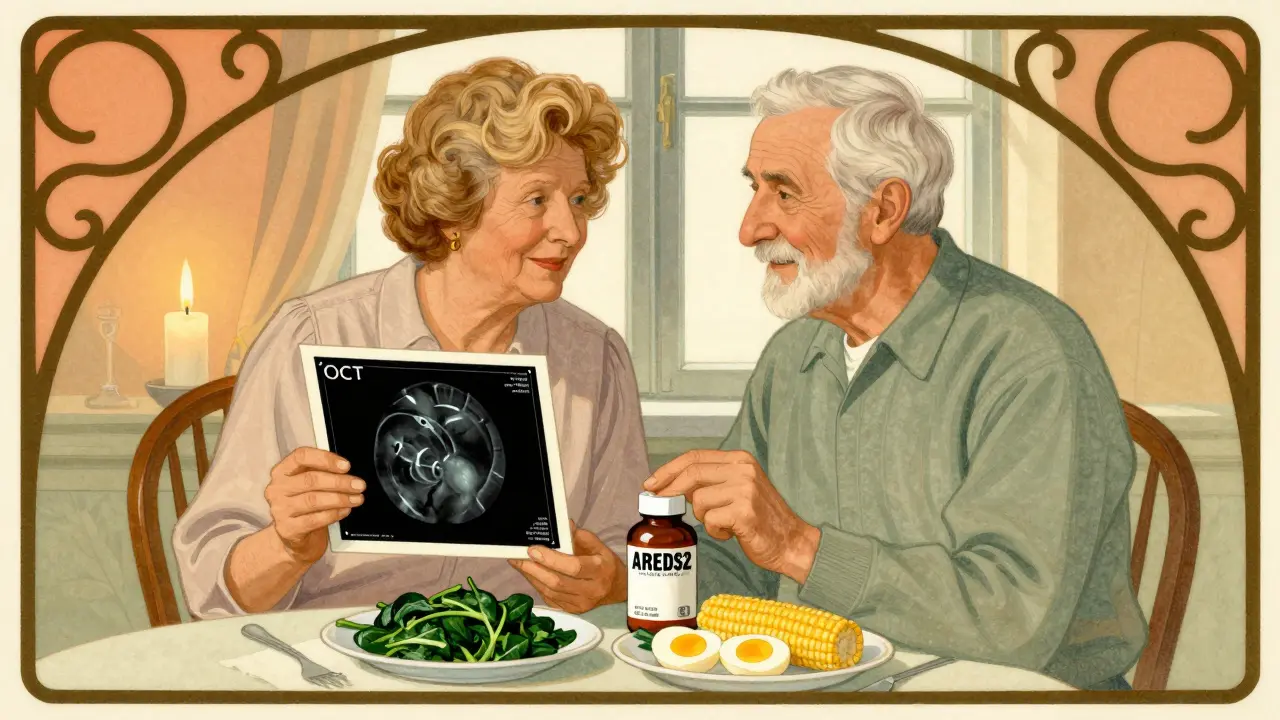
First, get a proper diagnosis from an eye doctor. They’ll use an OCT scan and fundus photography to determine if you have early, intermediate, or advanced AMD. That’s the only way to know if you qualify for AREDS2.
If you do qualify:
- Buy a supplement that matches the exact AREDS2 formula listed above
- Take it daily-consistency matters
- Don’t double up on vitamins. Many multivitamins already contain zinc or vitamin E. Taking extra could push you over safe limits
- Keep seeing your eye doctor regularly. Supplements aren’t a cure. Monitoring your condition is still essential
If you don’t have intermediate or advanced AMD? Save your money. Eat more spinach, kale, eggs, and corn. Those foods naturally contain lutein and zeaxanthin. There’s no evidence that popping pills helps if you’re not in the target group.
What Doesn’t Work
Let’s clear up some myths:
- Not for prevention: If you have no AMD, AREDS2 won’t stop you from getting it.
- Not for early AMD: Small drusen? Skip it.
- Not a cure: It won’t bring back lost vision.
- Not fish oil: Omega-3s didn’t help in the trial.
- Not a substitute for eye exams: Supplements are just one tool.
There’s no magic pill for AMD. But for the right people, AREDS2 is the closest thing we have to a proven shield against vision loss.
Can I take AREDS2 vitamins if I’m a smoker?
Yes-but only if the supplement doesn’t contain beta carotene. The original AREDS formula included beta carotene, which raised lung cancer risk in smokers. AREDS2 replaced it with lutein and zeaxanthin, which are safe. Always check the ingredient label. If it says “beta carotene,” avoid it.
Do I need a prescription for AREDS2 vitamins?
No, AREDS2 supplements are available over the counter. But you should only take them after getting a diagnosis from an eye doctor. Many OTC brands claim to be “AREDS2-formulated,” but not all match the exact dosages. Look for the specific amounts listed in the study: 500 mg vitamin C, 400 IU vitamin E, 10 mg lutein, 2 mg zeaxanthin, 80 mg zinc, 2 mg copper.
How long should I take AREDS2 vitamins?
If you’re in the target group, you should take them daily for the long term. The 10-year follow-up study showed continued benefit with consistent use. Stopping the supplement removes the protective effect. There’s no evidence of long-term harm from the formula when taken as directed.
Can AREDS2 vitamins reverse vision loss?
No. AREDS2 vitamins can slow the progression of AMD, but they cannot restore vision that’s already been lost. They work by reducing oxidative stress and inflammation in the retina, which helps preserve remaining vision-not bring back what’s gone.
Are generic brands as good as the name-brand ones?
It depends. Some generic brands match the AREDS2 formula exactly and are just as effective. Others cut corners-using lower doses, cheaper forms of zinc, or adding unnecessary ingredients. Always compare the Supplement Facts label to the official AREDS2 formula. If it doesn’t list all six ingredients at the correct amounts, it’s not the real thing.
Should I take AREDS2 if I have wet AMD?
The AREDS2 study focused on dry AMD. Wet AMD is treated with injections or laser therapy. There’s no clear evidence that AREDS2 helps wet AMD directly. However, if you have dry AMD in one eye and wet AMD in the other, and you meet the criteria for intermediate AMD, your doctor may still recommend it to protect the other eye. Always consult your retinal specialist.
What’s Next?
Researchers are already looking beyond AREDS2. New studies are testing lower-dose zinc, different antioxidants, and even gene therapies. But for now, AREDS2 remains the gold standard-for the right people.
If you’re unsure whether you qualify, schedule a retinal scan. Don’t guess. Don’t self-diagnose. Don’t buy supplements hoping for a miracle. The science is clear: AREDS2 works-but only if you’re in the target group. Get the facts. Know your stage. Then make your move.



Matt Beck
January 5, 2026 AT 02:03Okay but like… 🤔 this is the first time I’ve ever seen science actually say ‘stop spending money’ 😭 I’ve been buying these for my mom like a good son… turns out she’s got early AMD and I just flushed $60/month down the drain 💸💔
Beth Templeton
January 6, 2026 AT 00:34Tiffany Adjei - Opong
January 7, 2026 AT 21:39Wait wait wait - so you’re telling me the entire supplement industry built a $2 billion market on people misunderstanding ‘intermediate’ vs ‘early’ AMD? 🤯 And we’re supposed to trust doctors when they say ‘just take vitamins’? I’ve seen people take these and still go blind. The real villain here is the marketing department, not the science. Also - lutein in egg yolks? That’s not ‘natural’ that’s just what chickens eat before they get fried. 😏
Ryan Barr
January 8, 2026 AT 18:30Cam Jane
January 9, 2026 AT 14:05Hey everyone - if you’re reading this and you’re not sure if you qualify, please don’t panic. This is actually great news because it means you’re not wasting money on something that doesn’t help. 🎉 Seriously - go get an OCT scan. It’s quick, painless, and often covered by insurance. If you’re in the target group, this is one of the few things in medicine that’s actually a no-brainer. If you’re not? Eat more kale. Drink water. Walk outside. Your eyes will thank you. And if you’re feeling overwhelmed - you’re not alone. I’m a nurse and I see this exact confusion every week. You’re doing better than you think. 💪❤️
Dana Termini
January 9, 2026 AT 16:29I appreciate how clearly this was laid out. I’ve been skeptical of supplements for years, but I didn’t realize the science was this specific. My dad has intermediate AMD and started taking AREDS2 last year - his progression has slowed. I’m glad we’re finally getting clear guidance instead of hype. Thank you for writing this.
Amy Le
January 10, 2026 AT 13:25Why are we letting the NIH dictate what we put in our bodies? 🇺🇸 This is just another government-backed supplement racket. In China, they use traditional herbs - no zinc, no synthetic vitamins. And guess what? Their elderly have better vision. Also, why is this only for Americans? Is this a capitalist conspiracy to sell pills? 🤔 I’m not buying it. Also, ‘lutein’? Sounds like a brand of laundry detergent.
Stuart Shield
January 11, 2026 AT 17:33Man, this is the kind of post that makes me believe in Reddit again. I’ve been taking AREDS2 for three years now - my wife has advanced AMD in one eye, and we were terrified. The 55% slower lesion growth stat? That’s not just a number - it’s three more years of watching her grandchildren’s soccer games. I don’t care if it’s ‘just’ slowing it down - if it keeps her seeing the sunset, I’ll take it. And yeah, I double-checked the label. No beta carotene. No fish oil. Just the six. Every. Single. Day. 🙏
Lily Lilyy
January 12, 2026 AT 07:15Dear friends, please remember that your health is precious. Always consult your eye doctor before starting any supplement. The AREDS2 formula is a gift of modern science. It is not magic, but it is medicine. Be wise. Be patient. Be kind to your body. You are doing your best, and that is enough. 🌸
Jeane Hendrix
January 12, 2026 AT 16:06so like… wait, so if i have early amd and i take areds2 anyway… does it like… do anything? or is it just… useless? like i’m not trying to be a jerk but i’ve been taking it for 2 years and i just wanna know if i’m being a dumbass or if there’s some hidden benefit i’m missing? also i think i spelled ‘lutein’ wrong in my cart like 5 times 😅
Katelyn Slack
January 14, 2026 AT 15:53Thanks for this. I just got my OCT results yesterday - intermediate AMD in both eyes. I’ve been scared to death. This post made me feel like maybe… just maybe… I can do something. I’m ordering the right brand today. And I’ll keep seeing my doc. I’m not gonna let this steal my life. 💙