
When you fill a prescription for a generic drug, you’re not just saving money-you’re benefiting from a legal framework designed to keep drug prices low. But behind the scenes, a battle is being fought between companies trying to bring affordable medicines to market and others trying to block them. This isn’t just about corporate profits. It’s about whether millions of people can afford the medications they need. Antitrust laws are the main tool used to stop anti-competitive behavior in the generic drug market, and their enforcement has direct consequences for your wallet and your health.
How the Hatch-Waxman Act Changed Everything
In 1984, Congress passed the Drug Price Competition and Patent Term Restoration Act, better known as the Hatch-Waxman Act. This wasn’t just another law-it was a turning point. Before this, generic drugs were rare. Branded drug makers held near-monopolies because the approval process for generics was slow, expensive, and legally risky. The Hatch-Waxman Act changed that by creating a fast-track path for generic manufacturers to prove their drugs were just as safe and effective as the original, without repeating costly clinical trials.
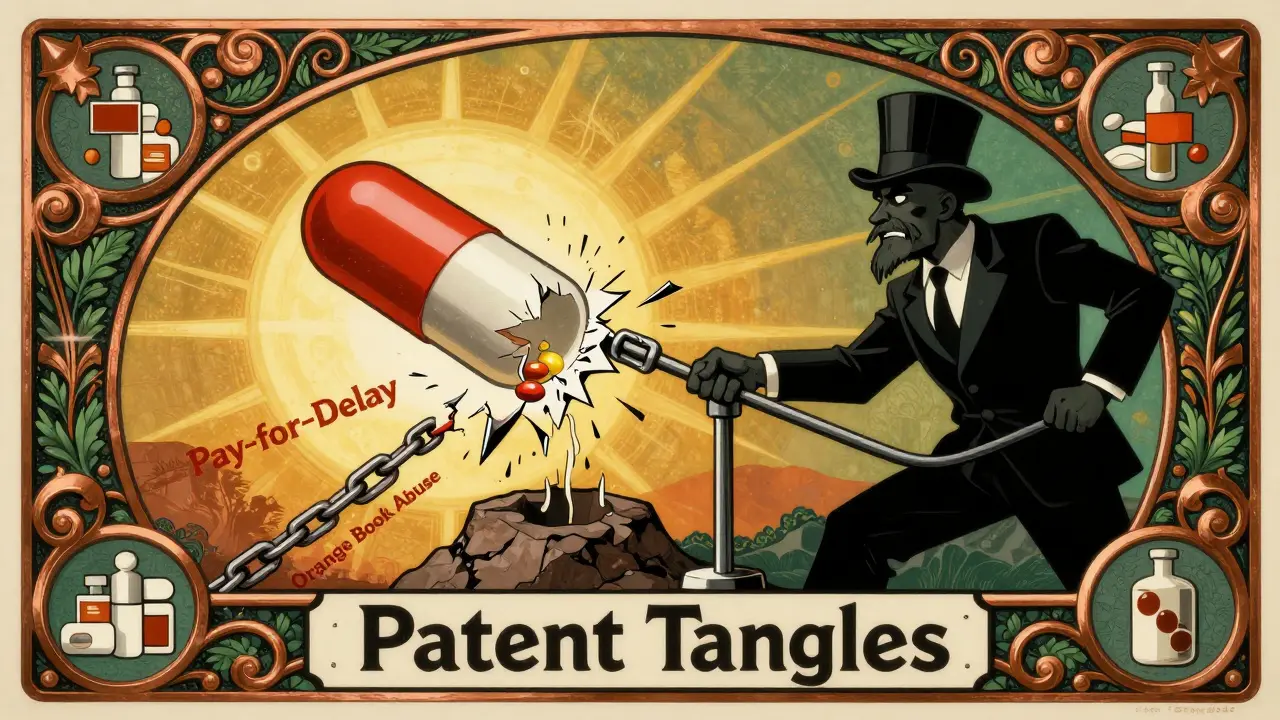
The law also introduced a powerful incentive: the first generic company to challenge a branded drug’s patent through a Paragraph IV certification gets 180 days of exclusive market access. That means no other generics can enter during that time. This sounds fair-it rewards innovation and risk-taking. But in practice, it became a weapon. Some branded drug companies started paying generic manufacturers to delay their entry. These deals, called “pay-for-delay,” kept prices high and consumers locked into expensive brand-name drugs.
Pay-for-Delay: The Hidden Cost of Inaction
Imagine a generic company ready to launch a life-saving drug. The branded manufacturer, facing imminent competition, offers them hundreds of millions of dollars to stay off the market. That’s not a business deal-it’s a collusion that violates antitrust law. The U.S. Supreme Court ruled in FTC v. Actavis (2013) that these reverse payments could be illegal if they’re large and unexplained. But proving that in court is hard.
Between 2000 and 2023, the Federal Trade Commission (FTC) pursued 18 pay-for-delay cases. The total value of settlements exceeded $1.2 billion. One of the biggest was Gilead Sciences, which paid $246.8 million in 2023 to settle claims it blocked generic versions of its HIV drug Truvada. These aren’t abstract numbers. Each delay means thousands of patients paying hundreds of dollars more per month. The FTC estimates that when the first generic enters the market, prices drop by at least 20% in the first year. With five competitors, prices can fall by 85%.
Other Tactics Used to Block Generic Entry
Pay-for-delay is just one tactic. Companies use others that are just as damaging:
- Product hopping: A company slightly changes a drug’s formulation-say, from a pill to a capsule-right before the patent expires. Then it markets the new version as superior, even if it’s not. Patients are forced to switch, and insurers are stuck paying more. AstraZeneca did this with Prilosec and Nexium.
- Sham citizen petitions: A branded company files a fake complaint with the FDA, claiming safety issues with a generic drug. The FDA has to respond, delaying approval. The FTC is currently suing Teva Pharmaceuticals for this exact tactic over its multiple sclerosis drug Copaxone.
- Restricted distribution: Some companies sign contracts with pharmacies and wholesalers that block them from carrying generics. This limits access even when the generic is legally approved.
- Orange Book abuse: Branded drug makers list patents that shouldn’t be there-like ones covering packaging or dosage forms-just to delay generics. The FTC took Bristol-Myers Squibb to court in 2003 for this.
These aren’t loopholes. They’re deliberate strategies. And they work-until regulators step in.
Global Differences in Enforcement
The U.S. isn’t alone in this fight. The European Union has been aggressive too. The European Commission has opened 27 antitrust cases in the pharmaceutical sector between 2018 and 2022, with 60% targeting delays in generic entry. One common tactic? Withdrawing marketing authorizations in certain countries to prevent generics from being sold there-even if the patent has expired.
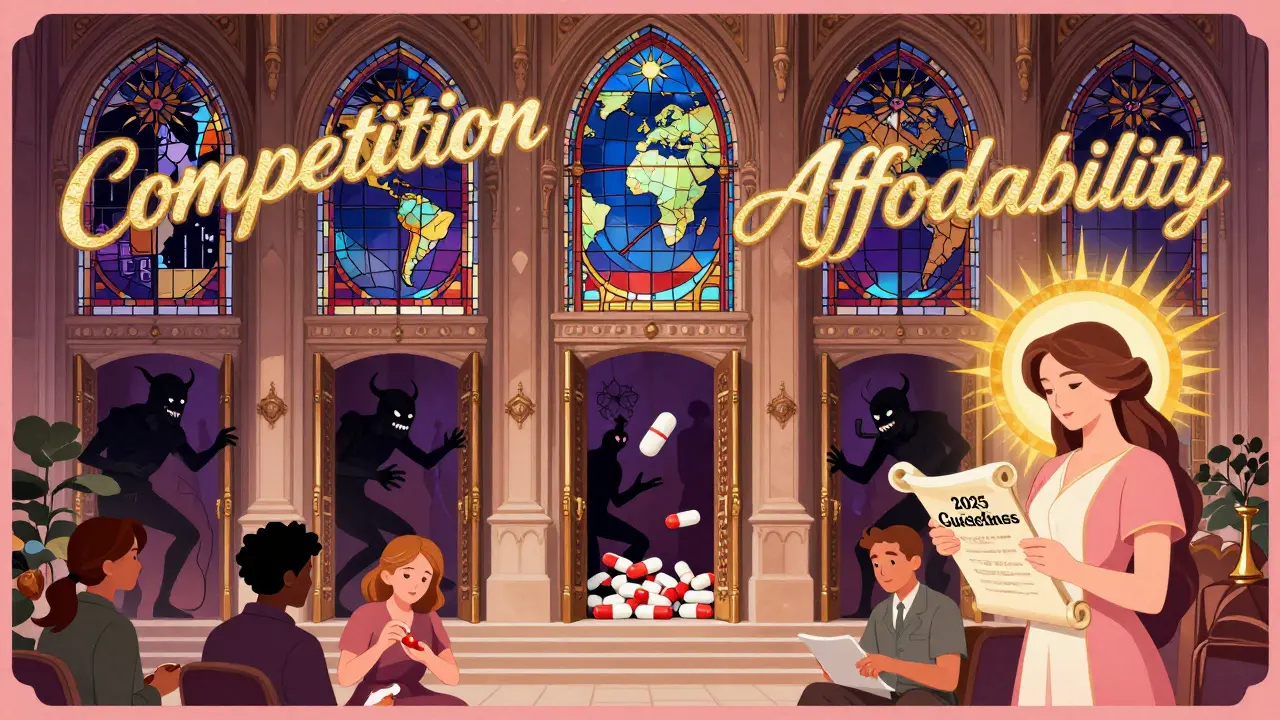
China took a major step in January 2025 by releasing its first Antitrust Guidelines for the Pharmaceutical Sector. It identified five “hardcore restrictions” that are automatically illegal: price fixing, output limits, market division, joint boycotts, and blocking new technology. By Q1 2025, China had penalized six cases-five of them involved price fixing through messaging apps and algorithms. That’s new. Chinese regulators are now using AI to monitor drug pricing trends across online platforms, catching collusion faster than ever before.
In the U.S., courts have drawn lines. In Walgreen Co v. AstraZeneca, the court ruled that switching from Prilosec to Nexium didn’t violate antitrust law because the branded drug was still available. But in other cases, courts have ruled that withdrawing a drug from the market entirely to block generics is illegal. The difference? Intent and impact.
What This Means for Patients
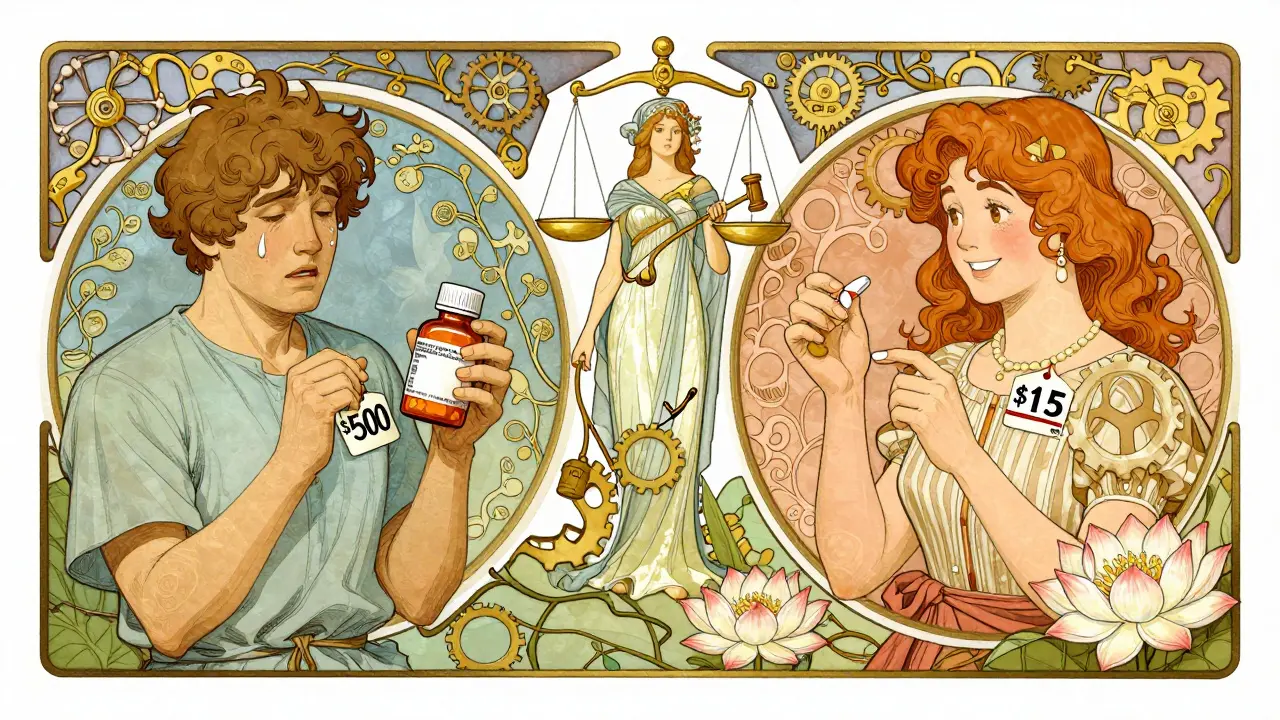
Behind every number is a person. In 2012 alone, generic drugs saved U.S. consumers $217 billion. Between 2005 and 2014, that total hit $1.68 trillion. That’s not just savings-it’s access. A 2022 Kaiser Family Foundation survey found that 29% of U.S. adults skipped or cut doses of their medication because they couldn’t afford it. Many of those drugs had generic versions available-if only competition hadn’t been stifled.
When a generic drug enters the market, it doesn’t just lower prices. It forces innovation. Branded companies can’t just sit on a monopoly-they have to keep developing new drugs. That’s the whole point of the Hatch-Waxman Act. But when companies game the system, that balance breaks. Patients lose. Innovation slows. And the system loses its credibility.
The Future of Generic Drug Competition
Regulators are adapting. The FTC’s 2022 workshop on generic drug entry after patent expiration showed growing concern over product hopping and sham petitions. The European Commission’s 2023 Pharmaceutical Strategy called regulatory barriers to generic entry a “key competition concern,” estimating that delays cost European consumers €11.9 billion a year.
But enforcement is still uneven. Many cases take years to resolve. Legal costs are high. And some companies still believe they can outwait regulators. What’s needed isn’t just more lawsuits-it’s smarter rules. Clearer guidelines. Faster reviews. And accountability for companies that use regulatory processes as weapons.
The system was built to help people. It still can. But only if the rules are enforced-not just written.
What is the Hatch-Waxman Act and why does it matter for generic drugs?
The Hatch-Waxman Act of 1984 created the modern system for approving generic drugs in the U.S. It lets generic manufacturers use the safety data from the original branded drug, cutting development time and cost. In return, it gives the first generic challenger 180 days of market exclusivity. This balance was meant to encourage innovation while promoting competition. But companies have exploited parts of the law-like Paragraph IV certifications and Orange Book listings-to delay generics instead of speeding them up.
What is a pay-for-delay agreement, and is it illegal?
A pay-for-delay agreement happens when a branded drug company pays a generic manufacturer to delay launching its cheaper version. The FTC and courts now treat these as potential antitrust violations. The 2013 Supreme Court case FTC v. Actavis ruled that such deals can be illegal if they involve large, unexplained payments that clearly delay competition. Since then, over $1.2 billion in settlements have been paid in U.S. pay-for-delay cases.
How do companies use the FDA’s Orange Book to block generics?
The Orange Book lists patents associated with branded drugs. Generic manufacturers must certify against each one. Some branded companies list patents that don’t actually cover the drug’s active ingredient-like packaging, dosage form, or method of use. These “junk patents” create legal roadblocks. The FTC has taken action against companies like Bristol-Myers Squibb for listing patents they knew were invalid, just to delay generic entry.
Why do generic drug prices drop so much after entry?
When the first generic enters, prices typically drop by 20% within a year. With five or more competitors, prices can fall by up to 85%. This happens because generics have lower R&D costs, no marketing budgets, and compete aggressively on price. The market shifts from a monopoly to a competitive one. The FTC found that this price drop is one of the most reliable effects of generic competition in any industry.
What’s being done in Europe and China to combat anti-competitive behavior in generics?
The European Commission has targeted practices like withdrawing marketing authorizations in specific countries to block generics and making misleading claims about generic safety. China’s 2025 Antitrust Guidelines explicitly ban price fixing, market division, and algorithm-based collusion. By Q1 2025, China had penalized six pharmaceutical cases-five involving price-fixing through messaging apps. Both regions are moving toward faster enforcement and using technology to detect collusion.



matthew runcie
March 20, 2026 AT 08:38Simple as that.
Thomas Jensen
March 21, 2026 AT 19:12shannon kozee
March 21, 2026 AT 19:26trudale hampton
March 23, 2026 AT 15:36Shaun Wakashige
March 24, 2026 AT 03:15Paul Cuccurullo
March 25, 2026 AT 08:30Solomon Kindie
March 26, 2026 AT 17:28Natali Shevchenko
March 28, 2026 AT 07:55Johny Prayogi
March 28, 2026 AT 18:54Nicole James
March 29, 2026 AT 17:41Nishan Basnet
March 31, 2026 AT 07:09Allison Priole
April 1, 2026 AT 22:43Casey Tenney
April 3, 2026 AT 12:30Sandy Wells
April 4, 2026 AT 02:37Bryan Woody
April 6, 2026 AT 02:33Meanwhile, real people are choosing between insulin and rent. This isn't capitalism. It's a horror movie and we're all in it.