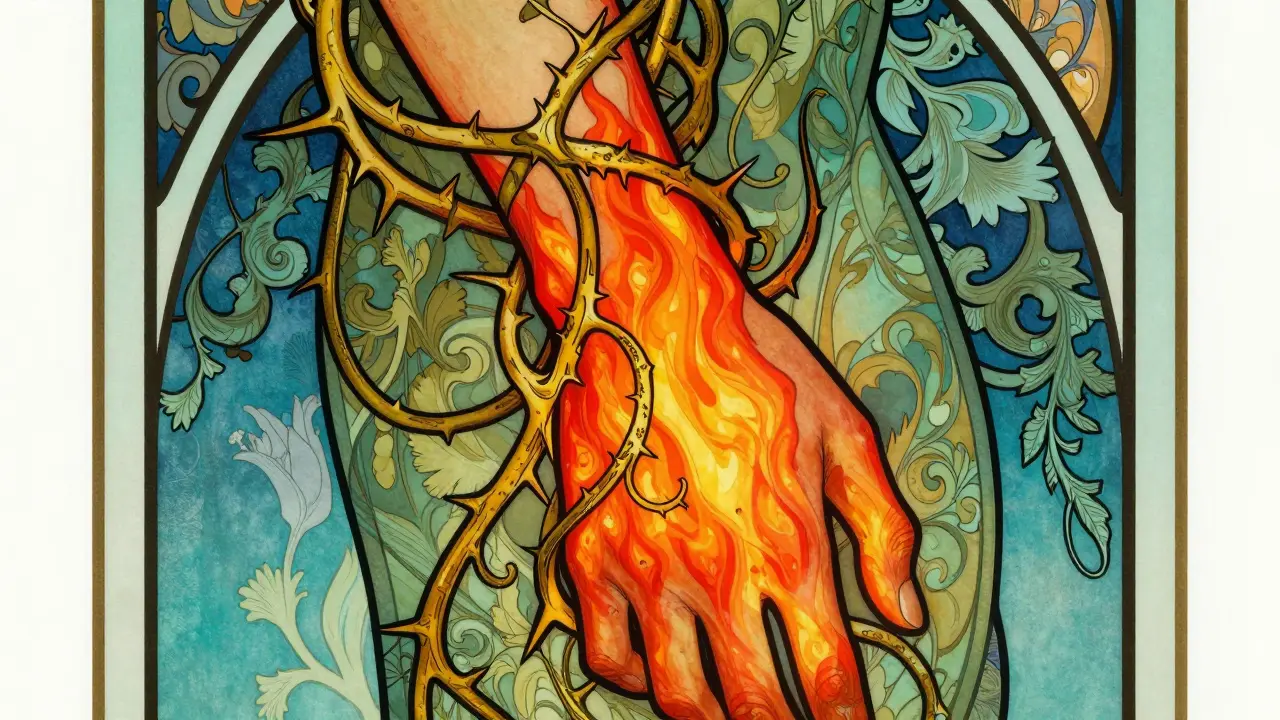
You break your wrist. You expect it to hurt. You expect the throbbing to fade as the bone knits back together. But what if the pain doesn't just stay-it multiplies? What if a light touch from a bedsheet feels like sandpaper, or the air conditioning feels like ice water on fire? This isn't just "bad healing." This is Complex Regional Pain Syndrome, often called CRPS or historically known as Reflex Sympathetic Dystrophy.
CRPS is a neurological condition where your nervous system gets stuck in overdrive. It sends constant, severe pain signals to your brain, long after the original injury has healed. The pain is usually described as burning, but it can also feel like stabbing, tingling, or electric shocks. It’s a confusing, exhausting experience that affects about 1 in every 1,000 people, with women being three times more likely to develop it than men.
What Exactly Is Complex Regional Pain Syndrome?
To understand CRPS, you have to look at how your nerves talk to your brain. Normally, when you get hurt, your peripheral nerves send a warning signal. Once the tissue heals, the signal stops. In CRPS, that "off" switch breaks. The International Association for the Study of Pain (IASP) defines it as a chronic pain condition resulting from dysfunction in either the central or peripheral nervous systems.
Think of it like a smoke alarm that keeps ringing even after the fire is out. Your body perceives danger where there is none. Doctors divide CRPS into two types based on whether a specific nerve injury was confirmed:
- CRPS Type I: This accounts for about 90% of cases. It develops without a confirmed major nerve injury, usually following a fracture or soft tissue injury.
- CRPS Type II: Also known as Causalgia, this occurs when there is clear evidence of damage to a specific nerve.
The key takeaway here is that the severity of the pain does not match the severity of the initial injury. A simple sprain might trigger a reaction that feels like a catastrophic event. This mismatch is what makes diagnosis so tricky and why early recognition is vital.
Recognizing the Signs: More Than Just Pain
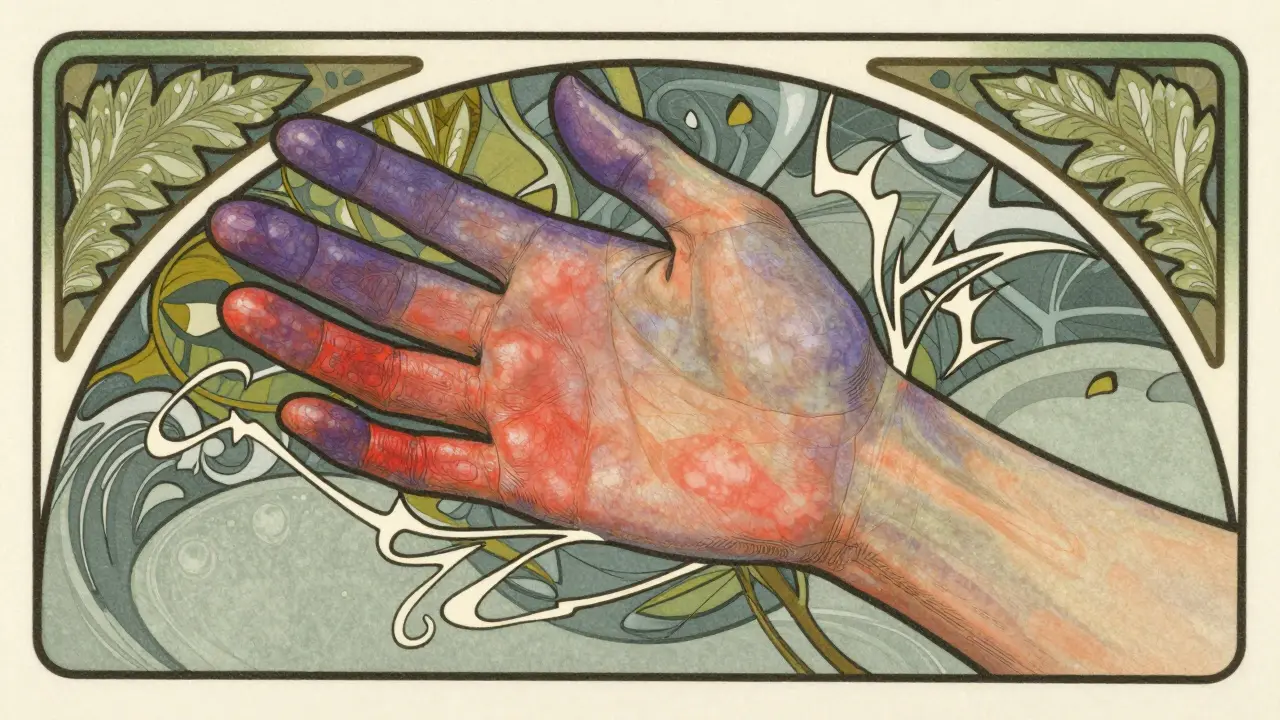
If you are waiting for a doctor to tell you what you already feel, you might be waiting too long. CRPS presents with a cluster of symptoms that go beyond simple soreness. The American Academy of Family Physicians (AAFP) notes that the hallmark is pain "out of proportion" to the inciting injury. But look closer at the limb itself-your arm or leg will likely show visible changes.
| Symptom Category | What It Looks Like |
|---|---|
| Sensory Changes | Extreme sensitivity to touch (allodynia). A breeze or light clothing may cause intense pain. |
| Vasomotor Issues | Temperature differences between limbs. The affected area may be 0.5°C to 1.5°C warmer or cooler than the healthy side. Skin color may turn red, purple, pale, or blotchy. |
| Sudomotor/Skin Changes | Swelling (edema), shiny thin skin, or excessive sweating. Hair and nails may grow faster or slower than usual. |
| Motor/Trophic Issues | Loss of fine motor control, tremors, muscle spasms, joint stiffness, and weakness. Over time, muscles may waste away (atrophy). |
These symptoms often fluctuate. One day your hand might be warm and red; the next, it could be cold and blue. This variability frustrates many patients because their condition literally looks different depending on the hour. If you notice these signs appearing four to six weeks after an injury or surgery, do not ignore them.
Why Does This Happen? The Triggers and Causes
We still don’t know exactly why some people develop CRPS while others heal normally. However, we do know the common triggers. Fractures are the number one culprit, accounting for 40% of cases. Wrist fractures are particularly notorious. Other triggers include deep cuts, lacerations, surgeries (like knee arthroscopy or carpal tunnel release), and even infections.
Surprisingly, the NHS notes that CRPS isn't always triggered by an obvious injury. Sometimes it starts spontaneously. The leading theory involves a combination of three pathways:
- Inflammation: Early on, the immune system goes haywire, releasing chemicals that sensitize nerves.
- Nerve Damage: Even microscopic damage to small sensory fibers can disrupt signaling.
- Sympathetic Nervous System Dysfunction: This part of your nervous system controls automatic functions like heart rate and blood flow. In CRPS, it malfunctions, causing the temperature and color changes seen in the skin.
Recent research, including studies funded by the National Institutes of Health (NIH), suggests an autoimmune component. Some patients have autoantibodies that attack their own nerve tissues. This explains why treatments targeting inflammation, like corticosteroids, can help in the early stages.
Getting Diagnosed: The Budapest Criteria
There is no single blood test or X-ray that confirms CRPS. Diagnosis is clinical, meaning it relies on your description of symptoms and a physical exam. Doctors use the Budapest Criteria, established by the IASP, to make a call. To be diagnosed, you generally need to meet four categories of criteria:
- Continuing pain that is disproportionate to any inciting event.
- Sensory symptoms: Evidence of hyperesthesia (increased sensitivity) or allodynia (pain from non-painful stimuli).
- Vasomotor symptoms: Temperature asymmetry or skin color changes.
- Sudomotor/Edema symptoms: Swelling or sweating changes.
- Motor/Trophic symptoms: Decreased range of motion, motor dysfunction, or trophic changes (hair/nail/skin).
Early diagnosis is critical. As Dr. Pamela T. Bustos of Stanford Medicine points out, CRPS creates a "cycle of pain." The longer you wait, the more entrenched the neural pathways become. If your doctor dismisses your pain as "just phantom pain" or "psychological," seek a second opinion from a pain specialist or a neurologist familiar with CRPS.
Treatment Strategies: Breaking the Cycle
There is no cure for CRPS, but it can be managed. The goal is to reduce pain, restore function, and improve quality of life. Treatment works best when started early, ideally within the first three months. A multidisciplinary approach is standard care.
Physical and Occupational Therapy
This is the cornerstone of treatment. It sounds counterintuitive-moving a limb that hurts-but immobility makes CRPS worse. Physical therapy focuses on desensitization techniques and gradual mobilization. Therapists might use mirror therapy, where you watch a reflection of your healthy limb moving to "trick" the brain into thinking the painful limb is moving normally. This helps retrain the central nervous system.
Medications
Painkillers like ibuprofen rarely work for neuropathic pain. Instead, doctors prescribe medications that calm nerve firing:
- Gabapentin or Pregabalin: These anticonvulsants help quiet down overactive nerves.
- Corticosteroids: Useful in the early inflammatory stage to reduce swelling and pain.
- Bisphosphonates: Originally for osteoporosis, these can help protect bones weakened by disuse and reduce pain in some CRPS patients.
- Opioids: Generally avoided due to risk of dependency and limited effectiveness for nerve pain, though sometimes used short-term in severe cases.
Interventional Procedures
If conservative measures fail, doctors may suggest sympathetic nerve blocks. An anesthetic is injected near the spine to block pain signals from the sympathetic nervous system. For chronic, refractory cases, spinal cord stimulation (SCS) might be an option. This involves implanting a device that sends electrical pulses to mask pain signals before they reach the brain.

Living With CRPS: Mental Health and Daily Life
Chronic pain takes a toll on your mental health. Anxiety, depression, and sleep disturbances are common companions of CRPS. The Cleveland Clinic emphasizes that CRPS impacts mental health significantly. You aren't "imagining" the stress; your body is under constant siege.
Support groups and cognitive behavioral therapy (CBT) can be incredibly helpful. CBT doesn't mean the pain is in your head; it means learning coping strategies to manage the emotional burden of living with unrelenting discomfort. Protecting your sleep is also crucial, as poor sleep lowers your pain threshold, creating a vicious cycle.
Adapt your daily environment. If touch is painful, wear loose, soft clothing. Use adaptive tools for cooking or writing to reduce strain on the affected limb. Listen to your body-push through therapy exercises, but rest when needed. Recovery is not linear. Some days will be better than others.
Prognosis: What Does the Future Hold?
The outlook for CRPS varies widely. The AAFP notes that most cases resolve spontaneously without treatment, but the disability during that time can be severe. Early intervention significantly improves outcomes. Many patients see gradual improvement over months or years. Others may live with chronic symptoms. Research is ongoing, with new trials testing ketamine infusions and immunomodulatory therapies.
Stay informed, advocate for yourself, and connect with specialists who understand this complex condition. You are not alone in this fight.
How long does Complex Regional Pain Syndrome last?
The duration of CRPS varies significantly from person to person. For some, symptoms may resolve within a few months with proper treatment. For others, it can become a chronic condition lasting years. Early intervention, particularly within the first three months of symptom onset, offers the best chance for significant improvement or remission. The NHS notes that while CRPS often gradually improves over time, some people experience pain for many years.
Can CRPS spread to other parts of the body?
Yes, CRPS can spread. While it typically starts in the injured limb (arm or leg), symptoms can migrate to adjacent areas or even the opposite limb. This phenomenon is known as "spread" and is more common if the condition is left untreated for a prolonged period. Keeping the affected limb mobile and managing pain early can help prevent this spread.
Is Complex Regional Pain Syndrome genetic?
While there is no single "CRPS gene," research suggests a genetic predisposition may play a role. Families with a history of CRPS or other chronic pain conditions may be at higher risk. However, genetics alone do not cause CRPS; it usually requires a triggering event like an injury or surgery. Strong associations have not been definitively identified, but scientists are actively studying genetic markers.
What is the difference between CRPS Type 1 and Type 2?
The main difference lies in nerve involvement. CRPS Type 1 occurs without a confirmed major nerve injury and accounts for about 90% of cases. CRPS Type 2 (formerly Causalgia) occurs when there is clear, documented damage to a specific nerve. Both types share similar symptoms and treatment approaches, but Type 2 is directly linked to identifiable nerve trauma.
Does exercise help or hurt CRPS?
Controlled, graded exercise is one of the most effective treatments for CRPS. Immobility leads to stiffness, muscle wasting, and worsened pain. However, aggressive or painful movement can flare symptoms. Working with a physical therapist experienced in CRPS is crucial to design a program that gently desensitizes the limb and restores function without causing excessive distress.