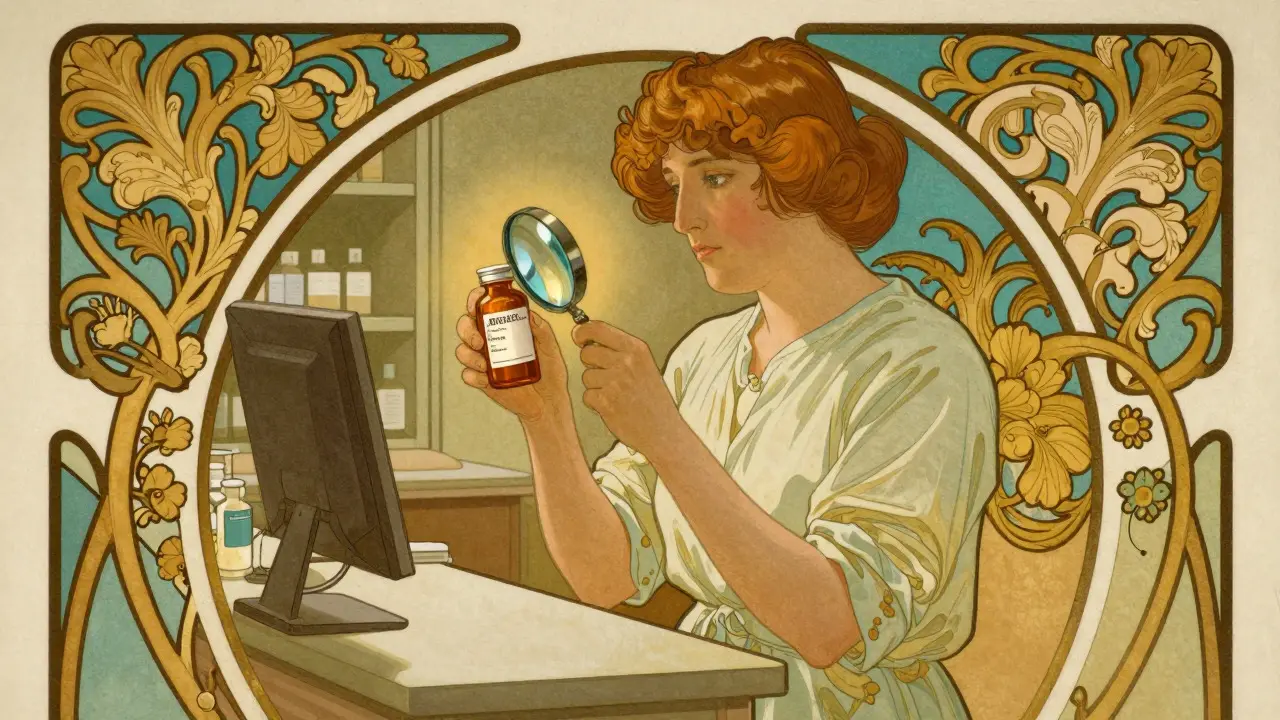
Imagine picking up a new bottle of pills from the pharmacy. The label looks official, the pharmacist smiles, and you walk out feeling taken care of. But what if the dosage is ten times higher than intended? Or worse, what if that medication interacts dangerously with something else you are already taking? These aren't just scary movie plots; they are real risks that happen every day. According to data from the Institute of Medicine, medication errors harm at least 1.5 million people annually in the United States alone. While doctors and pharmacists work hard to prevent mistakes, the final line of defense is often you-the patient.
You might think catching these errors requires a medical degree. It doesn’t. It requires attention, a few simple questions, and knowing exactly where things usually go wrong. By understanding how prescription writing errors happen, you can spot red flags before they become health crises. This guide breaks down the most common mistakes and gives you practical tools to verify your medications safely.
The Hidden Dangers of Handwriting and Abbreviations
Even though digital systems are becoming the norm, handwritten prescriptions still exist, especially in urgent care settings or when technology fails. Illegible handwriting remains a massive problem. A study by the American Pharmacists Association found that 42% of handwritten prescriptions required clarification from the prescriber. That means nearly half of all hand-written scripts need a phone call to figure out what was actually ordered. During that delay, confusion sets in.
The biggest culprit isn't just messy penmanship; it's dangerous abbreviations. Healthcare providers sometimes use shorthand to save time, but this shorthand is open to interpretation. For example, writing "U" for units can easily be mistaken for a zero. If a doctor writes "10 U" of insulin, a hurried reader might see "100." Similarly, "QD" (meaning daily) looks identical to "QID" (four times daily) when written quickly. Taking a medication four times a day instead of once can lead to severe overdose symptoms.
Another critical issue involves decimal points. Writing ".5 mg" without a leading zero is a classic error. Many readers interpret ".5" as "5," resulting in a ten-fold overdose. Conversely, writing "5.0 mg" with a trailing zero can be misread as "50 mg." The FDA has reported that these specific formatting errors caused hundreds of deaths between 2010 and 2020. When reviewing any paper prescription, look for these visual traps immediately.
Electronic Prescribing: Not a Perfect Fix
You might assume that switching to electronic prescribing solved these problems. It helped, reducing traditional handwriting errors by 55%, according to a 2019 JAMA Internal Medicine study. However, it introduced new types of mistakes. Electronic Health Records (EHRs) rely on dropdown menus and auto-complete features. Doctors often select the first option that appears, even if it’s not the right dose. For instance, if a provider intends to prescribe 5 mg of a drug but accidentally clicks 50 mg because it’s listed nearby in the menu, the system rarely catches it automatically.
This phenomenon is known as "alert fatigue." Providers receive so many safety warnings from their software that they start ignoring them. The ECRI Institute identified workarounds in e-prescribing systems as a top health technology hazard, noting that 31% of providers bypass safety alerts regularly. As a patient, this means you cannot trust that the computer checked everything. You still need to verify the details yourself.
Look-Alike and Sound-Alike Medications
Drug names are another major source of confusion. There are thousands of medications on the market, and many share similar spellings or pronunciations. The Institute for Safe Medication Practices (ISMP) tracks these "look-alike/sound-alike" pairs closely. Common dangerous pairs include Celebrex (for arthritis) versus Celexa (an antidepressant), or Zyprexa (an antipsychotic) versus Zyrtec (an allergy medication).
If you have high blood pressure and pick up a box of Zyrtec thinking it’s your heart medication, the consequences could be serious. Drug name confusion accounts for about 25% of prescribing errors. Always check the generic name printed on the bottle, not just the brand name. Generic names are less likely to sound alike. For example, know that lisinopril is different from losartan, even though they both treat blood pressure and start with 'L.'
Your Seven-Point Verification Checklist
To protect yourself, adopt a routine. Don't just grab the bag and leave. Take thirty seconds to review your prescription against these seven critical elements recommended by the FDA:
- Complete Drug Name: Ensure the full name is printed, not an abbreviation.
- Precise Dosage: Check for leading zeros (0.5 mg, not .5 mg) and no trailing zeros (5 mg, not 5.0 mg).
- Clear Frequency: Instructions should say "once daily" rather than "QD" or "BID."">
- Total Quantity: Does the number of pills match the expected duration? If you’re prescribed antibiotics for a week, do you have seven days' worth?
- Indication/Purpose: The label should state why you are taking it (e.g., "for hypertension").
- Prescriber Contact Info: Verify the doctor’s name and phone number are correct.
- Expiration Date: Make sure the prescription hasn’t expired.
A University of Michigan study showed that patients using a checklist like this caught 63% of prescription errors before reaching the pharmacy, compared to only 22% who didn’t. It’s a small effort with a huge payoff.
High-Alert Medications Require Extra Care
Some drugs carry higher risks than others. These are called "high-alert medications." They include insulin, anticoagulants (blood thinners like warfarin or apixaban), opioids, and chemotherapy agents. Although they represent only 8% of all prescriptions, they account for 72% of fatal prescription errors, according to Dr. Michael Cohen of ISMP.
If you are prescribed one of these, double-check everything twice. Confirm the unit of measurement explicitly. Ask the pharmacist, "Is this measured in milligrams or micrograms?" Confusing micrograms (mcg) with units or milligrams is a frequent cause of fatal overdoses, particularly with heparin and insulin. Never assume the standard dose applies to you; kidney and liver function significantly alter how your body processes these powerful drugs.

Using the Teach-Back Method
Communication gaps are wide. Doctors speak fast, and patients are often nervous. To bridge this gap, use the "teach-back method." After the doctor or pharmacist explains how to take your medication, repeat it back to them in your own words. Say, "So, I understand I need to take one tablet every morning with food, correct?"
Johns Hopkins Medicine validated this technique, showing it reduces misunderstanding by 81%. It forces a moment of clarity. If you repeated the wrong instruction, they will correct you right then. It also signals to the provider that you are engaged and paying attention, which often makes them more careful during the explanation.
| Error Type | Frequency/Impact | How to Catch It |
|---|---|---|
| Illegible Handwriting | 22% of errors | Ask for clarification immediately; request e-prescribing if possible. |
| Wrong Dosage | 19% of errors | Check for leading/trailing zeros; confirm units (mg vs mcg). |
| Drug Interactions | 15% of errors | List all current meds for the pharmacist; ask about interactions. |
| Incorrect Sig (Instructions) | 12% of errors | Use teach-back method; ensure plain language instructions. |
| Look-Alike Names | 25% of naming errors | Verify generic name; compare pill appearance to previous fill. |
Empowering Yourself Through Questions
Don't be afraid to ask questions. The National Patient Safety Foundation promotes the "Ask Me 3" program, which encourages patients to ask: "What is my main problem?", "What do I need to do?", and "Why is it important?" Applying this to prescriptions, ask: "What is this medication for?", "How do I take it?", and "What are the side effects?"
A 2021 JAMA Network Open study found that consistently applying these questions reduced medication errors by 44%. Providers expect these questions. In fact, they appreciate patients who are informed. It creates a partnership rather than a transaction. Remember, you are the expert on your own body and lifestyle. If a prescription seems off-perhaps the color of the pill is different from last month, or the taste is unusual-speak up. Your intuition is a valuable diagnostic tool.
Technology Tools for Patient Safety
Technology isn't just for doctors. Apps like MedSafety allow patients to scan prescription images using AI to detect potential error patterns. In pilot studies, these tools helped users identify errors 68% of the time. Additionally, many pharmacies now offer SMS alerts confirming prescription details. If you receive a text saying you picked up "Metformin" but you were expecting "Methotrexate," act immediately. Do not wait until you get home. Call the pharmacy back while you are still there.
As we move toward 2027, experts predict that patient-mediated error detection will become standard practice. Until then, the responsibility falls largely on us. By staying vigilant, using checklists, and communicating clearly, you can significantly reduce your risk. Your health is too important to leave entirely to chance.
What is the most common type of prescription error?
The most common type is improper dosing, accounting for nearly 38% of prescribing errors. This includes issues like missing leading zeros (.5 instead of 0.5) or confusing milligrams with micrograms.
How can I tell if my prescription has a dangerous abbreviation?
Watch for abbreviations like "U" for units, "QD" for daily, or "MS" for morphine sulfate. These are easily misread. Always ask the pharmacist to write out the full word if you see any shorthand.
Does electronic prescribing eliminate all errors?
No. While it reduces handwriting errors, it introduces new risks like dropdown menu selection errors and alert fatigue. Patients must still verify the details provided electronically.
What is the teach-back method?
It is a communication technique where you repeat back the instructions given by your healthcare provider in your own words. This confirms understanding and reduces misunderstandings by up to 81%.
Which medications are considered high-alert?
High-alert medications include insulin, anticoagulants (blood thinners), opioids, and chemotherapy drugs. Errors with these drugs are more likely to result in serious harm or death.
What should I do if I suspect a prescription error?
Stop taking the medication immediately. Contact your pharmacist or prescriber to verify the order. Do not assume it is correct based on past experiences. Bring the prescription label and the medication with you if possible.