
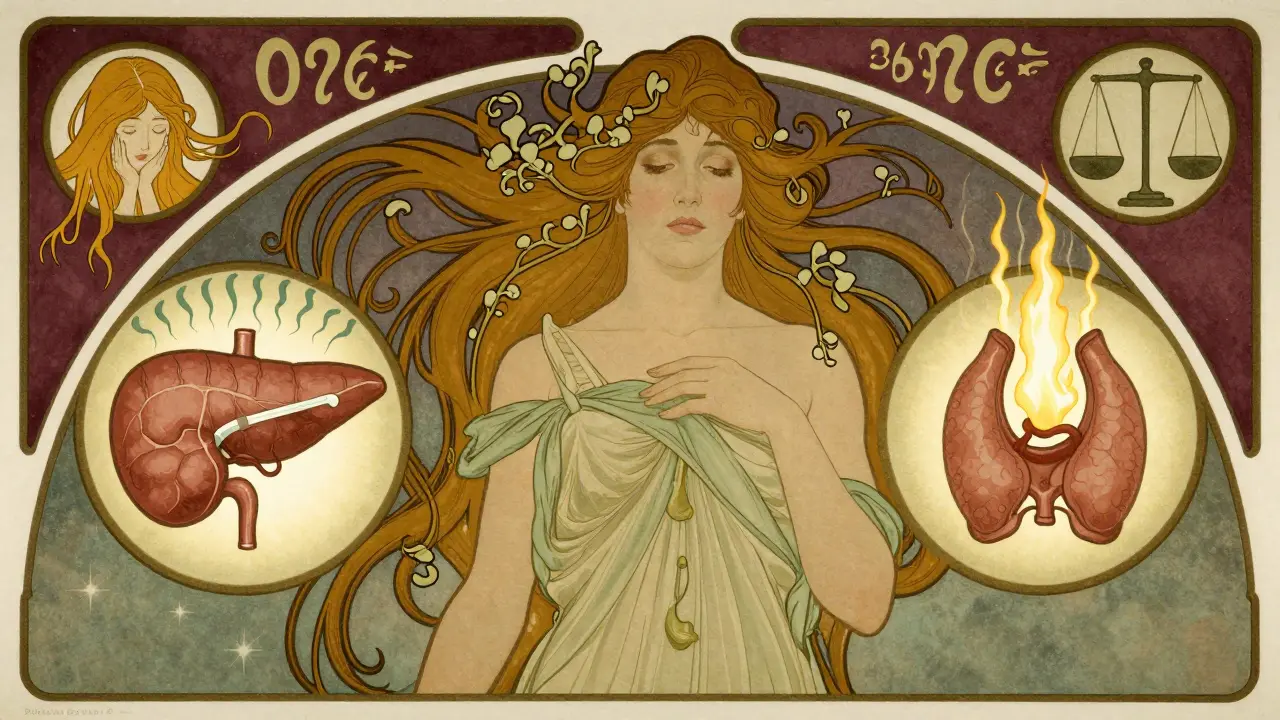
When your body starts acting strange-weight gain or loss you can’t explain, constant tiredness, mood swings, hair falling out-it’s easy to blame one thing. But what if it’s not just diabetes? What if your thyroid is throwing a wrench into the whole system? For millions of people, these two conditions don’t just happen side by side-they actively mess with each other. And if you’re managing one and not checking the other, you could be missing the real cause of your symptoms.
Why Diabetes and Thyroid Problems Go Together
It’s not coincidence. About 1 in 3 people with diabetes also have a thyroid problem. That’s not a small number-it’s a pattern. And it’s not just about aging or lifestyle. Both conditions are often rooted in the same autoimmune problem. If your immune system attacks your insulin-producing cells (Type 1 diabetes), it’s also more likely to attack your thyroid. That’s why people with Type 1 diabetes are 5 to 10 times more likely to develop thyroid disease than someone without diabetes. Even Type 2 diabetes, often linked to weight and diet, shows a strong tie. Studies show that 21.9% of people with thyroid dysfunction also have Type 2 diabetes, compared to just 16.96% in the general population. The link isn’t just statistical-it’s biological. Thyroid hormones control how fast your body uses energy. When they’re off, your blood sugar goes off too.How Thyroid Problems Directly Affect Blood Sugar
Your thyroid doesn’t just influence your metabolism-it directly controls how your body handles insulin and glucose. When your thyroid is underactive (hypothyroidism), your body slows down. Glucose metabolism drops by 25-30%. That means sugar stays in your blood longer. Your cells become resistant to insulin. Your HbA1c creeps up. You might need less insulin-but if you don’t know why, you could end up with dangerous low blood sugar. On the flip side, when your thyroid is overactive (hyperthyroidism), your body burns through glucose too fast. Your liver releases more sugar. Your muscles use insulin more aggressively. Your pancreas gets pushed harder. Studies show insulin clearance increases by 20-25%. That means you might need up to 30% more insulin just to keep your numbers stable. But if your thyroid is treated and suddenly slows down, your insulin needs drop overnight-and that’s when people end up in the ER from hypoglycemia.Symptoms That Look the Same (But Aren’t)
This is where things get tricky. The symptoms of thyroid disease and diabetes overlap so much, even doctors can mix them up. Fatigue? Check. Weight changes? Check. Hair loss? Check. Mood swings? Depression? Cold intolerance? All common to both. But there are red flags that point to thyroid involvement:- Hoarse voice-not from a cold, but from swelling in the throat
- Muscle cramps, especially in the calves, that don’t go away
- Poor memory or brain fog that gets worse over time
- Swelling in the neck (goiter)
- Dry, coarse skin that doesn’t improve with moisturizer
What You Need to Test For
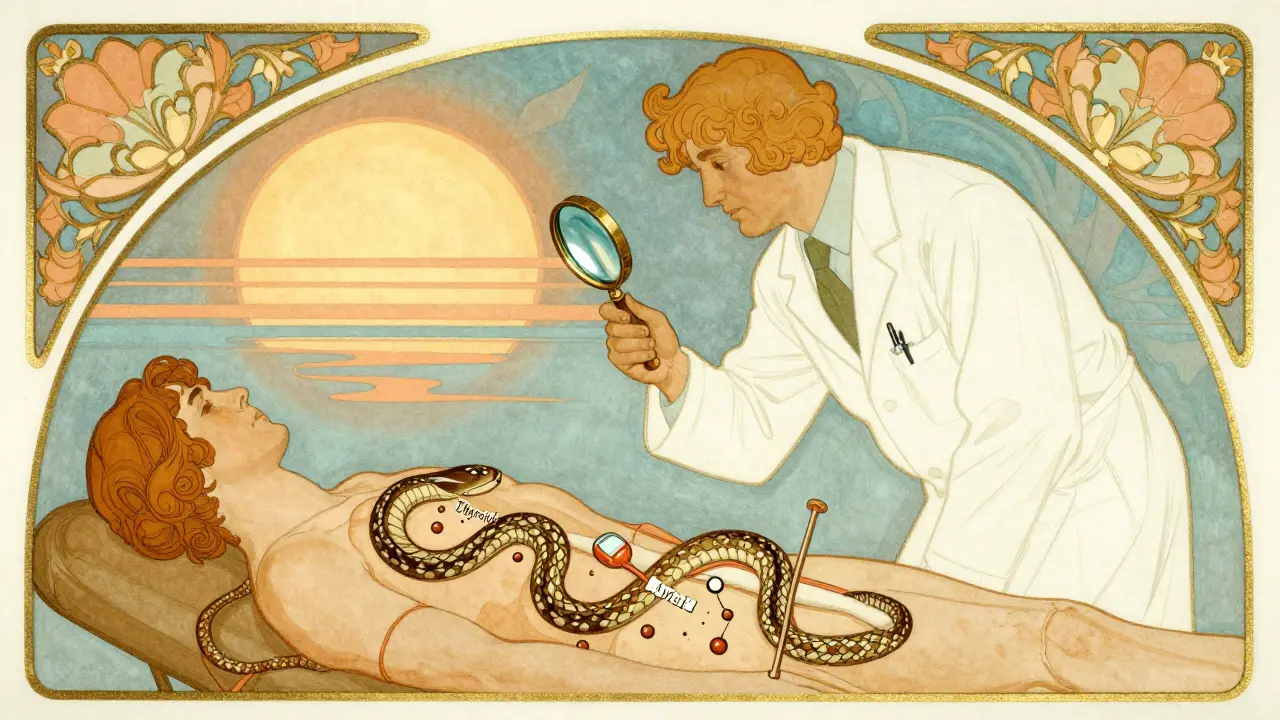
If you have diabetes, you need more than just HbA1c and fasting glucose. You need thyroid screening. The American Diabetes Association now recommends annual TSH testing for all Type 1 diabetics and high-risk Type 2 diabetics. That means checking your thyroid-stimulating hormone. But that’s not enough. You also need free T4 and free T3 levels. And if you have Type 1 diabetes-or a family history of autoimmune disease-get tested for thyroid antibodies (TPOAb and TgAb). These tell you if your immune system is attacking your thyroid, even before your TSH goes out of range. Many people have subclinical hypothyroidism-normal TSH, but low T3-and still suffer from symptoms. And don’t wait for symptoms. A 2024 study showed that even mild thyroid dysfunction in diabetics increases the risk of diabetic retinopathy by 37.2%. That’s not a small risk. It’s a reason to test early and often.Managing Both Conditions at Once
Treating one without the other is like fixing one tire while the other is flat. If your thyroid is underactive and you’re on levothyroxine, your insulin needs will drop. You might need to cut your dose by 15-25%. But if you don’t know why, you’ll crash. Conversely, if your thyroid is overactive, your insulin needs go up. You might be taking more insulin than you need-and not realizing it’s because of your thyroid. Once your thyroid is controlled, your insulin dose may need to be lowered. That’s why regular monitoring is non-negotiable. Here’s what works:- Check TSH every 3 months if you have both conditions-not once a year
- Use continuous glucose monitoring (CGM). People with both conditions have 32% fewer low blood sugar events with CGM than with fingersticks
- Take levothyroxine on an empty stomach, 30-60 minutes before food. Diabetic gastroparesis (nerve damage from diabetes) can reduce absorption by 15-20%
- Watch your diet. A Mediterranean diet improved HbA1c by 0.8-1.2% and TSH by 0.5-0.7 mIU/L in just 6 months
- Get your cholesterol checked. Hypothyroidism in diabetics raises LDL by 18-22 mg/dL and triglycerides by 25-30 mg/dL-huge heart risk
Real Stories, Real Mistakes
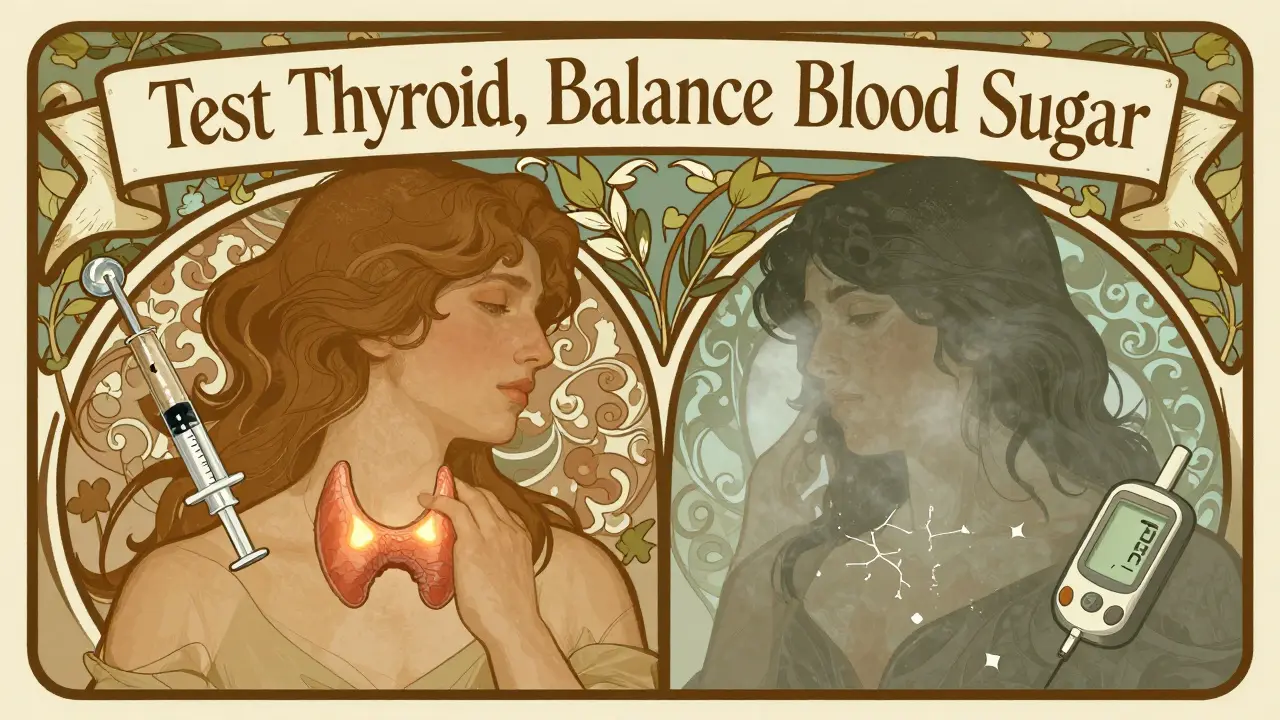
One patient on DiabetesDaily.com wrote: “After my hypothyroidism diagnosis, my insulin needs dropped by 30% overnight. I had three low blood sugar episodes in a week before my doctor figured it out.” Another Reddit user said: “I was told my blurry vision and fatigue were from diabetes complications. Turns out, my thyroid was barely working. Once I started levothyroxine, my vision cleared in weeks.” A 2022 survey found 58% of people with both conditions had at least one medication error because doctors confused symptoms. One in five needed hospitalization. These aren’t rare cases. They’re predictable-and preventable.What’s Changing in 2026
New research is changing how we treat this combo. The NIH-funded TRIAD study is tracking 5,000 people to see if treating thyroid issues early can slow or stop diabetes progression. Early results are promising: GLP-1 agonists, used for diabetes, improved thyroid function in 63% of patients with subclinical hypothyroidism. The American Association of Clinical Endocrinologists is updating its guidelines in October 2024 to include clear algorithms for managing thyroid dysfunction in Type 1, Type 2, and prediabetic patients. That means more standardized care, fewer mistakes. And the economic impact? People with both conditions spend nearly $5,000 more per year on healthcare. But with better coordination, experts estimate we could save $12.7 billion annually across the U.S. and Europe.What You Should Do Today
If you have diabetes:- Ask your doctor for a full thyroid panel: TSH, free T4, free T3, and thyroid antibodies
- If you’re on insulin or GLP-1 drugs, monitor your blood sugar closely for 2-4 weeks after starting or changing thyroid medication
- Get a CGM if you don’t have one-especially if you’re having unexplained lows or highs
- Adopt a Mediterranean-style diet: olive oil, fish, nuts, vegetables, whole grains. It helps both conditions
- Track your symptoms in a journal: fatigue, weight, temperature sensitivity, mood, hair loss



Alec Stewart Stewart
February 4, 2026 AT 01:05This hit home so hard. I’ve been dealing with weird fatigue and weight gain for years, thought it was just my diabetes acting up. Turns out my TSH was through the roof. Started levothyroxine and my energy came back like someone flipped a switch. 🙌
Samuel Bradway
February 5, 2026 AT 21:07So many people just blame everything on diabetes when it’s actually their thyroid. I wish more docs would test for both right away instead of making us jump through hoops. I almost missed mine for two years.
Prajwal Manjunath Shanthappa
February 7, 2026 AT 10:40It is, indeed, a profoundly alarming phenomenon - one that, frankly, reflects the catastrophic fragmentation of modern endocrinological practice. The conflation of metabolic dysregulation with autoimmune etiology is not merely coincidental - it is systemic, and yet, clinicians persist in siloed diagnostics. One must ask: how many patients are being failed by this archaic, reductionist paradigm? The data is irrefutable - yet ignored. I am not exaggerating when I say this is a public health catastrophe!
Wendy Lamb
February 7, 2026 AT 20:56Get tested. TSH, free T4, free T3, antibodies. Don’t wait for symptoms.
Antwonette Robinson
February 8, 2026 AT 03:26Oh wow, a whole article about thyroid and diabetes? Groundbreaking. I’m sure the 37% increased risk of retinopathy is just a coincidence, right? Like how my dog barks every time the moon is full. 🤡
Ed Mackey
February 8, 2026 AT 10:59so i just found out mine was low and i didnt even know. my doc said tsh was normal but my t3 was low. now im on meds and my brain fog is better. kinda wish they told me sooner tho
caroline hernandez
February 9, 2026 AT 14:48Let’s be clear: the interplay between thyroid hormones and insulin sensitivity is not anecdotal - it’s a neuroendocrine cascade. Hypothyroidism induces hepatic gluconeogenesis suppression and peripheral insulin resistance via GLUT4 downregulation. Concurrently, hyperthyroidism accelerates glycogenolysis and increases insulin clearance via hepatic CYP450 upregulation. This is why CGM is non-negotiable - you’re not just tracking glucose, you’re monitoring a dynamic endocrine feedback loop. And yes, levothyroxine absorption is compromised in gastroparesis - take it on an empty stomach, no coffee, no calcium, no fiber for 60 minutes. Period.
Sherman Lee
February 10, 2026 AT 03:44They don’t want you to know this… but Big Pharma doesn’t profit from thyroid testing. Why? Because once you fix your thyroid, you need less insulin, less GLP-1 drugs, less expensive CGMs. That’s why they push ‘just manage your sugar’ and never test TPOAb. Look at the data - 58% of meds errors? Coincidence? I think not. 🕵️♂️💊
Lorena Druetta
February 11, 2026 AT 10:57Thank you for sharing this vital information with such clarity and compassion. This is precisely the kind of patient-centered, evidence-based guidance that transforms lives. I encourage every individual managing diabetes to advocate for comprehensive thyroid screening - not as an afterthought, but as a fundamental component of holistic care. Your health is worth the effort.