
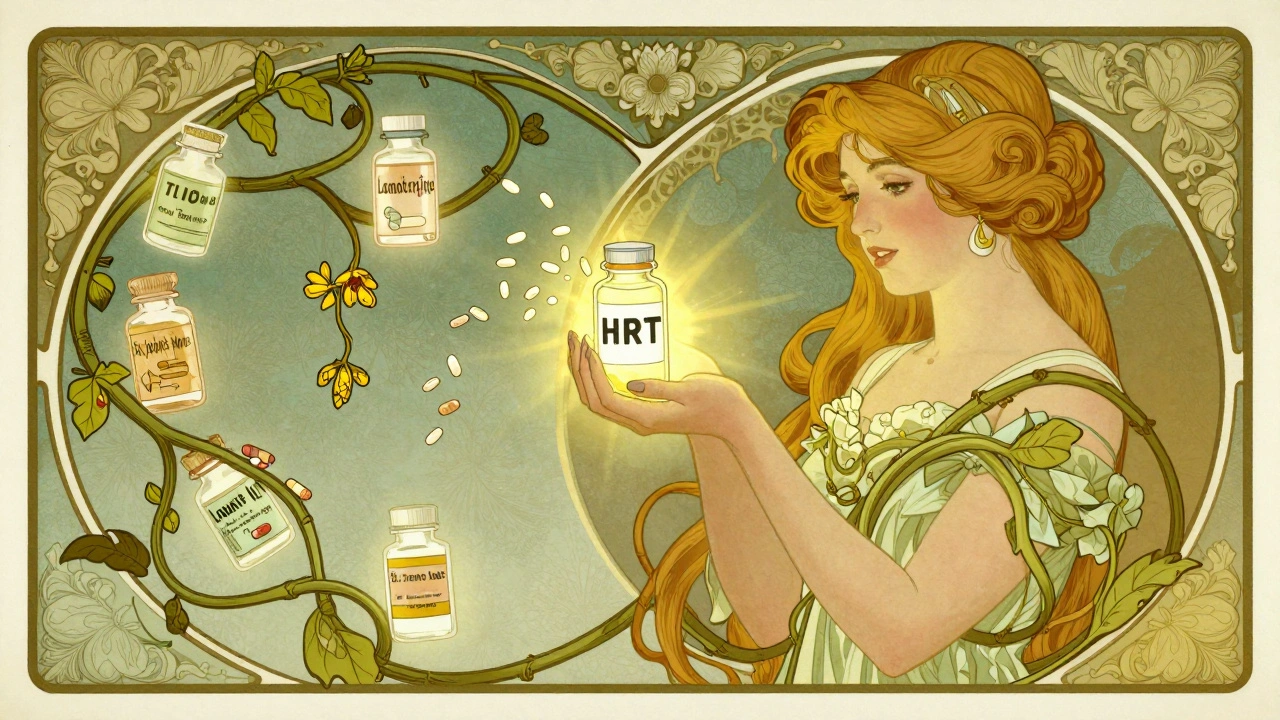
When you start Hormone Replacement Therapy (HRT) for menopause, you’re not just adding one medicine to your routine-you’re changing how your whole body handles other drugs. Many women don’t realize that the estrogen or progesterone in their HRT can make their epilepsy meds less effective, mess with their thyroid tests, or even reduce the power of antidepressants. These aren’t rare side effects. They’re well-documented, clinically significant interactions that can turn a stable treatment plan into a health risk.
How HRT Changes How Your Body Processes Other Drugs
HRT doesn’t just replace hormones-it rewires your liver’s ability to break down other medicines. The estrogen in most HRT products boosts the activity of liver enzymes like UGT1A4. This enzyme is responsible for clearing drugs like lamotrigine (used for epilepsy and bipolar disorder) from your bloodstream. When estrogen ramps up this enzyme, lamotrigine gets flushed out faster. Blood levels drop. Seizures return. Depression worsens.
A real case reported in 2022 by the Netherlands Pharmacovigilance Centre Lareb shows exactly how this plays out. A woman had been taking lamotrigine for years with good control of her depressive episodes. After starting Femoston-a common HRT containing estradiol and dydrogesterone-her symptoms returned after five months. Blood tests confirmed her lamotrigine levels had plummeted. When she stopped HRT, her levels rose again and her mood improved. This isn’t an isolated incident. It’s a pattern.
Oral HRT-tablets and capsules-is the main culprit. The hormones pass through the liver first, triggering this enzyme surge. Transdermal patches, on the other hand, deliver hormones directly into the bloodstream through the skin. They bypass the liver’s first-pass metabolism. That’s why the NHS says patches are less likely to interfere with other medications. If you’re on a drug with a narrow therapeutic window-like anticoagulants, seizure meds, or thyroid hormones-switching from pills to patches could be a safety upgrade.
Medications That Can Become Less Effective with HRT
Some drugs lose their punch when taken with estrogen-based HRT. Here are the most common and dangerous ones:
- Lamotrigine: As shown in the Lareb case, levels can drop by up to 50%. This increases seizure and relapse risk.
- Anticonvulsants: Carbamazepine, phenytoin, and barbiturates not only reduce HRT effectiveness but also get metabolized faster themselves, creating a two-way interaction.
- Antibiotics: Rifampicin (used for tuberculosis) and some others speed up estrogen breakdown, making HRT less effective at controlling hot flashes.
- HIV medications: Protease inhibitors and non-nucleoside reverse transcriptase inhibitors can interfere with hormone metabolism, leading to unpredictable hormone levels.
- St. John’s wort: This popular herbal remedy for mild depression induces liver enzymes that break down estrogen. It can make HRT useless and trigger a return of menopausal symptoms.
What’s scary is that many of these interactions happen silently. You won’t feel anything different. Your hot flashes might stay away, but your seizures or depression could flare up without warning. That’s why it’s not enough to just tell your doctor you’re on HRT. You need to list every pill, patch, capsule, tea, or supplement you take-even if you think it’s harmless.
How HRT Distorts Lab Tests and Diagnosis
HRT doesn’t just interact with drugs-it messes with the tests doctors use to monitor your health. The most common example is cortisol testing for adrenal insufficiency.
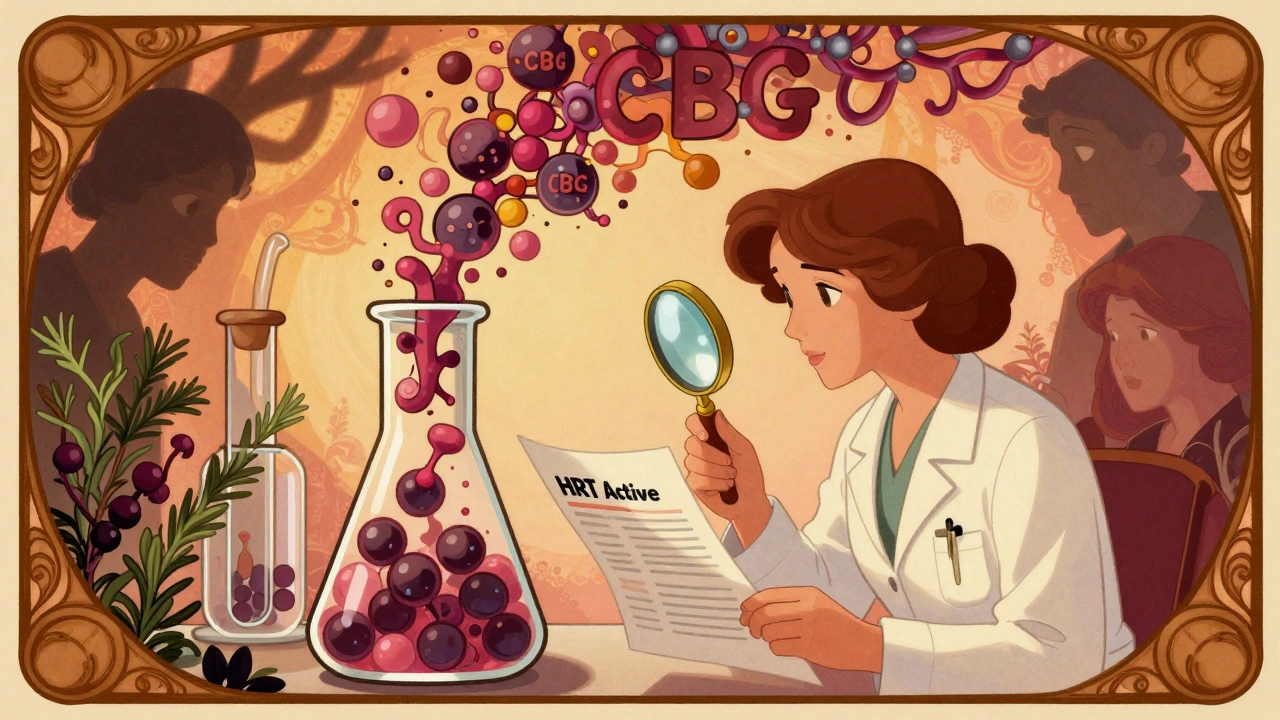
Estrogen increases a protein in your blood called corticosteroid-binding globulin (CBG). This protein binds to cortisol, making it inactive. So when you’re on HRT, your total cortisol levels go up-even if your actual free, active cortisol hasn’t changed. If your doctor checks your cortisol level without knowing you’re on HRT, they might think you’re over-replacing with hydrocortisone and reduce your dose. That could lead to adrenal crisis.
The Pituitary Foundation says clearly: “Cortisol cannot be used to assess hydrocortisone replacement in women taking HRT.” Instead, doctors need to rely on symptoms, ACTH stimulation tests, or free cortisol measurements. If you’re on both HRT and hydrocortisone, make sure your endocrinologist knows about both.
Another hidden issue: testosterone therapy. When combined with high-dose hydrocortisone, estrogen can cause water retention. You might notice swollen hands, feet, or ankles. This isn’t just discomfort-it can raise blood pressure and strain your heart. Dose adjustments or extra monitoring may be needed.

What About Herbal Supplements and Natural Remedies?
Many women turn to herbs like black cohosh, red clover, or rosemary to ease menopause symptoms. But these aren’t risk-free. Resveratrol, found in red grapes and supplements, has a chemical structure similar to synthetic estrogen. It might add to estrogen’s effects, increasing the risk of blood clots or breast cancer in vulnerable people.
Rosemary is another surprise. Some early research suggests it might speed up the liver’s breakdown of estrogen. If you’re taking rosemary extract while on HRT, you might not get the symptom relief you expected. And because these herbs aren’t regulated like drugs, there’s no standard dose. One bottle might have 100mg of active ingredient; another might have 500mg. You can’t predict the interaction.
The NHS warns: “Herbal remedies containing St John’s wort may affect the way your HRT works and make it less effective.” That’s not a suggestion. It’s a warning based on real clinical outcomes. If you’re using any supplement, tell your doctor. Don’t assume it’s “natural” so it’s safe.
When HRT Increases Risk with Other Medications
HRT doesn’t just change how drugs work-it can make side effects worse. The biggest danger is with drugs that already raise your risk of blood clots, stroke, or heart attack.
Estrogen increases clotting factors. If you’re also taking:
- Combined oral contraceptives (even if you’re postmenopausal and using them for other reasons)
- Some antidepressants like SSRIs that affect platelet function
- Medications for autoimmune conditions like lupus
Your risk of deep vein thrombosis or pulmonary embolism goes up. The U.S. National Library of Medicine’s MedlinePlus says combination HRT can increase the risk of stroke, heart attack, and breast cancer. That’s why they recommend stopping HRT at least 4 to 6 weeks before surgery or prolonged bed rest-especially if you smoke, have high blood pressure, or a history of clots.
Also, if you’re on tamoxifen for breast cancer, don’t assume HRT is safe. Even low-dose estrogen can interfere with tamoxifen’s cancer-blocking effect. Many oncologists advise against any form of estrogen therapy in breast cancer survivors.
What You Should Do Right Now
If you’re on HRT and any other medication, here’s what to do immediately:
- List every drug and supplement-including over-the-counter painkillers, vitamins, and herbal teas.
- Ask your doctor or pharmacist: “Could any of these interact with my HRT?” Don’t wait for them to ask.
- Check your delivery method. If you’re on oral HRT and take lamotrigine, epilepsy meds, or blood thinners, ask if a patch would be safer.
- Know the warning signs: Sudden severe headache, vision loss, chest pain, swelling in legs, or worsening seizures or depression could mean an interaction is happening.
- Get blood tests if needed. If you’re on lamotrigine or anticoagulants, ask if your levels should be checked after starting or stopping HRT.
There’s no one-size-fits-all answer. Your risk depends on your age, your health history, your current meds, and the type of HRT you’re using. But the key is this: HRT isn’t just a hormone pill. It’s a system-wide modifier. Treat it like the powerful drug it is.
What’s Changing in 2025
In 2022, the European Medicines Agency updated HRT product labels to include the lamotrigine interaction after the Lareb report. That’s a big deal. It means regulators now accept that these interactions aren’t theoretical-they’re real, measurable, and dangerous enough to require labeling.
But the evidence is still thin. Most of what we know comes from case reports and biological plausibility-not large clinical trials. That’s why doctors often miss these interactions. They’re taught to watch for the big risks-blood clots, cancer-but not the subtle drug clashes.
What’s coming next? More pharmacovigilance. More real-world data. More awareness. But until then, the burden is on you. If you’re on HRT, don’t assume your pharmacist or GP knows every interaction. Be the one who asks. Be the one who checks.
Can HRT make my epilepsy worse?
Yes. Estrogen in HRT can lower the blood levels of lamotrigine and other anticonvulsants by increasing liver enzyme activity. This can lead to breakthrough seizures or worsening seizure control. If you start HRT and notice more seizures, your doctor should check your medication levels. Switching from oral HRT to a patch may help reduce this risk.
Does HRT affect thyroid medication?
Yes. Estrogen increases a protein called thyroid-binding globulin, which binds to thyroid hormone. This can lower the amount of free, active thyroid hormone in your blood. If you’re on levothyroxine, your doctor may need to increase your dose after starting HRT. Always have your TSH levels checked 6-8 weeks after starting or changing HRT.
Is transdermal HRT safer with other drugs?
Yes. Skin patches deliver hormones directly into the bloodstream, bypassing the liver. This means they’re less likely to interfere with drugs metabolized by liver enzymes like UGT1A4. If you’re on epilepsy meds, blood thinners, or HIV drugs, patches are generally a safer choice than oral tablets.
Can I take St. John’s wort with HRT?
No. St. John’s wort speeds up the breakdown of estrogen in the liver, making HRT less effective. This can bring back hot flashes, night sweats, and mood swings. It may also reduce protection against osteoporosis. The NHS explicitly warns against combining the two. If you’re using it for depression, talk to your doctor about alternatives.
Should I stop HRT before surgery?
Yes, if you’re at risk for blood clots. The NHS and MedlinePlus recommend stopping estrogen-based HRT 4 to 6 weeks before major surgery or if you’ll be immobile for long periods. This reduces your risk of deep vein thrombosis or pulmonary embolism. Always discuss this with your surgeon and prescribing doctor.


Gareth Storer
December 4, 2025 AT 22:33Oh great, so now my hormones are also my personal drug saboteur? Thanks, biology. I’m just here trying to not cry in the grocery store and now I have to worry about my epilepsy meds turning into tap water? 😅
George Graham
December 5, 2025 AT 08:34This is such an important post. I’ve seen too many women get dismissed when they say something’s ‘off’ after starting HRT. The liver enzyme stuff isn’t common knowledge, but it’s life-changing if you’re on lamotrigine or thyroid meds. Please, if you’re on HRT, get your levels checked. Don’t wait for a crisis.
John Filby
December 7, 2025 AT 00:48Wait so St. John’s wort + HRT = bad? 😳 I’ve been taking it for months… should I panic? My hot flashes are gone but I’ve been feeling kinda flat lately. Maybe this is why? 🤔
Elizabeth Crutchfield
December 8, 2025 AT 12:36i just started hrt last month and my doc never mentioned any of this… i’m kinda freaked out now. i take lexapro and a multivitamin with ginkgo… should i call my pharmacy?
Ben Choy
December 8, 2025 AT 16:41Y’all need to hear this: if you’re on oral HRT and anything that affects your brain or blood, ask about patches. Seriously. It’s not a big change, just a different delivery method. I switched 6 months ago and my thyroid levels stabilized overnight. No drama. Just science. 🙌
Scott van Haastrecht
December 9, 2025 AT 14:37Of course the medical system ignores this until someone has a seizure or a clot. Doctors are too busy collecting their paychecks to read pharmacology journals. This isn’t ‘information’-it’s a systemic failure. And now you’re just supposed to ‘ask your doctor’ like they’re not already overwhelmed. Pathetic.
Bill Wolfe
December 11, 2025 AT 05:49It’s fascinating how the pharmaceutical-industrial complex has normalized the assumption that women’s bodies are mere vessels for pharmacological experimentation. The fact that estrogen’s hepatic enzyme modulation is treated as an ‘afterthought’ rather than a core pharmacokinetic variable speaks volumes about the patriarchal foundations of clinical practice. We must demand epistemic justice in endocrinology.
Ollie Newland
December 11, 2025 AT 17:13UGT1A4 induction is the silent killer here. Oral estrogen = first-pass metabolism = enzyme upregulation = reduced CYP substrate half-life. Patches bypass hepatic extraction, so no CYP450/UGT fireworks. Lamotrigine’s T1/2 drops from ~30h to ~12h-no wonder people relapse. This isn’t anecdotal. It’s pharmacodynamics 101.
Rebecca Braatz
December 13, 2025 AT 06:51Hey ladies-this is your sign to speak up. If your doctor doesn’t know about HRT-drug interactions, they’re not keeping up. Bring this post. Print it. Stick it on their desk. You deserve to be safe. You’re not being ‘difficult’-you’re being smart. I’ve been there. You got this.
Jordan Wall
December 14, 2025 AT 20:51So… if I’m on HRT and take resveratrol supplements (because I’m ‘anti-aging’), I’m basically doing a slow-motion estrogen bomb? 🤯 Also, typo: ‘hormones’ is misspelled in para 3. Just sayin’. 😎
Yasmine Hajar
December 15, 2025 AT 06:50My mom had a stroke after starting HRT and was on warfarin. No one told her. She’s fine now, but it was terrifying. If you’re on blood thinners, PLEASE talk to your doctor. Don’t wait. I’m sharing this everywhere.
val kendra
December 16, 2025 AT 08:08Switched to patches last year after my lamotrigine levels crashed. Took 3 weeks to stabilize but now I’m back to normal. No more brain fog. No more panic attacks. Patch = life saver. Also, stop taking St. John’s wort. It’s not ‘natural’-it’s a drug.
Isabelle Bujold
December 17, 2025 AT 04:22There’s a critical gap here: most guidelines don’t mention the interaction between HRT and selective serotonin reuptake inhibitors (SSRIs) in terms of platelet function and bleeding risk. A 2023 cohort study in JAMA Psychiatry showed a 2.3x increased risk of gastrointestinal bleeding in women on both HRT and SSRIs, especially with concomitant NSAID use. This needs to be in the warning labels. The data is there-it’s just not being translated into practice.
Jenny Rogers
December 18, 2025 AT 08:18It is a moral imperative, not merely a clinical consideration, to ensure that hormone replacement therapy is administered only after exhaustive pharmacological consultation and under the strictest supervision of a board-certified endocrinologist. To suggest otherwise is to engage in reckless anthropological negligence. The body is not a laboratory for amateur experimentation. One must ask: who bears the ethical burden when a woman’s neurochemical equilibrium is destabilized by unmonitored polypharmacy?