
Think about the last time you threw away an empty medicine bottle. Did you rip off the label? Or did you just toss the whole thing into the recycling bin with your name, address, and doctor’s details still clearly visible? If it was the latter, you might be handing over a goldmine of data to identity thieves. It sounds dramatic, but the reality is stark. Prescription labels are one of the top five sources for identity fraud. Criminals use this information to commit insurance fraud or even obtain controlled substances under false identities. Protecting your personal information on these small plastic containers is not just about tidiness; it is a critical step in securing your digital and financial life.
The good news is that removing or disabling this information does not have to be complicated. You do not need special security clearance or expensive equipment. However, the method you choose matters significantly. Some methods look secure but fail under closer inspection, while others offer complete peace of mind. This guide breaks down exactly how to handle those labels so your private health data stays private.
Why Your Medicine Bottle Label Is a Security Risk
It helps to understand what is actually printed on that little white sticker before you decide how to destroy it. A standard prescription label contains patient names, addresses, dates of birth, prescription numbers, medical conditions, and physician details. To an identity thief, this is a complete profile. The U.S. Department of Justice reported over 412,000 pharmacy-related identity theft cases in 2021 alone. That is not a typo. Hundreds of thousands of people had their information compromised through improper disposal of medical waste.
The Federal Trade Commission (FTC) has flagged prescription labels as a major vulnerability. In their 2022 Consumer Sentinel Network Data Book, they documented $560 million in healthcare fraud losses linked to such breaches. When you throw a labeled bottle into the trash or recycling, it often ends up in a landfill or a processing facility where anyone can pick it up. Scavengers, competitors, or organized crime rings can easily harvest this data. The risk is real, and the cost to victims averages around $1,347 per incident according to Javelin Strategy research. Preventing this starts with understanding that the label itself is the enemy, not the plastic bottle.
Method 1: Chemical Dissolution for Clean Removal
If you want to reuse the bottle-for travel, organizing buttons, or storing craft supplies-you need the label gone completely without leaving sticky residue. Manual peeling rarely works well. Modern prescription bottles use waterproof acrylic adhesives designed to withstand moisture and handling. Titan Labs demonstrated in 2022 that manual peeling fails on 92% of modern bottles, leaving behind permanent adhesive strips that still contain your name and address.
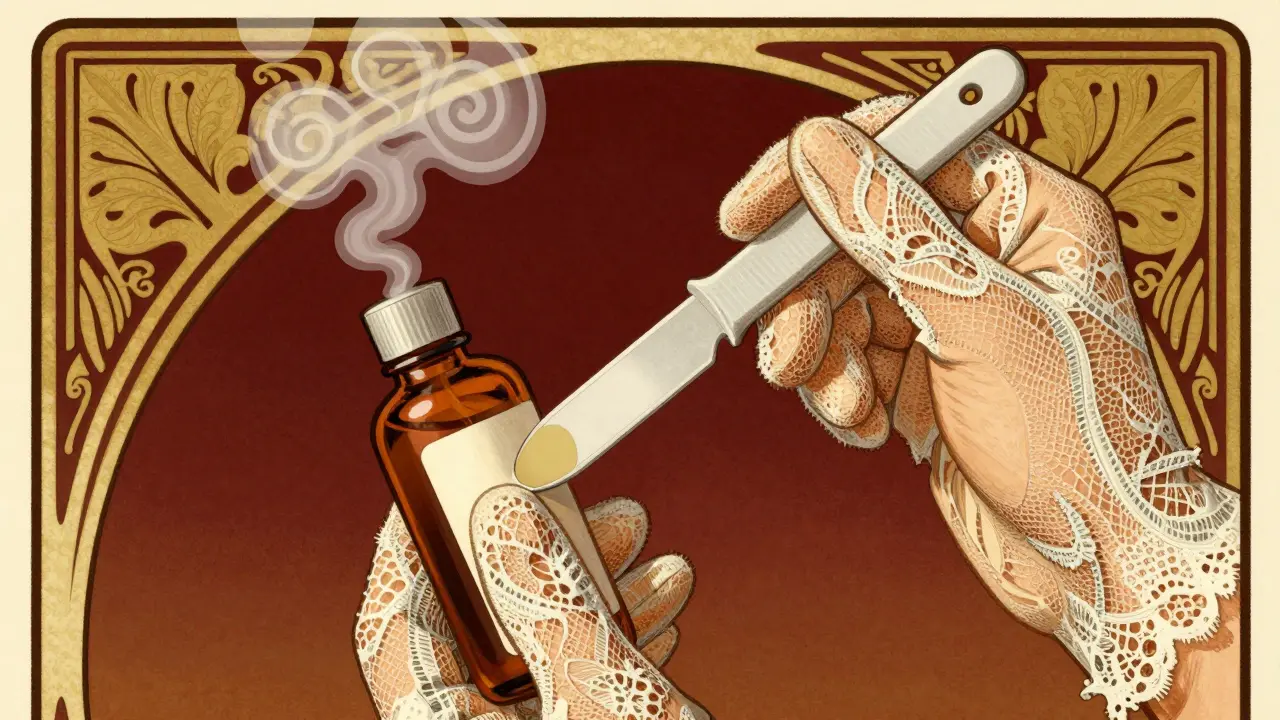
The most effective solution for clean removal is chemical dissolution. Products like Cleanup Solvent-22 is a proprietary acetone-based formula manufactured by Titan Labs that breaks adhesive bonds within 15-20 seconds are designed specifically for this purpose. Here is how to use it safely:
- Saturate the Label: Apply the solvent directly onto the label until it is fully wet. Do not skimp on the liquid.
- Wait Briefly: Let it sit for 15 to 20 seconds. This allows the chemicals to break down the acrylic adhesive.
- Peeel Gently: Use your fingernail or a plastic scraper to lift the corner. The label should slide off in one piece.
- Clean Residue: Wipe any remaining stickiness with a cloth dampened with the solvent.
This method achieves nearly 99% efficacy across common bottle materials like high-density polyethylene and polypropylene. It takes about 32 seconds per bottle compared to nearly two minutes for failed manual attempts. The downside is accessibility and smell. These solvents cost around $15 and are not always available in local hardware stores. They also emit strong fumes, so you must work in a well-ventilated area. If you have sensitive skin or respiratory issues, wear gloves and a mask.
Method 2: Physical Shredding for Total Destruction
If you do not plan to reuse the bottle, shredding is the gold standard for data destruction. LegalShred.com and other security experts recommend physical shredding because it leaves no room for error. Unlike markers or solvents, which rely on human application, a cross-cut shredder mechanically destroys the paper and adhesive layer.
To do this effectively, follow these steps:
- Remove Caps: Take the cap off the bottle. Most home shredders cannot handle hard plastic caps, and they can damage the machine.
- Peel or Cut the Label: Try to peel the label off. If it resists, use scissors to cut the label off the curved surface. Flat pieces feed better into shredders.
- Shred the Label: Run the label through a cross-cut shredder. Avoid strip-cut shredders, as long strips can sometimes be pieced back together like a puzzle.
- Dispose of the Bottle: Once the label is shredded, the empty plastic bottle can go into your regular recycling bin. It now contains no personal data.
This method is 100% effective against data recovery. However, it requires owning a quality shredder. Many households do not have one, or their machines jam frequently. If you lack a shredder, consider visiting a library or office supply store that offers public shredding services. Some pharmacies also provide drop-off bins for secure disposal, though availability varies by location.
Method 3: Marker Obscuration (And Why It Fails)
You may have heard advice suggesting you simply write over the label with a black marker. Melody Sun, a clinical pharmacist at CHOC (Children's Hospital of Orange County), recommends using a Sharpie Permanent Marker applied in three thick, overlapping layers covering all text. While this seems easy and free, it is flawed. CHOC’s own 2023 observational data shows that marker application fails to prevent digital recovery in 63% of cases.
Why does it fail? Technology has advanced. Smartphone apps and infrared imaging can see through ink. This phenomenon, known as "ghost imaging," allows criminals to recover residual data even after you think you have hidden it. A 2021 study found that 41% of "blacked-out" labels yielded recoverable data via simple photo enhancement tools. If you must use this method because you have no other options, take extra precautions:
- Use multiple colors of permanent marker to create a dense, opaque block.
- Apply heavy pressure to ensure the ink penetrates the paper fibers.
- Cover every inch of the label, including the edges where text might wrap.
- Verify completeness by holding the bottle up to a bright light. If you can see shadows of letters, keep writing.
Even with these steps, marker obscuration is risky. The FTC states that complete label removal is preferred. Only use markers if removal or shredding is impossible.
Best Practices for Disposal Timing and Safety
When you remove or destroy the label is just as important as how you do it. Delayed processing increases your risk. CHOC’s protocol requires label destruction within 24 hours of medication disposal. Identity theft risk rises by 40% if labeled bottles sit in your trash can for more than a day. Make label removal part of your routine when you finish a prescription.
Safety is another critical factor. Whether you are using solvents, scissors, or shredders, protect yourself:
- Ventilation: Always open windows or use fans when working with chemical solvents. Acetone fumes can cause dizziness and headaches.
- Protective Gear: Wear latex or nitrile gloves to avoid skin irritation from adhesives and chemicals.
- Tool Care: Use plastic scrapers instead of metal knives to avoid scratching the bottle or injuring yourself. Scratches can harbor bacteria if you reuse the container.
- Medication Disposal: Before dealing with the label, ensure the pills inside are disposed of safely. Mix unused medications with unpalatable substances like kitty litter or coffee grounds in a sealed bag before trashing them. Never flush medications unless explicitly instructed by the FDA.
Comparison of Removal Methods
| Method | Effectiveness | Time Required | Cost | Best For |
|---|---|---|---|---|
| Chemical Solvent | 98.7% | 32 seconds | $15+ (one-time) | Reusing bottles cleanly |
| Cross-Cut Shredding | 100% | 10 seconds | Free (if owned) | Total data destruction |
| Permanent Marker | 37% (High Risk) | 47 seconds | Free | Last resort only |
| Manual Peeling | 8% (Very Low) | 98+ seconds | Free | Not recommended |
Frequently Asked Questions
Can I recycle my medication bottle if I shred the label?
Yes. Once the label containing personal information is shredded and disposed of separately, the empty plastic bottle is safe to place in your household recycling bin. Ensure the bottle is clean and dry to avoid contaminating the recycling stream.
Is using a black marker enough to protect my privacy?
No. Research shows that 63% of marker-obscured labels can still be read using digital enhancement or infrared imaging. While it is better than nothing, it is not secure. Shredding or chemical removal is strongly preferred to prevent identity theft.
What should I do with the actual pills before destroying the label?
Do not leave pills in the bottle. Mix unused medications with unpalatable substances like kitty litter, dirt, or used coffee grounds in a sealed plastic bag. Then place the bag in your household trash. This prevents children or pets from accessing the drugs and stops thieves from stealing usable medication.
Are there pharmacy kiosks that help with this?
Many major pharmacies like CVS and Walgreens have implemented in-pharmacy label-removal stations and secure disposal kiosks since 2020. Check with your local pharmacy to see if they offer free label shredding or take-back programs for both medications and packaging.
Why is manual peeling ineffective on modern bottles?
Modern prescription bottles use polypropylene labels with waterproof acrylic adhesives. These are designed to resist moisture and tearing. Manual peeling usually leaves behind significant adhesive residue that still contains your name, address, and prescription details, offering little to no security.