
Have you ever opened your medicine cabinet and found a bottle with an expiration date that passed last year? It’s a common sight. We toss out perfectly good pills because we’re told they’re useless-or worse, dangerous-after that printed date. But the truth is more complicated. For many solid oral medications, that date is just a manufacturer’s guarantee of potency, not a cliff edge where the drug suddenly turns toxic. However, storing meds to extend their life isn’t about ignoring labels; it’s about understanding what actually breaks down drugs and how to prevent it.
While government programs like the FDA’s Shelf-Life Extension Program (SLEP) have proven that thousands of stockpile drugs remain stable for years beyond their dates, this doesn’t mean you should keep every expired pill in your bathroom. Some medications degrade into harmful compounds, while others lose effectiveness quickly. Knowing which ones are safe to store long-term and how to do it correctly can save money and reduce waste, but getting it wrong can be risky.
The Myth of the Expiration Date
We tend to treat medication expiration dates like milk cartons-if it’s past the date, throw it out. In reality, these dates represent the time during which the manufacturer guarantees 100% potency and safety under specific storage conditions. They are conservative estimates designed to protect companies from liability, not necessarily scientific limits on when a drug becomes ineffective.
This was proven by the Shelf-Life Extension Program (SLEP), which is a joint initiative between the FDA and the Department of Defense established in 1986 to test the stability of drugs in strategic stockpiles. The program tested over 3,000 lots of 122 different drug products. The result? An astonishing 88% retained adequate stability well beyond their labeled expiration dates. Many showed extended stability of up to 62 months or more. Naloxone, halothane, and fentanyl, for example, demonstrated 100% stability for 4-5 years post-expiration across all tested lots.
However, there is a massive catch. These results apply to drugs stored under strict, controlled conditions in bulk packaging. Your home environment is rarely as stable. Furthermore, SLEP focuses on solid dosage forms like tablets and capsules. Liquids, creams, and biologics behave very differently. So, while the science suggests many drugs last longer than we think, applying this to your personal stash requires caution.
Where You Store Matters More Than When You Bought It
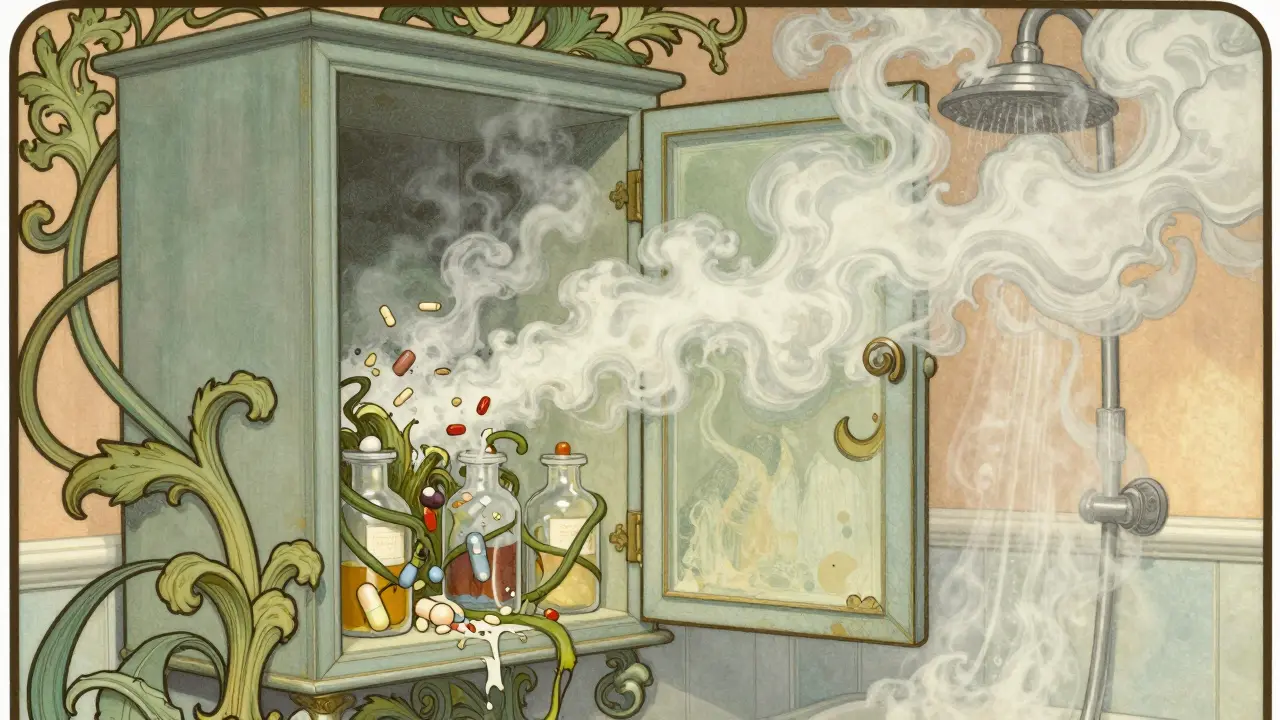
If you want to maximize the life of your medications, location is everything. Most people make the same mistake: they store medicines in the bathroom medicine cabinet. This is arguably the worst place in your house for drugs.
Bathrooms experience significant fluctuations in temperature and humidity. Every hot shower creates steam that raises relative humidity, which can cause tablets to crumble or capsules to stick together. Moisture is the enemy of chemical stability. According to industry standards for solid oral dosage forms, ideal storage often involves maintaining temperatures at either 5°C or 25°C with controlled relative humidity around 60%. Your bathroom rarely stays within these bounds.
Instead, choose a cool, dry, dark place. A bedroom closet or a drawer in a hallway away from windows works best. Avoid areas near heat sources like radiators or stoves. Light, particularly UV exposure, can degrade light-sensitive medications. That’s why some drugs come in amber bottles or opaque packaging. If you transfer pills to clear containers, you’re exposing them to potential degradation agents.
- Avoid: Bathrooms, kitchens (near sinks/stoves), cars (extreme heat/cold swings).
- Choose: Bedrooms, hallways, pantries (if away from food moisture), or dedicated dry cabinets.
- Temperature Goal: Room temperature (around 20-25°C) unless specified otherwise.
Which Medications Can Actually Be Extended?
Not all drugs are created equal when it comes to longevity. The SLEP data highlights that solid oral dosage forms-tablets and capsules-are the most stable. Drugs like ibuprofen, acetaminophen, and certain antibiotics (when unopened and properly stored) often retain potency for years past their expiration dates.
However, some medications pose serious risks if they degrade. Tetracycline, an older antibiotic, is notorious for breaking down into compounds that can damage kidneys if taken after significant degradation. Liquid formulations, suspensions, and reconstituted powders also have much shorter lifespans once mixed or opened. Insulin and other biologics are highly sensitive to temperature excursions; even brief periods outside the recommended 2-8°C range can render them ineffective, which can be life-threatening for diabetics.
Dr. Lee Cantrell of UCSF notes that while many solid forms maintain stability, liquid formulations and certain antibiotics can degrade into potentially toxic compounds. Therefore, extending the shelf life of insulin, nitroglycerin, or liquid antibiotics is not recommended for home storage. Stick to extending the use of stable, solid emergency medications if you must, but always prioritize fresh supplies for critical daily treatments.
| Medication Type | Typical Stability Beyond Expiry | Risk Level | Storage Sensitivity |
|---|---|---|---|
| Solid Tablets/Capsules | High (Years) | Low (Potency loss only) | Moderate (Humidity/Light) |
| Liquids/Suspensions | Low (Months) | Medium (Microbial growth) | High (Temperature/Humidity) |
| Insulin/Biologics | Very Low (Days/Weeks) | Critical (Loss of efficacy) | Extreme (Strict Temp Control) |
| Nitroglycerin | Low (Months) | High (Rapid degradation) | High (Light/Air) |
| Tetracycline | Variable | High (Toxic byproducts) | Moderate |
Packaging and Preservation Techniques
In industrial settings, manufacturers use advanced technologies to extend shelf life. Modified Atmosphere Packaging (MAP) alters the gas mix inside packages to inhibit microbial growth and slow oxidation. High-Pressure Processing (HPP) uses extreme hydrostatic pressure to inactivate microorganisms without heat. While you can’t replicate HPP at home, you can mimic some principles of MAP by controlling air and moisture exposure.
Desiccants are your best friend here. Those little silica gel packets you throw away from shoe boxes or vitamin bottles? Keep them. Placing a fresh desiccant packet in your medicine container can absorb ambient moisture, significantly slowing down chemical degradation. Just ensure the desiccant doesn’t directly touch the pills.
Original packaging is also superior to pill organizers. Blister packs provide individual barriers against moisture and oxygen. Once you pop a pill out of its blister and put it in a weekly organizer, you’ve exposed it to air and humidity, drastically reducing its remaining shelf life. If you need to organize meds, consider doing so only for immediate use (a few days’ worth) rather than moving entire bottles.
When to Throw It Out: Safety Signals
Even with perfect storage, some signs indicate a medication has gone bad. Don’t rely solely on the date. Use your senses.
Check for physical changes. Do the pills look discolored? Are they crumbling or sticking together? Is there a strange odor? For liquids, look for cloudiness, separation that doesn’t shake out, or particles floating in the solution. If any of these occur, discard the medication immediately. These are visible signs of chemical breakdown or microbial contamination.
Also, consider the "first open" date. For eye drops, inhalers, and liquid antibiotics, the clock starts ticking faster once the seal is broken. Eye drops, for instance, usually have a 28-day shelf life after opening due to the risk of bacterial contamination, regardless of the printed expiration date on the bottle. Ignoring this can lead to serious infections.
Disposal and Environmental Impact
Extending shelf life helps reduce pharmaceutical waste, which is a growing environmental concern. Flushing medications down the toilet contaminates water supplies. Throwing them in the trash can expose children, pets, or wildlife to dangerous substances.
The safest method is to use a drug take-back program. Many pharmacies and law enforcement agencies host collection bins. If no take-back option is available, the FDA recommends mixing the drugs with an unappealing substance like dirt, cat litter, or used coffee grounds in a sealed plastic bag before throwing them in the household trash. Remove or scratch out personal information from the label first.
By storing medications correctly and knowing which ones can safely last longer, you reduce unnecessary waste. But remember: when in doubt, especially with critical medications like heart drugs or insulin, replace them. No cost savings is worth the risk of treatment failure.
Can I take expired Tylenol or Ibuprofen?
Generally, yes. Solid oral pain relievers like acetaminophen (Tylenol) and ibuprofen are among the most stable medications. Studies like those from the SLEP program show they often retain potency for years past their expiration date if stored in a cool, dry place. However, they may be slightly less effective. Avoid taking them if they look discolored, smell odd, or have been exposed to moisture.
Is it safe to store insulin past its expiration date?
No. Insulin is a biologic product that is highly sensitive to temperature changes. Even slight deviations from the recommended 2-8°C storage range can degrade its structure, making it ineffective. Using degraded insulin can lead to dangerous blood sugar spikes. Always follow the manufacturer's expiration date and storage instructions strictly for insulin.
Why shouldn't I store medicine in the bathroom?
Bathrooms are humid and experience frequent temperature fluctuations due to showers and baths. Moisture and heat accelerate the chemical breakdown of active ingredients in medications. This can cause tablets to crumble, capsules to stick, or liquids to grow bacteria. A cool, dry bedroom closet is a much safer alternative.
What happens if I take expired tetracycline?
Expired tetracycline can degrade into compounds that are toxic to the kidneys. Unlike many other drugs that simply lose potency, tetracycline poses a direct health risk when old. Never use tetracycline past its expiration date, and dispose of it safely through a drug take-back program.
How long do eye drops last after opening?
Most multi-dose eye drops should be discarded 28 days after opening, regardless of the expiration date on the bottle. Once opened, the solution is exposed to air and potential contaminants, increasing the risk of bacterial growth. Single-use vials should be thrown away immediately after one use.


Fred Stone
July 8, 2026 AT 15:28honestly this is super helpful info. i always just throw stuff in the bathroom cabinet without thinking about humidity or heat. gonna move my ibuprofen to the bedroom closet right now thanks for breaking down the slep program stuff too
Brett Aungst
July 9, 2026 AT 15:58As a pharmacist, I can confirm that while SLEP data is real, it applies strictly to unopened stockpile items stored under ideal conditions. The moment you open a bottle, moisture ingress begins. Also, tetracycline degradation products are genuinely nephrotoxic, so never risk it with old antibiotics. Stick to the expiration date for anything critical like insulin or nitroglycerin.
Vinay Bairagi
July 11, 2026 AT 05:32why do americans waste so much money on new meds when the old ones work fine? its just corporate greed pushing expiry dates to force repurchases. we should be more self reliant and trust our own judgment over these big pharma labels
Blythe Ward
July 12, 2026 AT 07:10oh please 🙄 actually reading the science shows that storage conditions matter immensely. your average household isn't a climate controlled lab. keeping expired meds is lazy and potentially dangerous especially with biologics. maybe read up on pharmacokinetics before dismissing safety protocols 😒💊
Mary Howarth
July 13, 2026 AT 08:49I absolutely love how this article breaks down the nuances of medication storage! It is so important that we understand not just the 'what' but the 'why' behind expiration dates, because knowledge truly is power when it comes to our health and safety, don't you think?! I have already moved all my supplements away from the bathroom steam, and I feel so much better knowing they are safe!
Sean Estabrooks
July 13, 2026 AT 10:58The FDA's SLEP program was essentially a cover-up for military surplus dumping disguised as public health guidance. They want you to believe drugs are stable forever so they can control the supply chain through strategic hoarding. Wake up sheeple. The chemical degradation is accelerated by atmospheric pollutants they aren't telling you about. Trust no one.
Alana Frassinelli
July 14, 2026 AT 07:04i get where you're coming from with the distrust of institutions but the chemistry of hydrolysis and oxidation is pretty straightforward regardless of who runs the government. keeping desiccants in your pill bottles is a simple hack that really does help maintain potency without needing to buy new ones constantly which saves cash and reduces waste
Gavin Edley
July 15, 2026 AT 22:45You lot are all missing the point entirely. It's not about saving money or following rules, it's about the principle of autonomy over your own body. If I choose to take a three-year-old paracetamol tablet, who are you to judge me? You're all just sheep waiting for the next mandate. Stop policing each other's medicine cabinets and start living your lives.
jeremy pritchett
July 17, 2026 AT 02:48listen up folks the truth is out there if you look for it. most of us are being lied to about what is safe and what isnt. i started storing my meds in vacuum sealed bags with silica gel and havent had a single issue since. dont let them tell u ur meds r bad just cause the date says so. stay strong and keep questioning everything man
Kimberly Simbulan
July 17, 2026 AT 11:07Sure, go ahead and eat those expired pills, I'm sure nothing will happen. /s
All jokes aside, this is a great reminder to check our storage habits. I never realized how bad the bathroom environment was for my eye drops until now. Thanks for the tip on the 28-day rule after opening!
kavitha kumar
July 17, 2026 AT 19:13my husband keeps his meds in the car and then complains they dont work anymore. typical. this article should be mandatory reading for everyone who thinks they know better than the instructions. stop being so careless with your health
fred morgan
July 18, 2026 AT 13:50The distinction between solid oral dosage forms and liquid formulations is critical. While tablets may retain potency, suspensions degrade rapidly due to microbial growth and chemical instability. Adherence to manufacturer guidelines remains the safest protocol for all patients.
Ashley Loera
July 19, 2026 AT 23:03omg this is so scary i just checked my bathroom and found expired eye drops from last year. thank god i read this before using them again. im throwing them out right now and buying fresh ones. yikes