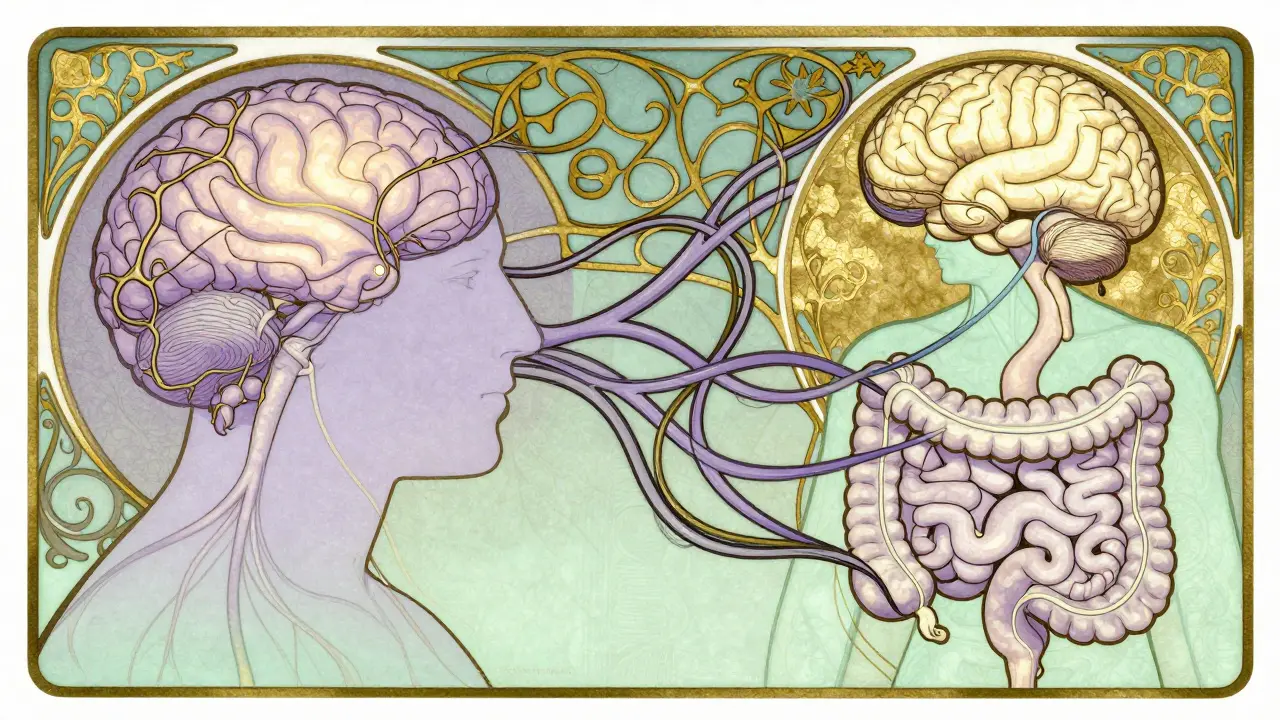
For years, if you complained of stomach pain, bloating, or erratic bowel habits, doctors treated your gut like an isolated machine. They looked for ulcers, infections, or inflammation. When they found nothing physically wrong with the tissue itself, many patients were told it was "all in their head." But that narrative is crumbling. Today, science confirms what many sufferers have suspected for decades: Irritable Bowel Syndrome (IBS) is not just a digestive disorder; it is a disorder of communication between your brain and your gut.
This condition affects 5% to 10% of people worldwide. It isn't rare, yet it remains deeply misunderstood. The core issue lies in the gut-brain axis, which is a bidirectional communication network linking the enteric nervous system in your intestines with your central nervous system in your brain. When this line goes static, your body misinterprets normal digestion as pain, stress triggers diarrhea or constipation, and standard laxatives or antacids fail to fix the root cause. Understanding this connection changes everything-from how you get diagnosed to how you find lasting relief.
Why Your Brain Is Driving Your Gut Symptoms
To understand why IBS feels so much worse than typical indigestion, you have to look at the wiring. Your gut has its own nervous system, often called the "second brain," known as the enteric nervous system (ENS). This system talks constantly to your actual brain via the vagus nerve, hormones, and immune signals. In healthy individuals, this conversation is smooth. You eat, you digest, you feel full. In IBS patients, this signal gets amplified.
Neuroimaging studies reveal structural differences in the brains of people with IBS. Research published in Frontiers in Endocrinology showed that patients with diarrhea-predominant IBS (IBS-D) have increased cortical thickness in areas responsible for processing sensation. Meanwhile, those with constipation-predominant IBS (IBS-C) show decreased thickness in regions that regulate emotion and bodily awareness. Essentially, your brain is wired to pay excessive attention to what’s happening in your abdomen.
This hypersensitivity is driven largely by neurotransmitters. About 95% of the body’s serotonin is produced in the gut, not the brain. Serotonin regulates bowel motility and pain perception. In IBS-D patients, mucosal serotonin levels are significantly higher-averaging 45.7 ng/mg protein compared to 28.4 ng/mg in healthy controls. This excess serotonin speeds up gut contractions, leading to urgent diarrhea. Conversely, lower serotonin availability contributes to the sluggish motility seen in IBS-C. It’s not just "stress" causing these symptoms; it’s a measurable chemical imbalance in the signaling pathway.
The Role of Microbes and Immune Signals
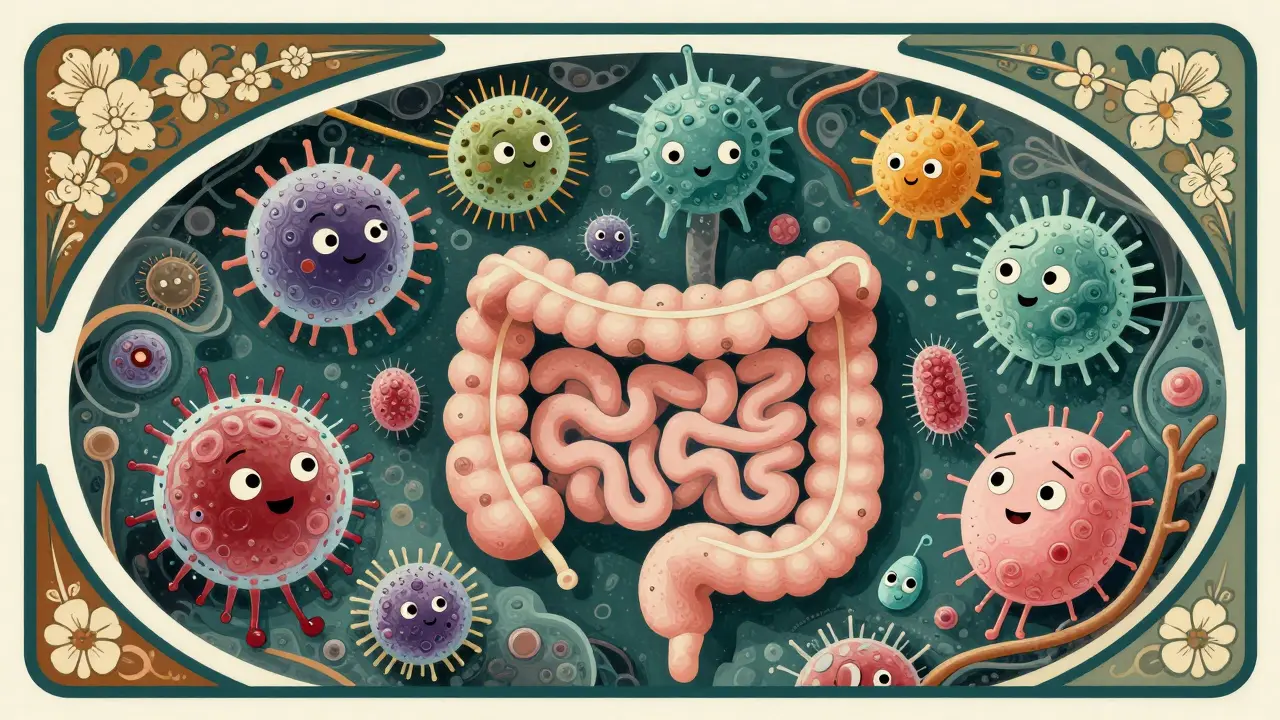
Your gut microbiome-the trillions of bacteria living in your intestines-isn’t just along for the ride. These microbes produce metabolites that directly influence the gut-brain axis. Recent studies highlight the ratio of Firmicutes to Bacteroidetes bacteria as a key marker. Alterations in this balance correlate with changes in the salience network of the brain, which determines what stimuli we notice and react to.
Immune activation plays a surprising role here too. Many IBS patients have mild, chronic inflammation in the gut lining. Researchers found decreased levels of β-endorphin, a natural painkiller produced by immune cells in the colon, in IBS patients. With less natural pain suppression, normal gas production or stool movement feels painful. This explains why some people can eat a large meal without issue while others experience severe cramping after a light snack. It’s about visceral sensitivity, not just stomach capacity.
Beyond Pills: Targeting the Communication Line
If the problem is faulty communication between the brain and gut, treatments that only target one side often fall short. Traditional medications like loperamide stop diarrhea but don’t calm the nerves. Antispasmodics relax muscles temporarily but ignore the brain’s role in triggering spasms. Newer approaches focus on resetting the dialogue.
Gut-directed hypnotherapy stands out as one of the most effective non-drug interventions. By using guided relaxation and visualization, this therapy retrains the brain to interpret gut signals correctly. Randomized controlled trials show response rates of 70-80%, far surpassing the 35-40% rate of standard medical care alone. The effects last, with many patients maintaining improvement six months after treatment ends. It works because it addresses the central processing error, not just the peripheral symptom.
Pharmacological options have also evolved to target specific receptors in the gut-brain axis. Alosetron, a 5-HT3 receptor antagonist, blocks serotonin signals to slow down the gut, helping women with severe IBS-D. However, it carries risks like ischemic colitis and requires strict monitoring. For IBS-C, Prucalopride, a 5-HT4 agonist, stimulates serotonin receptors to enhance motility. These drugs work well for subsets of patients but aren’t universal fixes due to side effects and limited availability.
| Treatment Type | Mechanism of Action | Effectiveness Rate | Key Considerations |
|---|---|---|---|
| Gut-Directed Hypnotherapy | Retrains brain-gut signaling | 70-80% | Requires trained provider; long-lasting effects |
| Low-FODMAP Diet | Reduces fermentable carbs/gas | 50-76% | Needs dietitian supervision; restrictive initially |
| Alosetron (for IBS-D) | Blocks serotonin receptors | 50-60% | FDA restricted; risk of ischemic colitis |
| Probiotics (e.g., Bifidobacterium) | Modulates microbiome | 30-40% | Strain-specific; variable results |
Dietary Strategies That Actually Work
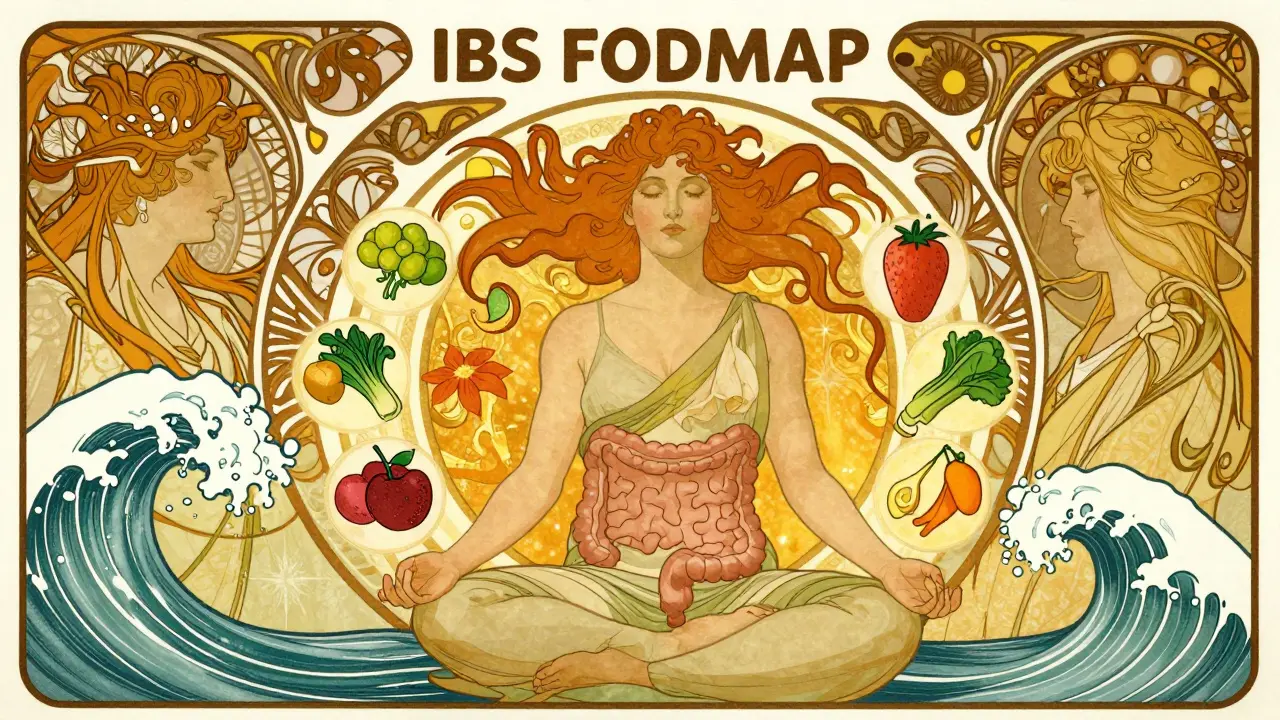
Diet is the lever you control daily. While elimination diets are popular, guessing games rarely succeed. The gold standard is the low-FODMAP diet. FODMAPs are short-chain carbohydrates (fermentable oligosaccharides, disaccharides, monosaccharides, and polyols) that your small intestine struggles to absorb. When they reach the colon, bacteria ferment them rapidly, producing gas and drawing water into the bowel.
This process causes luminal distension-stretching of the intestinal walls. In a sensitive gut, this stretch triggers pain receptors. Studies show the low-FODMAP diet improves symptoms in 50-76% of patients. However, it’s not meant to be permanent. The protocol involves three phases: elimination (4-6 weeks), reintroduction (testing tolerance), and personalization. Without professional guidance, many people restrict foods unnecessarily, leading to nutritional gaps. A registered dietitian helps identify exactly which FODMAPs trigger your specific symptoms, allowing you to enjoy more food over time.
Some patients benefit from probiotics, but strain matters. Bifidobacterium infantis 35624 has shown consistent results in reducing bloating and pain in clinical trials. Generic probiotic supplements often lack sufficient colony-forming units (CFUs) or contain strains unproven for IBS. Don’t expect miracles from any pill off the shelf; look for evidence-based formulations.
Navigating Diagnosis and Care Gaps
Getting help is harder than it should be. According to community surveys, nearly 70% of IBS patients spend 3-7 years seeking a diagnosis. Many visit five or more doctors before receiving confirmation. Why? Because IBS is a diagnosis of exclusion. Doctors must rule out celiac disease, inflammatory bowel disease (IBD), and infections first.
The Rome IV criteria provide a framework: recurrent abdominal pain at least one day per week for three months, associated with defecation or changes in stool frequency/form. Yet, these criteria miss the broader picture. Up to 70% of IBS patients also suffer from anxiety or depression, and half report other pain conditions like fibromyalgia. Treating the gut without addressing mental health leaves half the problem untreated.
Access to specialized care varies wildly. Gut-directed hypnotherapy costs $1,200-$2,500 out-of-pocket, and certified practitioners are scarce-only one per 500,000 people in rural areas. Insurance rarely covers it. This creates a two-tier system where those who can afford neuromodulation therapies see better outcomes. Until coverage improves, patient education becomes critical. Understanding the gut-brain mechanism alone increases treatment adherence by 30% and symptom improvement by 25%. Knowledge empowers you to advocate for yourself.
What’s Next for IBS Treatment?
The future of IBS care looks personalized. We’re moving away from one-size-fits-all pills toward targeted therapies based on individual biology. New biomarker panels, like VisceralSense™, measure microbial metabolites and neurotransmitter ratios to predict which treatment will work best for you. Early data shows 85% accuracy in matching patients to effective therapies.
Drug development is accelerating too. Etrasimod, a sphingosine-1-phosphate receptor modulator, recently showed 52% improvement in composite symptoms for IBS-D patients in phase III trials. Unlike older drugs, it targets immune cell trafficking in the gut, potentially calming inflammation without heavy sedation. The NIH’s new Microbiome-Gut-Brain Consortium aims to map individual gut-brain profiles, paving the way for precision medicine.
For now, the best approach combines multiple strategies. Start with education about the gut-brain link. Work with a dietitian on a structured low-FODMAP plan. Explore neuromodulation techniques like hypnotherapy or mindfulness if accessible. Use medications strategically to manage acute flares. And remember: your symptoms are real, biological, and treatable. You’re not broken; your communication lines are just noisy. With the right tools, you can quiet the static and reclaim your life.
Is irritable bowel syndrome caused by stress?
Stress doesn’t cause IBS, but it exacerbates it through the gut-brain axis. Stress activates the hypothalamo-pituitary-adrenal (HPA) axis, releasing cortisol and altering gut motility and sensitivity. In people with pre-existing gut-brain dysfunction, stress amplifies pain signals and triggers flare-ups. Managing stress is part of treatment, but it’s not the sole origin of the condition.
How does the low-FODMAP diet work?
The low-FODMAP diet reduces intake of poorly absorbed carbohydrates that ferment in the colon. This fermentation produces gas and draws water into the bowel, causing bloating, distension, and pain in sensitive guts. By limiting these carbs temporarily, you reduce mechanical irritation and allow the gut to heal. The diet involves elimination, reintroduction, and personalization phases under professional guidance.
Can gut-directed hypnotherapy really cure IBS?
Hypnotherapy doesn’t “cure” IBS in the sense of eliminating it forever, but it offers long-term remission for many. By retraining the brain’s interpretation of gut signals, it reduces visceral hypersensitivity. Clinical trials show 70-80% response rates, with benefits lasting months after treatment ends. It’s considered a highly effective neuromodulation technique, especially for those who don’t respond to medication.
What is the difference between IBS-D and IBS-C?
IBS-D (diarrhea-predominant) features frequent loose stools and urgency, often linked to higher gut serotonin levels speeding up motility. IBS-C (constipation-predominant) involves infrequent, hard stools due to slowed transit, associated with lower serotonin availability. Both share underlying gut-brain axis dysfunction but require different therapeutic approaches targeting motility and sensitivity.
Are probiotics effective for IBS?
Some probiotics help, but results depend heavily on the strain. Bifidobacterium infantis 35624 has strong evidence for reducing bloating and pain. Other strains may offer little benefit or even worsen symptoms. Look for clinically tested products with specified CFU counts (e.g., 1×10^9 CFU/day). Probiotics modulate the microbiome, influencing gut-brain signaling, but they’re not a standalone solution.
Why do IBS patients often have anxiety or depression?
The gut-brain axis is bidirectional. Chronic gut distress sends negative signals to the brain, affecting mood-regulating areas like the prefrontal cortex and amygdala. Shared neurotransmitters like serotonin and GABA play roles in both gut function and emotional regulation. Additionally, living with unpredictable, painful symptoms takes a psychological toll. Treating mental health supports gut symptom management and vice versa.
Is there a blood test for IBS?
No single blood test diagnoses IBS. It’s a clinical diagnosis based on symptom patterns (Rome IV criteria) after ruling out other conditions. Blood tests check for celiac disease, inflammation markers, or thyroid issues. Emerging biomarker panels measuring microbial metabolites show promise for predicting treatment response but aren’t yet standard diagnostic tools.
How long does it take to see results from gut-brain therapies?
Results vary by therapy. Dietary changes like low-FODMAP may show improvement within 2-4 weeks. Gut-directed hypnotherapy typically requires 7-12 sessions over several weeks, with benefits emerging gradually and sustaining long-term. Medications like alosetron or prucalopride can work within days to weeks. Consistency and combining approaches usually yield the fastest, most durable relief.