

Imagine feeling a sudden, overwhelming wave of panic-your heart races, your head throbs, and you're drenched in sweat-but there is no actual danger. For most, this sounds like a panic attack. But for a small number of people, it is actually a sign of a rare tumor on the adrenal glands. When a pheochromocytoma is a rare neuroendocrine tumor that originates in the chromaffin cells of the adrenal medulla, it turns your body's "fight or flight" response into a permanent, unpredictable switch. This isn't just a hormonal imbalance; it's a physical mass that can send your blood pressure to dangerous levels in seconds.
The good news is that this condition is surgically curable in the vast majority of cases. However, because it's so rare-affecting only about 0.1% to 0.6% of people with high blood pressure-it is notoriously difficult to diagnose. Many patients spend years visiting different doctors, often being told they just have anxiety, before the real culprit is found. Understanding the connection between these tumors and hypertension is the first step toward getting the right treatment.
Key Takeaways for Patients and Families
- The Classic Triad: Look for the combination of severe headaches, profuse sweating, and heart palpitations.
- The Danger: Untreated tumors can cause hypertensive crises, which can lead to strokes or heart failure.
- The Fix: Surgical removal (adrenalectomy) resolves hypertension in 85-90% of patients.
- Crucial Prep: Surgery cannot be done "cold"; patients need specific blood pressure medications (alpha-blockers) for 1-2 weeks prior to avoid surgical complications.
- Genetic Link: Up to 40% of cases are hereditary, meaning genetic testing is vital for the patient and their family.
What Exactly Is a Pheochromocytoma?
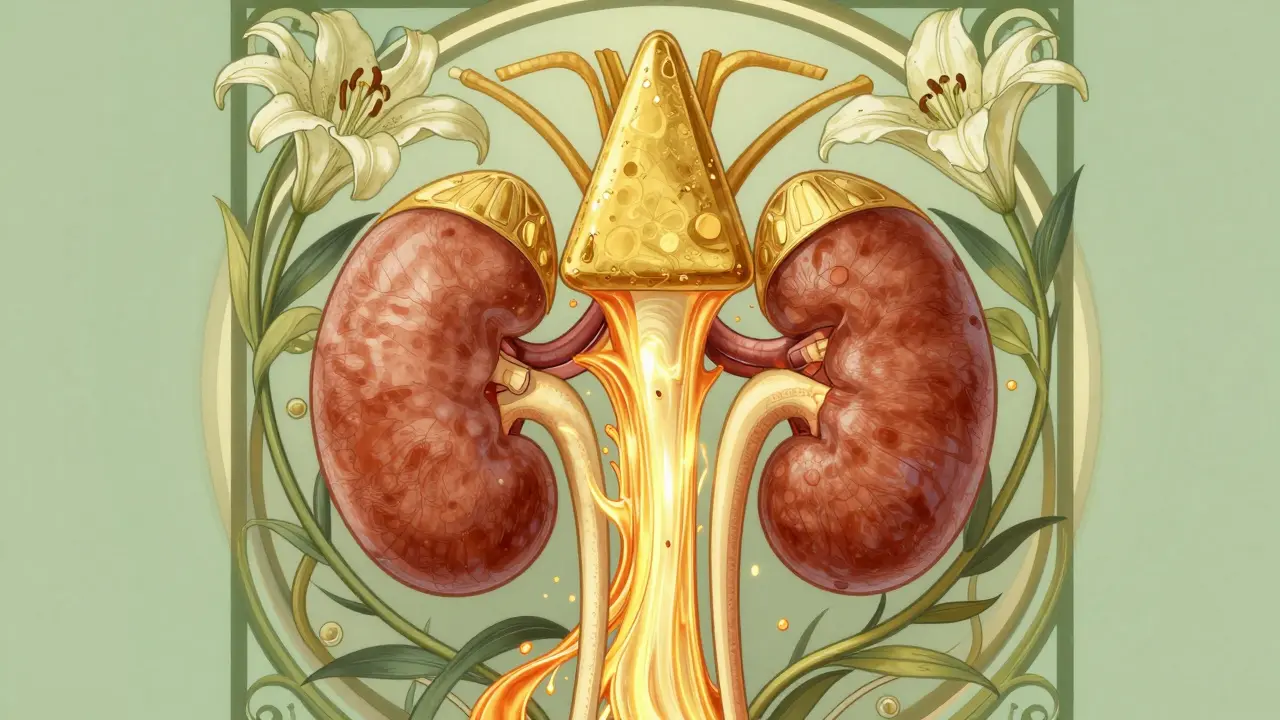
Your adrenal glands are small, triangle-shaped organs sitting on top of your kidneys. They produce hormones that regulate everything from stress to salt balance. A pheochromocytoma occurs when the center part of the gland, called the medulla, grows a tumor. These tumors pump out massive amounts of catecholamines-specifically hormones like epinephrine (adrenaline) and norepinephrine.
In a healthy person, these hormones only surge when you're in danger (like nearly getting hit by a car). In someone with this tumor, the hormones leak into the bloodstream randomly or in huge bursts. This keeps the body in a state of high alert, causing the blood vessels to constrict and the heart to beat faster, which sends blood pressure skyrocketing.
Most of these tumors (about 90%) are benign, meaning they aren't cancerous. However, about 10% are malignant and can spread to other parts of the body. Because the tumor can sometimes grow outside the adrenal gland, doctors also use the term paraganglioma for tumors that appear in other nerve-rich tissues.
Recognizing the Symptoms: More Than Just Stress
Because the symptoms come in "spells," they are often mistaken for panic disorder or migraines. The most telling sign is the "classic triad." If you experience these three together, it's a major red flag:
- Severe Headaches: Intense, throbbing pain usually caused by a sudden spike in blood pressure.
- Profuse Sweating: Drenching perspiration that happens even in cool environments.
- Palpitations: A racing heart or the feeling that your heart is skipping beats.
Beyond the triad, you might notice your skin turning pale (pallor) during an episode, or feel a sense of impending doom. Some people also experience weight loss or abdominal pain. Interestingly, some patients develop orthostatic hypotension, where their blood pressure actually drops too low when they stand up, even though they have severe spikes at other times.
These episodes are often triggered by specific actions. For some, it's physical exertion or emotional stress. In rare cases, just the act of urinating can trigger a spell if the tumor is located near the bladder.
The Road to Diagnosis: Testing and Imaging
You can't find a pheochromocytoma with a standard physical exam. Doctors rely on biochemical tests first. The gold standard is measuring metanephrines. These are the breakdown products of adrenaline. Since the tumor leaks these constantly, they show up in the blood or urine even when you aren't having a "spell."
Usually, a doctor will order a 24-hour urine collection or a plasma-free metanephrine test. If the levels are more than three times the normal limit, the diagnosis is likely. Only after the blood or urine tests come back positive do doctors move to imaging. Using a CT scan or MRI helps pinpoint exactly where the tumor is located. Lately, a specialized scan called 68Ga-DOTATATE PET/CT has become the go-to for high precision, as it's much better at finding small tumors or those hiding outside the adrenal glands.
| Feature | Essential Hypertension | Pheochromocytoma | Primary Aldosteronism |
|---|---|---|---|
| Blood Pressure Pattern | Sustained high | Episodic spikes (paroxysmal) | Sustained high |
| Key Symptoms | Often none (silent) | Headache, Sweating, Racing Heart | Muscle weakness, fatigue |
| Primary Cause | Lifestyle, Genetics, Age | Adrenal tumor (hormone surge) | Overproduction of aldosterone |
| Cure Rate | Managed via meds/diet | 85-90% cure via surgery | Varies; often surgical/meds |
Surgical Intervention: The Path to Recovery
The definitive treatment is adrenalectomy, which is the surgical removal of the affected adrenal gland. While it sounds straightforward, this is one of the most delicate surgeries in endocrinology because of how the tumor behaves during the operation.
If a surgeon touches the tumor without the patient being properly prepared, the tumor can "squeeze" a massive amount of adrenaline into the bloodstream. This can cause a hypertensive crisis during surgery, leading to a stroke or heart failure. To prevent this, a strict preoperative protocol is used:
- Alpha-Blockade: Patients take medications like phenoxybenzamine for 7 to 14 days. This "blocks" the adrenaline receptors, stabilizing the blood pressure and preventing a spike during surgery.
- Volume Expansion: Because the tumor keeps blood vessels constricted, the body actually holds less fluid than normal. Patients are put on a high-salt diet and told to drink plenty of water to refill their system, preventing a dangerous drop in blood pressure after the tumor is removed.
Most surgeons prefer a laparoscopic approach (minimally invasive), which allows for faster recovery and smaller scars. In about 5-8% of cases, the surgeon may need to switch to an open surgery if the tumor is too large or stuck to other organs.

Life After Surgery and Genetic Considerations
For most, the recovery is remarkably fast. Many people find that their blood pressure returns to normal within 48 hours of surgery, and they can stop taking blood pressure medications within a few weeks. However, if both adrenal glands were removed (bilateral adrenalectomy), the patient will need lifelong hormone replacement therapy, using medications like hydrocortisone to mimic the missing gland's function.
One of the most important parts of the journey is genetic testing. About 35-40% of these tumors are linked to genetic mutations, such as those in the SDHB or VHL genes. If you have a genetic mutation, you aren't just managing one tumor; you have a higher risk of developing others in the future. For carriers of the SDHB mutation, annual whole-body MRIs are often recommended to catch new growths early.
Can pheochromocytoma be treated without surgery?
Surgery is the only way to cure a pheochromocytoma. Medications like alpha-blockers and beta-blockers are used to manage symptoms and stabilize the patient before surgery, but they do not remove the tumor. In very rare cases where surgery is impossible (due to severe health issues or metastatic cancer), medication is used for long-term symptom control.
Why is it so often misdiagnosed as anxiety?
The symptoms of a pheochromocytoma-racing heart, sweating, and a feeling of panic-mimic a panic attack almost perfectly. Because the episodes are intermittent and the tumor is rare, many doctors assume it is a psychological issue rather than a physical tumor. This often leads to a diagnostic delay of several years.
Is this tumor always cancerous?
No. In fact, about 90% of pheochromocytomas are benign. Only about 10% are malignant (cancerous). Even if it is benign, the tumor is still dangerous because of the hormones it releases, so surgical removal is usually recommended regardless of whether it is cancerous or not.
What happens if the tumor is left untreated?
Untreated pheochromocytomas can lead to severe complications, including heart failure, kidney failure, and stroke due to uncontrolled hypertension. There is also a risk of a "pheochromocytoma crisis," a life-threatening surge of catecholamines that causes organ failure.
How long is the recovery after adrenalectomy?
Most patients stay in the hospital for 1-2 days. With laparoscopic surgery, about 85% of people return to work within two weeks. The most significant change is often the immediate drop in blood pressure, which can feel strange after years of hypertension.
Next Steps for Patients
If you suspect you or a loved one has these symptoms, the first step is to request a **plasma-free metanephrine test**. This is a simple blood test that is much more reliable than just monitoring blood pressure. If the results are abnormal, seek a consultation with an endocrinologist who specializes in adrenal disorders.
For those already diagnosed, ensure your surgical team is following the alpha-blockade protocol. Do not attempt surgery without this preparation. Finally, request genetic counseling. Knowing if your condition is hereditary can save your children or siblings from the same diagnostic struggle by allowing them to get screened early.




Bradley Gusick
May 1, 2026 AT 07:04Typical Big Pharma nonsense pushing surgery as the only "cure" while they ignore the environmental toxins causing these tumors in the first place. Wake up people! They want you under the knife so they can charge you ten grand for a laparoscopic procedure and then put you on lifelong meds if they "accidentally" take both glands. It's all a racket to keep us dependent on the system while they hide the real causes of endocrine disruption in our water supply.
Leah Sentz
May 2, 2026 AT 21:56OMG this is so scary!! 😱 My cousin had something like this and it was a total nightmare! We need better healthcare in this country right now or people are just gonna keep suffering 🇺🇸🇺🇸 It's honestly heartbreaking how many people get ignored by doctors 💔😭
Robert Cowley
May 3, 2026 AT 08:15Imagine actually believing a 24-hour urine collection is a "gold standard" in the 21st century. Lol. The methodology is archaic and the margin for error is huge if the patient isn't strictly adhering to the collection protocol. It's basically a guessing game until you get the imaging, and even then, the overlap with paragangliomas makes the whole "guide" feel a bit oversimplified. 🙄
Preety Singh
May 4, 2026 AT 03:13The lack of nuance regarding the genetic predisposition is quite glaring. One must understand that the SDHB mutation is not merely a detail but a fundamental shift in the prognostic trajectory of the patient. To suggest that a simple surgical removal is a universal fix is a gross oversimplification that borders on negligence. True medical literacy requires an appreciation for the systemic complexity of neuroendocrine tumors which this text fails to provide in its brevity
princess lovearies
May 4, 2026 AT 20:03It's really interesting how our bodies have these hidden switches that can just flip. It makes you realize how much of our "personality" or "anxiety" might just be physical chemistry gone wrong. Just sending love to anyone currently struggling to get a diagnosis-stay patient and keep advocating for yourself. You know your body better than anyone else does.
Allison Maier
May 6, 2026 AT 11:56too long didnt read but sounds fake 🥱
Jimmy Crocker
May 6, 2026 AT 13:03Quite frankly the sheer audacity of assuming that a laparoscopic approach is always the preffered method is simply laughable given the anatomical variances one encounters in la reality of the operating room... furthermore the mention of salt diets is a bit rudimentary if one actually understands the fluid dynamics of the vascular system under chronic catecholamine excess which is obviously way beyond the scope of this little "guide" anyway.
Joel Bonstell
May 6, 2026 AT 22:28I've helped a few people walk through this. Just a heads up, don't skip that alpha-blocker phase. I know the meds can make you feel weird, but getting a BP spike during surgery is way scarier than some dizzy spells for two weeks. Also, if you're doing the urine test, make sure you avoid caffeine and vanilla since they can mess with the results. Hang in there everyone!
Andrew Hanssen
May 7, 2026 AT 08:02The claim that 85-90% of patients are cured is a statistical convenience. It ignores the long-term psychological fallout of years of misdiagnosis and the chronic cardiovascular damage already sustained during the hypertensive crises. Surgery removes the tumor, but it doesn't magically erase the trauma of being told you're crazy for five years while your heart was literally trying to exit your chest.
SWATI NAWANGE
May 9, 2026 AT 00:16It is absolutely imperative that the reader acknowledges the distinction between a benign pheochromocytoma and a malignant one. The text mentions it briefly, but the implications for familial screening are vast. One must be extremely meticulous with the SDHB genetic testing as the risk of extrapadrenal tumors is significantly higher. It is simply unacceptable to treat this as a mere "guide" when the stakes are life and death. I have seen far more comprehensive analyses in academic journals that make this look like a children's pamphlet.