
Every year, millions of people take over-the-counter (OTC) medications without thinking twice. A headache? Grab some ibuprofen. Trouble sleeping? A diphenhydramine pill does the trick. But here’s the problem: OTC medications aren’t harmless. When mixed with prescription drugs, they can cause serious, even life-threatening reactions - and most people have no idea.
You might think your doctor knows everything you’re taking. But studies show 67% of patients never mention their OTC meds during appointments. Why? Because they assume it’s not important. That’s a dangerous assumption.
What Happens When OTC and Prescription Drugs Mix?
Drug interactions aren’t just theoretical. They happen every day - and they’re often silent. You don’t feel anything until it’s too late. There are three main ways OTC meds mess with your prescriptions:
- Drug-drug interactions: Two or more medicines react inside your body
- Drug-food/drink interactions: What you eat or drink changes how the drug works
- Drug-condition interactions: Your existing health problem makes a medicine risky
For example, if you’re on warfarin (a blood thinner), taking an NSAID like ibuprofen can double your risk of internal bleeding. Or if you’re on an SSRI antidepressant and use a cold medicine with dextromethorphan, you could trigger serotonin syndrome - a condition that causes confusion, rapid heartbeat, and seizures.
The Most Dangerous OTC Medications (and What They Do)
Not all OTC drugs are equal when it comes to risk. Some are quiet killers. Here are the top offenders:
1. NSAIDs (Ibuprofen, Naproxen, Aspirin)
These are everywhere - Advil, Aleve, Bayer. But they’re not safe with many common prescriptions.
- With blood thinners (warfarin, apixaban): Increases bleeding risk by 2-4 times
- With blood pressure meds (lisinopril, losartan): Can raise your BP by 5-15 mmHg - undoing months of control
- With low-dose aspirin: Ibuprofen can block aspirin’s heart-protective effect
One study found that people taking daily aspirin for heart protection were 3 times more likely to have a heart attack if they also took ibuprofen regularly. That’s not a coincidence - it’s chemistry.
2. Acetaminophen (Tylenol)
It’s the #1 OTC pain reliever. And it’s also the #1 cause of accidental liver failure in the U.S.
Why? Because it’s hidden in over 200 products - cold medicines, sleep aids, migraine formulas, even some prescription painkillers like Vicodin. People take Tylenol for a headache, then take a cold tablet for congestion - not realizing both contain acetaminophen. The daily limit is 4,000 mg. Many people hit 7,000-8,000 mg without knowing it.
One case: A 58-year-old man took Tylenol for arthritis, then used a nighttime cold medicine for 10 days. He ended up in the hospital with acute liver failure. His liver enzymes were off the charts. He didn’t know the cold medicine had acetaminophen. Neither did his doctor.
3. Antihistamines (Diphenhydramine, Doxylamine)
Benadryl, NyQuil, ZzzQuil - these are sleep aids to many. But they’re also powerful CNS depressants.
- With opioids (oxycodone, hydrocodone): Slows breathing dangerously
- With benzodiazepines (alprazolam, lorazepam): Increases drowsiness, dizziness, fall risk
- With heart meds (digoxin): Can cause irregular heartbeat
Elderly patients are especially at risk. One study found that seniors taking diphenhydramine with a prescription anxiety drug were 4 times more likely to fall and break a hip. That’s not aging - that’s a drug interaction.
4. Antacids and Acid Blockers (Tums, Pepto-Bismol, Omeprazole)
These seem harmless. But they change how your body absorbs other drugs.
- With thyroid meds (levothyroxine): Antacids can cut absorption by up to 30%
- With digoxin: Aluminum or magnesium in antacids reduces digoxin levels by 25%
- With clopidogrel (Plavix): Omeprazole blocks the enzyme that activates clopidogrel - reducing its effect by 50%
That last one matters. If you had a stent placed and are on Plavix to prevent clots, taking Prilosec (omeprazole) could mean your blood starts clotting again. No warning. No symptoms. Just a heart attack waiting to happen.
What You Might Not Realize: Food and Supplements Can Be Just as Dangerous
You think only pills matter? Think again.
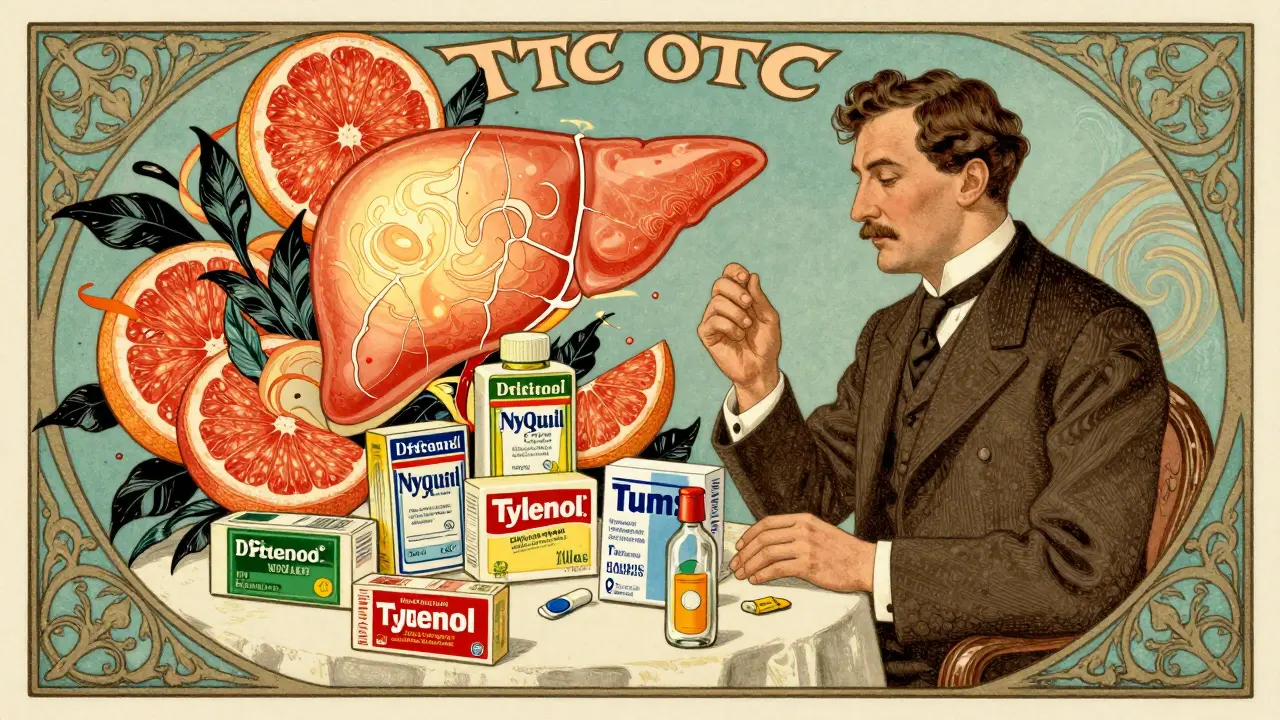
- Grapefruit juice messes with over 85 drugs - including statins, blood pressure meds, and some antidepressants. It blocks enzymes that break down the drug, causing toxic buildup.
- St. John’s Wort - a popular herbal supplement for mood - can make birth control, antidepressants, and transplant meds useless.
- Vitamin K-rich foods (kale, spinach, broccoli) can reduce the effect of warfarin.
- Aged cheese, cured meats, red wine with MAO inhibitors (for depression) can trigger a deadly spike in blood pressure.
One patient took St. John’s Wort with her SSRI. Within a week, she was hospitalized with serotonin syndrome. She thought herbal meant safe. It didn’t.
Who’s at Highest Risk?
It’s not just the elderly. But they’re the most vulnerable.
- People over 65: Take an average of 5-7 medications daily - prescription and OTC combined
- Those with kidney or liver disease: Your body can’t clear drugs the same way - they build up
- Diabetics and heart patients: Their meds are finely tuned. Even small changes can crash their system
- People with multiple chronic conditions: More drugs = more chances for conflict
But even young, healthy people aren’t safe. A 28-year-old took OTC ibuprofen with her prescription blood pressure pill. Within two weeks, her kidneys started failing. No symptoms until it was too late.
How to Protect Yourself
You don’t have to guess. There are simple, proven steps to stay safe.
- Make a full list - every pill, capsule, liquid, and supplement. Include the reason you take it. Write down the active ingredient, not just the brand name.
- Bring it to every appointment - doctor, pharmacist, ER. Don’t assume they’ll ask. They rarely do.
- Check every new OTC product - even if it’s “just for a cold.” Use the FDA’s Drug Interaction Checker or ask your pharmacist. They’re trained for this.
- Never double up - if your cold medicine has acetaminophen, don’t take Tylenol too. If your painkiller has ibuprofen, skip Advil.
- Read the label - look for “active ingredients.” That’s where the danger hides.
Pharmacists are your best ally. They see 20-30 patients a day who don’t know what they’re mixing. Ask them: “Does this OTC med interact with my prescription drugs?” Don’t wait until you’re sick.
What’s Being Done?
The FDA now requires clearer warning labels on OTC products with known interaction risks. WebMD’s Drug Interaction Checker now includes over 24,000 medications and 850+ foods. Some hospitals now scan your OTC meds during intake.
But technology alone won’t fix this. The real fix is you - being informed, asking questions, and refusing to assume anything is safe just because it’s sold over the counter.
OTC doesn’t mean harmless. It means you’re on your own. And that’s why you need to be smarter than the label.
Can I take ibuprofen with my blood pressure medicine?
Not without talking to your doctor. Ibuprofen and other NSAIDs can raise blood pressure and reduce the effectiveness of many blood pressure medications. In some cases, this can cause a dangerous spike in BP or worsen kidney function. If you need pain relief, ask about acetaminophen - but even that has limits if you have liver issues.
Is Tylenol safe with my other meds?
Acetaminophen (Tylenol) has fewer drug interactions than NSAIDs, but it’s the leading cause of acute liver failure in the U.S. because people accidentally take too much. Many cold, flu, and sleep medicines contain acetaminophen. If you’re taking more than one product, you might be over the 4,000 mg daily limit. Always check labels and avoid combining.
Do herbal supplements interact with prescription drugs?
Yes - and often dangerously. St. John’s Wort can make antidepressants, birth control, and heart meds ineffective. Garlic, ginkgo, and ginseng can increase bleeding risk if you’re on blood thinners. Even vitamin E and fish oil can interfere with clotting. Always tell your doctor what supplements you take - they’re not harmless.
Why don’t doctors always catch these interactions?
Because patients rarely tell them. Electronic health records often don’t include OTC meds or supplements. Doctors assume you’re only taking what’s prescribed. If you don’t mention your cold medicine, sleep aid, or vitamin, they can’t check for interactions. You’re the only one who knows everything you’re taking - so speak up.
What should I do if I think I’ve had a drug interaction?
Stop the OTC medication immediately and call your doctor or pharmacist. If you have symptoms like confusion, rapid heartbeat, unusual bleeding, dark urine, yellow skin, or trouble breathing, go to the ER. Don’t wait. Many interactions cause damage before you feel anything.

Joe Prism
March 5, 2026 AT 14:23OTC meds are the silent killers no one talks about. I’ve seen too many elderly folks end up in the ER because they thought ‘natural’ meant ‘safe.’
phyllis bourassa
March 7, 2026 AT 14:13Oh honey, I’m so glad someone finally said this. My aunt took Advil with her blood pressure med for months and didn’t even know she was slowly killing her kidneys. She’s lucky she didn’t lose them. 🙃
Bridget Verwey
March 8, 2026 AT 04:17Let me guess-you’re the person who says ‘I don’t need to tell my doctor about my NyQuil’ because ‘it’s just for sleep.’
Yeah. I’ve met you. At the pharmacy. You were holding a bottle of Tylenol PM and a bottle of Zoloft. You didn’t even blink.
Stop. Just… stop.
Andrew Poulin
March 8, 2026 AT 06:19Acetaminophen is a slow burn. You think you’re fine until your liver turns to mush. No drama. No warning. Just gone.
Read the label. Or don’t. Your funeral won’t have a guest list.
Weston Potgieter
March 8, 2026 AT 11:38Why are we even talking about this like it’s news? Everyone knows OTC drugs are just prescription drugs with better marketing. The FDA lets this happen because Big Pharma makes more money when you buy two pills instead of one.
It’s capitalism. Duh.
Vikas Verma
March 10, 2026 AT 01:40Pharmacovigilance is a critical pillar of public health. The absence of comprehensive OTC disclosure in EHRs represents a systemic vulnerability in medication safety architecture.
Stakeholders must implement mandatory OTC inventory logging at point-of-sale and integrate with clinical decision support systems.
Sean Callahan
March 11, 2026 AT 06:17i had a friend who took benadryl with oxycodone and woke up in the hosptal with his lungs almost shut down. he thought it was just a sleep aid. i still cant believe he was so dumb
Ferdinand Aton
March 12, 2026 AT 11:38Actually, most of these interactions are overblown. I’ve been taking ibuprofen with my blood pressure meds for 12 years. Still standing. Maybe the real problem is fear-mongering?
Adebayo Muhammad
March 12, 2026 AT 21:44And who controls the FDA? Who funds the studies? Who profits when you get sick from a $2 pill? The system is rigged. They want you dependent. They want you confused. They want you buying more pills. Wake up.
St. John’s Wort? It’s been used for centuries. The pharmaceutical industry just hates that it works better than their $200/month antidepressants.
Pranay Roy
March 14, 2026 AT 04:48Did you know the government is secretly adding sodium to OTC meds to make you thirsty so you buy more bottled water? And then they sell you the water? This is all a plan. They want you addicted to everything. I’ve been researching this since 2017. No one listens.
Aaron Pace
March 14, 2026 AT 13:02OMG YES 🤯 I just found out my sleep aid had acetaminophen and I’ve been taking Tylenol too 😭 I’m so glad I saw this before I ruined my liver 🙏
Joey Pearson
March 15, 2026 AT 11:15You’re not alone. I used to think OTC meant ‘safe.’ Then my mom got hospitalized. Now I carry a list of everything I take. It’s a habit. A lifesaving habit.
You got this. One step at a time.
Roland Silber
March 16, 2026 AT 22:20One thing nobody mentions: pharmacists are your secret weapon. Most don’t even know they can check interactions for free. Walk in with your list. Say ‘I need a safety check.’ They’ll do it in 5 minutes. No appointment needed.
And if they say ‘it’s fine’? Ask again. Or go to another pharmacy. You’re the CEO of your own body. Don’t outsource your safety.